Redirect to CHS blog

Showing posts with label Collections. Show all posts

Monday, December 3, 2018

In Your Travels: California Historical Society Collections on the Road

CHS on the Road is a series of posts by registrar Cheryl Maslin highlighting CHS collections on loan to other institutions. In your travels, we hope you will be able to visit these exhibitions.

Artifacts from the Panama-Pacific International Exposition are on view in WWI America, currently showing at the Museum of History and Industry, 860 Terry Ave N., Seattle, through February 10, 2019, and coming soon to the Bullock Texas State History Museum, 1800 Congress Ave., Austin, March 16–August 11, 2019.

Throughout much of 2015 our many visitors at CHS were treated to the exhibition City Rising: San Francisco and the 1915 World’s Fair, in commemoration of the centennial of the opening of the Panama Canal. The exhibition, which opened February 20 with a grand gala at the Palace of Fine Arts and concluded January 10, 2016, featured numerous images and artifacts from the Panama-Pacific International Exposition, some generously provided by lenders, and many sourced from CHS’s own collections.

In 2017, the Minnesota Historical Society borrowed several of these artifacts from CHS for its traveling exhibition WWI America, now installed at the Museum of History and Industry in Seattle. These include the engraved silver spade made by Shreve & Co. (founded 1852 in San Francisco) used by President William Howard Taft in the groundbreaking ceremony on October 14, 1911, at the Golden Gate Park Polo Fields; a set of five Novagems, a gift of Maria Shoppe Bartee, two of which were on display in the conjunction exhibition at San Francisco’s Palace of Fine Arts in 2015; and opening- and closing-day badges, the latter of which once belonged to five-year-old Albert Couderc, a gift of Marie Couderc.

Image courtesy of the Museum of History and Industry, Seattle, WA
Also featured in WWI America are four candlestick-style telephones that CHS borrowed for its show from the AT&T Archives and History Center. The phones were used in the first transcontinental conference call on January 25, 1915, between Alexander Graham Bell in New York; his former assistant, Thomas Watson, located at 333 Grant Avenue in San Francisco; Theodore Vail, president of AT&T, seated inside the Jekyll Island Club off the coast of Georgia; and President Woodrow Wilson, at the White House in Washington, DC.

Following its successful exhibition at the Virginia Historical Society (now the Virginia Museum of History and Culture) in Richmond, which saw some thirty-five thousand visitors, WWI America is now on view at the Museum of History and Industry in Seattle through February 10, 2019. For more information, visit https://mohai.org/. The show will then travel to the Bullock Texas State History Museum in Austin, where it will be on view March 16 through August 11, 2019. See https://www.thestoryoftexas.com/.

Tuesday, November 22, 2016

Jack London, 100 years later


Jack Londom
One hundred years ago today, Jack London died in Sonoma County at the age of 40. He remains one of the most widely read American writers and is known for the many adventures that he shared with the world. London was also an accomplished photographer, producing nearly twelve thousand photographs during his lifetime.  In honor of London's passing exactly 100 years ago, several California newspapers have featured pieces about London over the past several days. See these links below:


-----------------

The California Historical Society has written often about Jack London, including this piece from 2011:

Christened John Griffith Chaney on January 12, 1876, Jack London was born near 3rd and Brannan Streets in San Francisco California. Sadly his birthplace burned in the Great Earthquake and Firestorm of May 1906.  Click Here to read London's account of the disaster, first published by Collier's on May 5th 1906. In 1953 the California Historical Society placed a plaque at the site of his childhood home, honoring London's memory and many contributions to the literary world.   London was a prolific American writer, photographer, activist and journalist.  His fiction, novels and essays  gained him world-wide fame and fortune.   He was one of a group of writers who pioneered the nascent genre of commercial magazine fiction.  White Fang and Call of the Wild endure as his most memorable novels, yet he penned many popular essays, exposés, articles and short stories.  

 
Jack London's flask, 1907
Sterling Silver, Snake Skin, Glass
Collection of the California Historical Society
Gift of Albert Bender
 
London's flask is in the permanent collection of the California Historical Society.  After London died his wife Charmian gave the flask to his friend George Sterling, most likely the one who originally presented London with the flask. Sterling then gave the flask to Albert Bender, a great philanthropist of the Bay Area arts and cultural scene in the early 20th century. The flask is one of Bender’s many gifts to CHS and it is one of the earliest acquisitions of the permanent collection.


Jack London Resources on the Web:

Jack London Online Collection

Jack London State Historic Park

The World of Jack London

Thursday, January 3, 2013

100 Years of Rural California in Print


Saturday, January 12, 2013, Timed entry at 1:30pm, 2:15pm, 3pm, 3:45pm, reservations required
$5 general admission (includes gallery admission), Free for California Historical Society members


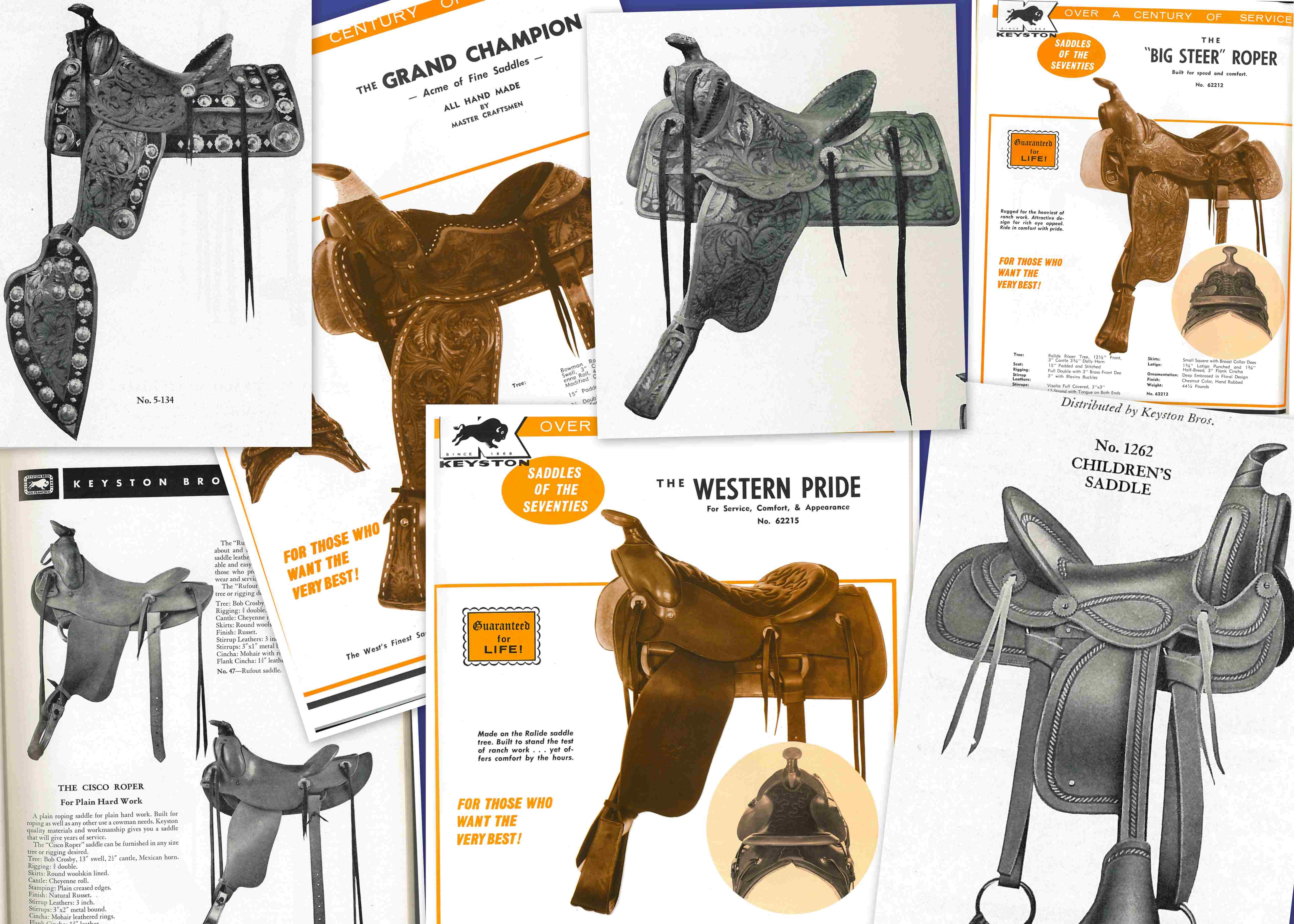
Join us for a special afternoon in the library of the California Historical Society where you will have the opportunity to hold history in your hands. Our archivists and librarians will gather an array of printed materials from the Collection – including commercial catalogs for farm implements, tack and saddlery, and seeds and nursery stock, as well as books, pamphlets, periodicals, and printed ephemera from counties, businesses, and organizations throughout the state that document various aspects of life in rural California – and make them available on tables in the library for visitors to look at up close. This event organized in connection with our ongoing exhibition I See Beauty in This Life: A Photographer Looks at 100 Years of Rural Californiahelps to expand upon our understanding, and image, of rural California over the past 100 years. Due to the delicate nature of the material, reservations are required and can be made at ruralcaliforniainprint.eventbrite.com.

Friday, December 7, 2012

New CHS audio and film recordings digitized by the California Audiovisual Preservation Project (CAVPP)


Thanks to the California Audiovisual Preservation Project and the tireless efforts of Pamela Jean Vadakan, ten additional oral histories and two films have been digitized and are available freely on the Internet Archive:


These recordings include oral history interviews with California labor activists and printers, including Louise Lambert, Elaine Black Yoneda, and Amadeo R. Tommassini. The jewel in the crown, however, may be the beautifully digitized Tanker (pictured above), a 47-minute color film made for Marinship corporation in 1944 and 1945 documenting (and promoting) the Sausalito shipyard’s wartime operations. Tanker includes historic footage of shipyard workers, their newly built community in Marin City, spectacular launchings, shipbuilding processes and technologies, and a visit from Prince Faisal and other Saudi dignitaries.

Marie Silva
Archivist & Manuscripts Librarian

Tuesday, October 2, 2012

Stern Grove Festival Association Records


Stern Grove Festival Association Records, MS 2063

San Francisco’s open-air summer concert series, the Stern Grove Festival, presented its 75th season this year. In acknowledgment of this milestone, the Stern Grove Festival Association (SGFA) records have been reprocessed with a finding aid made available on the Online Archive of California.

Inspired by its bucolic setting and natural acoustics, Mrs. Rosalie Stern purchased and deeded Stern Grove to the city in 1931. Since then, Stern Grove has functioned as a nonprofit city recreational and park facility, featuring a diverse array of performances by renowned classical and jazz musicians, and theatre and dance companies. 
 Allied Relief Benefit Concert program, 1940, Stern Grove Festival Association Records, MS 2063
The Stern Grove Festival Association Records consist of correspondence, meeting minutes, programs, posters, photographs, and scrapbooks, which document the activities of the SGFA, as well as the city’s long history of support and appreciation for the arts.  

The new guide to the collection can be found on the Online Archive of California at
http://www.oac.cdlib.org/findaid/ark:/13030/c8zc8253

Megan Hickey Nespeco, Library Volunteer

Thursday, September 20, 2012

California Wool Growers Association finding aid

Cheryl Ann Holt, Miss Wool California, ca. 1968. California Wool Growers Association photograph collection (PC 014), PC 014.002.tif.


The California Historical Society is pleased to announce the completion of the processing of the California Wool Growers Association photography collection and the publication of its finding aid on the Online Archive of California.  The sheep industry has long been an integral part of California’s rich agricultural history and the photographs in this collection demonstrate the California Wool Growers Association’s (CWGA) active role in the industry as advocates for sheep ranchers, proud sponsors of agricultural events such as livestock shows and symposiums, and promoters of wool and lamb products. 

The collection, dating from the early 1900s to the mid-1980s, contains photographs, negatives, slides, contact sheets, banquet camera photographs, transparencies, ephemera, correspondence, promotional materials, press releases, and newsletters collected by the CWGA for use in publication or possible publication in the association's journal California Livestock News.

The collection was processed in conjunction with the California Historical Society’s upcoming exhibit I See Beauty in this Life: A Photographer Looks at 100 Years of Rural California.  Featuring roughly 150 photographs, I See Beauty in This Life brings together writer and photographer Lisa M. Hamilton’s large-scale color prints and her selections from California Historical Society’s vast photography collections, including many images culled from the California Wool Growers Association photography collection.

I See Beauty in this Life: A Photographer Looks at 100 Years of Rural California will run from October 28, 2012 until March 24, 2013 in the California Historical Society galleries.  The finding aid for the California Wool Growers Association photography collection can be accessed through the Online Archive of California (http://www.oac.cdlib.org/) or you may search the California Historical Society’s online catalog (http://www.californiahistoricalsociety.org/).

African-American man sweeping wool, undated. California Wool Growers Association photograph collection (PC 014), PC 014.015.tif.
  
Slim Pickens, guest auctioneer at Red Bluff bull sale, 1960. California Wool Growers Association photograph collection (PC 014), PC 014.015.tif.

Les Bruhn, Bodega Bay, with “Queen”, won 2nd place, 26th annual Fox Western International Sheep Dog Trials at California Ram Sale, Sacramento, 1964. California Wool Growers Association photograph collection (PC 014), PC 014.002.tif.
--- Jaime Henderson, Project Archivist


Wednesday, August 15, 2012

100th Birthday of Julia Child


In honor of Julia Child, we selected a few items from our collection for your enjoyment…

Menu from the Hotel and Café de Paris in Los Angeles. Note that their rules were strict: ladies were prohibited from smoking, an extra napkin cost $.05, and don’t even think about asking for a specific seating location... Do you think Julia would have approved? (From the 19th century menu collection)


Starting in the 19th century, San Francisco’s Old Poodle Dog Restaurant was long famous for providing quality French cuisine. (From the Business Ephemera collection)


Receipts from San Quentin Prison’s Commissary Department. If you were unlucky enough to be inside, it looks like you probably would dine on lamb—but chances are, the prison chefs weren’t up to Julia’s culinary standards, and your meals would reflect this. (From MS 3442)


- Eileen Keremitsis, Reference Staff

Wednesday, July 25, 2012

Happy Birthday to the 110


News flash:  We’ve heard from readers that the 110 actually opened on December 30 (see this Caltrans announcement http://www.dot.ca.gov/dist07/sync/pr/2395U3%20SR-110%20Museum%20Event%20Media%20Alert.pdf).  It appears that a section of the freeway connecting Orange Grove Avenue with Avenue 40 opened on July 20.  Let us know if you can shed any new light on the history of the  110.


The first freeway in California was opened in July of 1940.  The Writer’s Almanac website had this shout-out to Southern California’s 110 on its July 20th birthday:  “Known as the Arroyo Seco Parkway, the Pasadena Freeway, or simply "the 110," it was also the first freeway — a high-speed, divided, and limited-access thoroughfare — in the western United States. It runs for just over eight miles and connects Pasadena to Los Angeles.


Today, the Arroyo Seco Parkway remains much as it was in 1940, even though it wasn't designed for the speeds that motorists travel today: There are no acceleration and deceleration lanes, and drivers must go from the on-ramp speed of five miles per hour up to the freeway speed of 55 in a short and hair-raising distance. It was intended to carry about 27,000 cars a day; today, it sees closer to 122,000. But it's still the most direct route from Pasadena into downtown LA.”


The photograph from our collection is from circa 1950s.


---Wendy Welker, California Historical Society Archivist

Monday, July 16, 2012

Special Viewing and Reception of the California Historical Society Collections at the University of Southern California

W. Herbert Allen's family in a Tourist automobile, ca.1900, 
California Historical Society Collection at USC, CHS-13005
Saturday, July 21, 2012, 2:00 p.m.

Special Viewing and Reception of the California Historical Society Collections at the University of Southern California


Join us for a special viewing and reception in the Doheny Memorial Library. The California Historical Society collection at the University of Southern California includes over 20,000 photographs from the Title Insurance and Trust Company and the Los Angeles Area Chamber of Commerce (LAACC), along with the records of LAACC documenting the development and promotion of the Los Angeles region.

Event begins at 2pm in the Friends Lecture Hall, Room 240
Doheny Memorial Library, University of Southern California
3550 Trousdale Parkway, Los Angeles, CA 90089

This is a free event, though reservations are required.
RSVP to chsatusc.eventbrite.com or 415.357.1848, ext. 233.


*Parking is available at Gate 3 on Figueroa Street and McCarthy Way for $8 for the day.

Tuesday, June 26, 2012

Civil Liberties in San Francisco with Stan Yogi and Elaine Elinson

Wednesday, July 11, 2012, 6:00 p.m.

Civil Liberties in San Francisco with Stan Yogi and Elaine Elinson

Join Stan Yogi and Elaine Elinson, co-authors of Wherever There's a Fight : How Runaway Slaves, Suffragists, Immigrants, Strikers and Poets Shaped Civil Liberties in California, 2010 Gold Medal winner in the California Book Awards.

Wherever There's a Fight captures the sweeping story of how freedom and equality have grown in California, from the gold rush right up to the precarious post-9/11 era.  It connects the experiences of early Chinese immigrants subjected to discriminatory laws and expulsion to those of African Americans who challenged the color bar on San Francisco Streetcars and workers who fought for union contracts on the docks and in the fields.

With vivid, illustrated stories, the authors will take you on a tour of key civil liberties sites in San Francisco – places you may have passed every day without realizing the hidden history they hold.  They will also share some treasures they found in the archives of the California Historical Society.

RSVP at civlibsf.eventbrite.com or 415.357.1848, ext. 233.

Sunday, June 3, 2012

Leo L. Stanley Scrapbooks and Papers


Leo L. Stanley Scrapbooks and Papers, 1849-1974 (bulk 1928-1965), MS 2061


For those drawn to the more colorful figures in California history, the recently re-processed and cataloged Leo L. Stanley collection might be of interest.

Dr. Stanley received a fair amount of notoriety in the press when it was revealed in 1928 that he was performing medical experiments on prisoners while acting as Chief Medical Officer at San Quentin State Prison. Less known, however, is that he was an enthusiastic pen-pal with some of San Quentin’s more infamous prisoners, including J.P. “Bluebeard” Watson, who was convicted for the murder of fifteen women.

This letter, from Watson to Stanley, is representative of the intimate tone found in much of the correspondence between Stanley and the convicts he cared for (regardless of the severity of their crimes).   


While Stanley’s personal and professional anecdotes are fascinating in their own right, his scrapbooks and papers also illuminate broader themes, including the history of San Quentin, the California prison system, convict labor, and human experimentation in medicine.

The new guide to the collection can be found on the Online Archive of California at http://www.oac.cdlib.org/findaid/ark:/13030/c80863rn

Megan Hickey Nespeco, Library Volunteer

Monday, May 28, 2012

Spanning Space and Time: The Golden Gate Bridge and the Transformation of the Bay Area


Thursday, May 31, 2012, 6:00pm

$8 admission for California Historical Society, San Francisco Architectural Heritage, or National Trust members

$12 admission for the general public

San Francisco Architectural Heritage, in partnership with the California Historical Society and the National Trust for Historic Preservation, Western Office, will hold a symposium to commemorate the 75th anniversary of the opening of the Golden Gate Bridge. Panelists Gray Brechin, Catherine Powell, and Dick Walker will explore themes such as art, commerce, labor, and demographics that are typically overlooked in standard accounts of the Golden Gate Bridge, which have traditionally focused on the bridge’s importance as an engineering feat (one of the modern “Wonders of the World”). The symposium will be moderated by John King, urban design critic for the San Francisco Chronicle. A Q&A will follow the program and light refreshments and wine will be served. Click here to but tickets for Spanning Space and Time.

About the panelists:

Gray Brechin
Dr. Gray Brechin became an environmentalist when he first read Rachel Carson’s Silent Spring on its publication in 1962. Prior to receiving his Ph.D. from the UC Berkeley Department of Geography in 1998, he covered environmental and urban issues as a columnist and television producer in San Francisco. His published dissertation, Imperial San Francisco: Urban Power, Earthly Ruin, spent 16 weeks on the San Francisco Chronicle’s best-seller list and is considered a classic of urban studies. He is the founder of the Living New Deal project and a Visiting Scholar at the UCB Department of Geography where the Living New Deal is based.

John King
John King is the San Francisco Chronicle’s Urban Design Critic, a post he created in 2001, and the author of “Cityscapes: San Francisco and Its Buildings,” published in May 2011 by Heyday. His work also has appeared in Dwell, Metropolis, and The American Scholar. He is an honorary member of the American Society of Landscape Architects and recipient of awards from the California Preservation Foundation and the state chapters of the American Planning Association and the American Institute of Architects.

Catherine Powell
Catherine Powell is the Director of the Labor Archives and Research Center at San Francisco State University.  She currently serves on the executive board of the California Faculty Association and is a delegate the San Francisco Labor Council and chair of its Law and Legislative Committee. She is also coordinator of the Bay Area Labor History Workshop and a board member of the Fund for Labor Culture and History. Catherine is co-editor of The San Francisco Labor Landmarks Guide Book: A Register of Sites and Walking Tours.

Richard Walker
Richard Walker is professor of geography at the University of California, Berkeley, where he has taught for 35 years. Walker has written on a diverse range of topics in economic, urban, and environmental geography, with scores of published articles to his credit. He is co-author of The Capitalist Imperative (1989) and The New Social Economy(1992) and has written extensively on California, including The Conquest of Bread(2004) and The Country in the City (2007).   He is also PI of the Living New Deal Project to inventory all New Deal public works sites in the United States.

Saturday, May 26, 2012

A Wild Flight of the Imagination: The Story of the Golden Gate Bridge eBook

As hundreds of thousands of admirers of the Golden Gate Bridge begin to converge on the San Francisco Bay area to celebrate the 75th Anniversary of the world-renowned icon, the California Historical Society has released its first multi-media eBook for iPads that captures the rich history and amazing story of the Bridge through a selection of rarely seen artwork, photographs, video, memorabilia, stories, images and much more.

The free iPad eBook, A Wild Flight of the Imagination: The Story of the Golden Gate Bridge, can be downloaded through the California Historical Society’s new, dynamic and image-rich website at www.californiahistoricalsociety.org.  The app is also available on Apple's iTunes App Store as a free download under the name “GG Bridge.” 

Published by the California Historical Society and produced by Sol Editions and Wild Blue Studios, the eBook was funded through a grant provided by United Healthcare.

“The story of the Golden Gate Bridge is a remarkable one, captivating millions of people around the world with its themes of promise, innovation, perseverance, and artistic inspiration,” said Dr. Anthea Hartig, Executive Director of the California Historical Society. “This eBook will help share that story and bring the amazing history of this California icon to life in an interactive way.”

The eBook’s title is drawn from the exhibition of the same name currently on view at the California Historical Society galleries. The phrase is borrowed from a 1921 promotional prospectus for the Golden Gate Bridge in which the authors, chief engineer for the bridge Joseph Strauss and San Francisco city engineer M.M. O’Shaughnessy, used inspirational language to set a tone for the enormously ambitious engineering feat.

The interactive multimedia app extends the reach of the California Historical Society’s exhibition and makes over 350 historic objects, including dozens of photographs, letters, journals, reports and other ephemera from its own holdings and 19 other collections available to readers of all ages.
Highlights include photographs by Ansel Adams and Dorothea Lange, paintings by Maynard Dixon, Ray Strong, and Chesley Bonestell, and architectural drawings by Irving F. Morrow and John Eberson, the two architects who worked on the bridge design. Audio highlights include the heroic and poignant voices of men who built the bridge and an opening music selection from composer Rob Kapilow’s “Chrysopylae,” A Golden Gate Opus, written with contributions from sound designer Fred Newman.
Readers of all ages can also watch a short film of Chief Engineer Strauss speaking to a reporter on the bridge during construction, examine the family scrapbook of Fred Dummatzen, one of the workers who tragically lost his life when a scaffold collapsed, and even view some of the proposed bridge color schemes that were ultimately rejected.
“This exciting new format allows us to bring the richness of our historic collections to a much larger audience, including teachers and students, and will allow many more people around the world to share in the Golden Gate’s 75th Anniversary, even if they cannot be here in person,” Hartig said.

Wednesday, May 23, 2012

The Golden Gate Bridge: Icon, Metaphor, Inspiration


Friday, May 25, 2012 from 6:00 PM


The Golden Gate Bridge: Icon, Metaphor, Inspiration


Free Event at the California Historical Society, 678 Mission Street, San Francisco, but RSVP required at http://johnkingggb.eventbrite.com/

Kick off Memorial Day weekend by joining us at the galleries of the California Historical Society for an evening with John King, urban architecture critic for the San Francisco Chronicle. As part of continuing programming around the exhibition on display in the California Historical Society galleries through October 14 and the upcoming anniversary of the Golden Gate Bridge, King will offer his musings on the majestic bridge. "We take the Golden Gate Bridge for granted, but what if it had never been built? Look past the marvelous architecture, wondrous engineering, and geographic splendor of the bridge, and another facet emerges. The Golden Gate Bridge is a cultural touchstone that allows us to contemplate how the risks taken by one generation reshaped the Bay Area in enduring ways." Although this event is free to the public, please RSVP to ensure that you will have a seat. 


Wednesday, April 25, 2012

Geil J. Norris Family Papers, Vault MS 156


Geil J. Norris Family Papers, Vault MS 156


            These New Year cards—printed in Mexico City in 1881 for Sam Brannan and Manual Castro, with the Mexican coat of arms and, yes, real feathers affixed in the shape of birds—are part of the recently cataloged Geil J. Norris Family Papers. Though small, the collection contains many notable and exquisite examples of Californiana documenting the Pico, Castro, and Sanchez families, from which Mr. Norris was descended, throughout the nineteenth century. Highlights of the collection include: an 1844 broadside announcing Thomas O. Larkin’s appointment as United States consul; letters by Zamorano, Pío Pico, Thomas O. Larkin, and Manuel Castro; documents pertaining to the Mexican War, including an 1846 bando and a letter of protest written by the minister of the missions at Santa Clara and San José; and the pictured greeting cards. 

            The cards (and a letter in the collection) tell an interesting story in their own right, suggesting that Mormon pioneer Sam Brannan and Mexican War general Manual Castro were business associates in Mexico in the early 1880s, when Brannan was involved in land speculation schemes in Sonora. The collection as a whole reminds us of the complex and historic interconnections—political, economic, and familial—between Mexico and California.

            A detailed guide to the collection is available on the Online Archive of California: http://www.oac.cdlib.org/findaid/ark:/13030/c8k072ns

Marie Silva
Archivist & Manuscripts Librarian 

Monday, April 16, 2012

George Cruikshank, Charles Dickens’ illustrator & temperance advocate

George Cruikshank, Dickens’ illustrator & temperance advocate

In belated celebration of Charles Dickens’ 200th birthday, we present a letter from the CHS Collection, written by George Cruikshank, the Victorian caricaturist most famous perhaps for his illustrations of Oliver Twist:


In this 1848 letter, Cruikshank presents his nephew W. Percy Cruikshank to a C. M. Evans of Birmingham. Cruikshank (the nephew) delivered lectures “in the provinces” on The Bottle, his uncle’s popular illustrations on the evils of alcoholism. (On the temperance issue, Dickens and Cruikshank parted ways.)

Despite some preliminary investigation, the provenance of this letter remains a mystery. Did C. M. Evans eventually leave Birmingham for the golden shore of California?
                                                                       
Marie Silva, Archivist & Manuscripts Librarian

Sunday, March 25, 2012

A Wild Flight of the Imagination Curator Walkthrough

Thursday, April 12, 2012, 5:30 p.m. 


A Wild Flight of the Imagination Curator Walkthrough 

Free Event at the California Historical Society, 678 Mission Street, San Francisco

Walk through our exhibition A Wild Flight of the Imagination: the Story of the Golden Gate Bridge with the curator Jessica Hough.  She will give you insight into the show, welcome you into the Library to see other engaging objects from the CHS collection, and invite you to handle Bridge artifacts. RSVP to http://wildflightcurator.eventbrite.com/.


Saturday, March 24, 2012

A Wild Flight of the Imagination Family Afternoon

Saturday, April 14, 2012, 2 p.m.

A Wild Flight of the Imagination Family Afternoon


Free Event at the California Historical Society, 678 Mission Street, San Francisco
Bring the kids and come for a special curator-led tour of the exhibition.  We will learn about the Golden Gate before the Bridge, how a bridge is built, and what materials are used.  Children and adults will be invited to handle iron worker tools and Bridge artifacts. Families will also have the opportunity to work on a Golden Gate inspired craft project together.  RSVP to http://wildflightfamily.eventbrite.com/ or 415.357.1848, ext. 229.

Friday, March 23, 2012

Helen Hunt – Who do you think you are?

Watch the NBC broadcast of Who do you think you are? this evening to see Helen Hunt’s search for her roots. You get extra points if you catch the connection with the California Historical Society’s collection. (Hint: Scholle Brothers)


Tuesday, March 20, 2012

Golden Gate Opus Preview Event with composer Rob Kapilow

Friday, March 23, 2012, 12 p.m.

Discussion and special viewing of select collection items

Co-Sponsored by the Marin Symphony

Event is at the California Historical Society, 678 Mission Street, San Francisco

Join us for an afternoon discussion led by composer Rob Kapilow as he discusses his latest work for the Marin Symphony, Golden Gate Opus and talks about the creative process. View select works from the California Historical Society collection that aided in Rob Kapilow’s work as he composed Golden Gate Opus. Composer Rob Kapilow listened to the community’s stories and experiences about the Golden Gate Bridge. Kapilow asked, “What does the Golden Gate Bridge sound like?” He explained that there’s a symphony right there if you only listen to it, referring to the foghorn, the tires on the pavement, the wind and more. He joined forces with local media outlets, schools and non-profits to gather stories and feedback about the Golden Gate Bridge.