Redirect to CHS blog

Showing posts with label Education. Show all posts

Wednesday, October 17, 2018

Spotlighting the Use of Primary Sources in Teaching California

As the California Historical Society (CHS) moves forward with development on Teaching California, our state-funded initiative to offer schools and teachers classroom-ready instructional materials aligned with the new History-Social Science Framework, we’d like to spotlight the important primary source-driven philosophy of our project, and share some of the great examples that we’ve been incorporating in our content development.


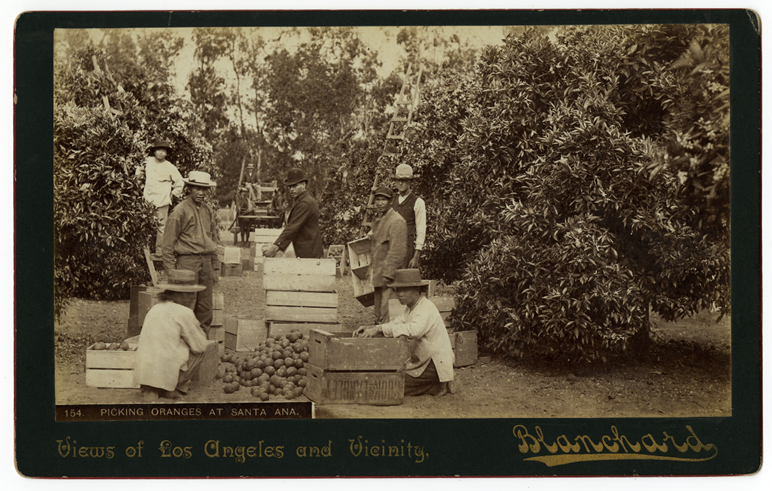
In short, the new Framework is an instructional tool by which teachers can cover, and in some cases move beyond, the existing History-Social Science Standards for the state of California. Primary sources like this photo of Chinese citrus worker picking oranges in Santa Ana help answer grade-specific questions of significance, such as “Why do people move?” Students can explore how people moved from place to place, while reflecting on their own family experiences. Picking Oranges at Santa Ana, circa 1890s; General Subjects Photograph Collection-Agriculture; California Historical Society


Examining primary sources, original documents and objects created at the time of study can be an engaging, meaningful, and rigorous way for students to connect to the past. Primary sources give students the ability to trace continuity and change, foster personal connections to a larger narrative, and build deeper community connections. They also invite student inquiry and encourage students to wrestle with the complexities of differing points of view while learning crucial critical thinking and analysis skills. For teachers however, access to engaging and grade-appropriate primary sources is not always matched by a corresponding stress on the tools and context needed to utilize them successfully in the classroom. 

Cue the new Framework, which outlines a new inquiry-based model of instruction for California’s K-12 classrooms. Embedded within the Framework are grade-level examples of the types of primary sources that teachers can explore with their students to help address questions of historical significance. Importantly, California’s diversity is seen as an asset and, according to Deputy Superintendent of the California Department of Education Thomas Adams, “a new opportunity for inclusive instruction.” This opportunity is available in recommendations for primary source types—like photos, letters and objects—that are not only engaging, but also inclusive. 

But while teachers responded positively to the Framework after its adoption by the California Department of Education in 2016, they also expressed the strong need for access to the type of engaging and relevant primary sources outlined in its pages, organized to easily address the new inquiry-based model. 

This need will shape the new collection of classroom-ready instructional materials we create for the project, which will be free and accessible to teachers in Summer 2019 on teachingcalifornia,org. Never-before-seen primary source material, much from CHS’s collections, will lead the student exploration and discovery of history through a uniquely California lens (when appropriate and relevant), and teachers will also find support in historical context, sourcing, and developing student literacy.

                            
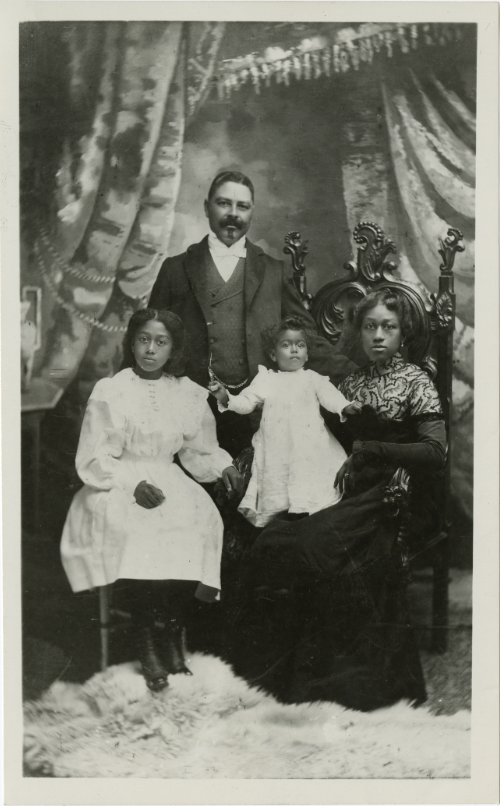
As the Framework details, primary sources speak to students’ own lives, heritages, and family identities, and in early grades can help students start developing a sense of history through their own family and community histories. This image of the Shorey family, from Oakland, California, can help students explore the Grade One Framework question, “How do families remember their past?” Capt. William T. Shorey and wife Julia Shelton, daughters Zenobia and Victoria, ca. 1910; Portraits Collection; California Historical Society. 


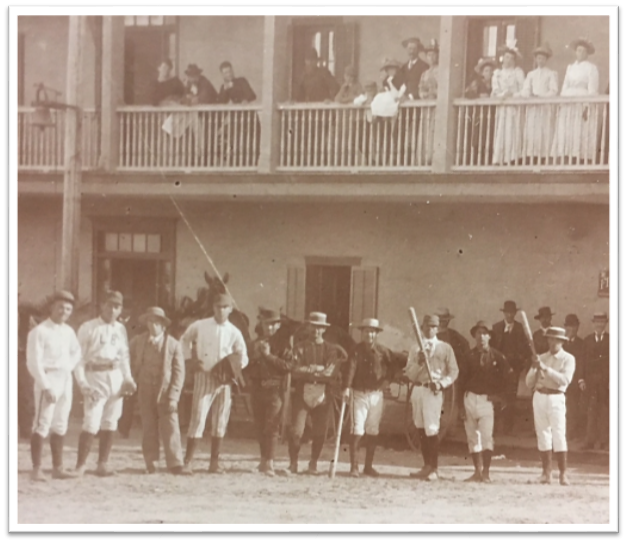
This example shows a men’s baseball team at San Juan Bautista, that can help Kindergarteners think through the question “What is our neighborhood like?” as they learn about living and working together now versus long ago. Men's baseball team, undated; California Counties Photograph Collection; PC-CO-San Benito; California Historical Society.


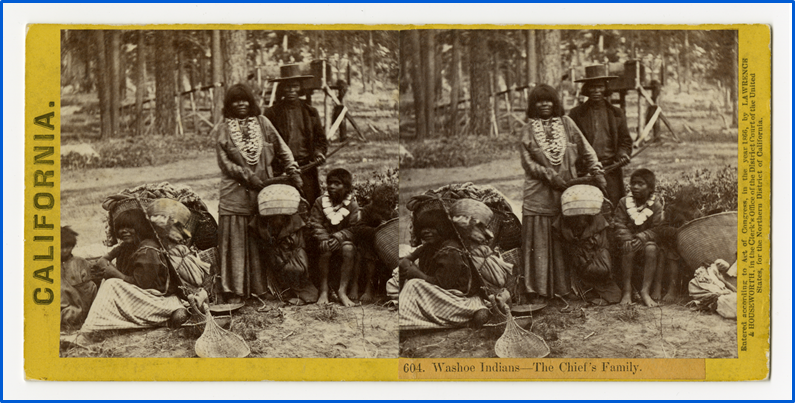
This is an example of an image that we may use for Grade One, which helps students think through the question, “How do many different people make one nation?” as students explore the ways in which Native Californians and immigrants have helped define Californian and American culture. Washoe Indians--The Chief's Family; Stereographs of California and Nevada; PC-RM-Stereos; California Historical Society


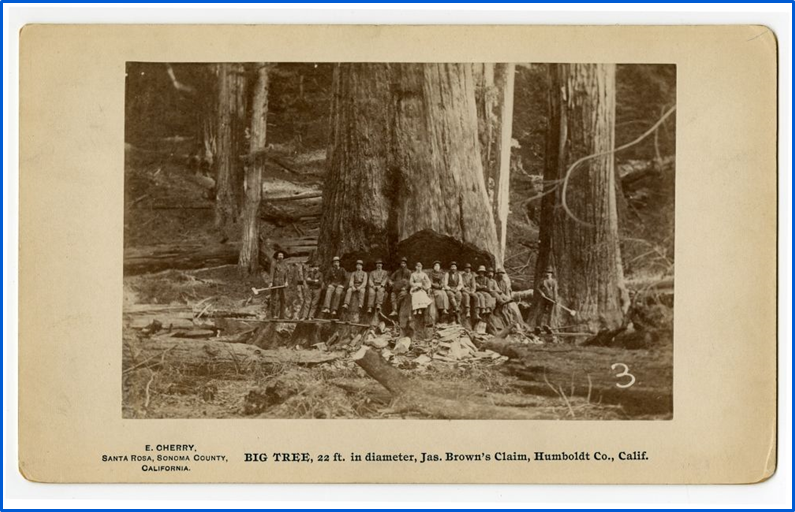
This photograph from our collections can help address the Framework question, “What have been the costs of the decisions of people in the past?” as students explore the cost of logging or preserving the natural environment. Big Tree, 22 ft. in diameter, Jas. Brown's Claim, Humboldt Co., California; California Counties Photography Collection; PC-CO; California Historical Society

Our content development partners on Teaching California, The California History-Social Science Project (CHSSP), are current members of the Library of Congress’ Teaching With Primary Sources (TPS) Consortium, a group of institutions across the country who help deliver TPS professional development, design curriculum using primary sources from the Library’s collections and/or conduct research on the classroom use of primary sources. This week, I am fortunate to accompany CHSSP on their annual TPS meeting in Washington DC, and learn from and with those working at the forefront of primary source-led instruction in the classroom. Opportunities like this, as well as further engagement with teachers throughout our development process, will help us continue providing access to primary sources in a way that is not only useful for teachers in the classroom, but will help do our part to shift the pattern of history-social science instruction.

--------------------------------------------------------------------------------------------------------------------------

This post was written by Kerri Young, Teaching California Project Manager at the California Historical Society.

Funded by a $5 million grant from the State Department of Education to the California Historical Society, Teaching California offers schools and teachers classroom-ready instructional materials designed to engage students in exciting and inspiring investigations of the past. Comprised of curated primary source material from California's premier archives, libraries, and museums, this program provides a research-based approach to improve student reading, writing, critical thinking and civic engagement, all aligned with the State’s new K-12 History-Social Science Framework. For everything you need to know about the new Framework, visit CHSSP’s useful blog here.

Thursday, September 13, 2018

Teaching California, An Origin Story


Funded by a $5 million grant from the State Department of Education to the California Historical Society, Teaching California offers schools and teachers classroom-ready curriculum designed to engage students in exciting and inspiring investigations of the past. Comprised of curated primary source material from California's premier archives, libraries, and museums, this program provides a research-based approach to improve student reading, writing, critical thinking and civic engagement, all aligned with the State’s new K-12 History-Social Science Framework.

We sat down with the directors of the two organizations spearheading the project to find out how Teaching California came to be. A former high school history and government teacher, Nancy McTygue serves as the California History-Social Science Project's Executive Director. Anthea Hartig serves as Executive Director and CEO of the California Historical Society. She is a Ph.D. historian and former history and cultural studies teacher. 

               Anthea Hartig, California Historical Society
Nancy McTygue, California History-Social Science Project

1. What is Teaching California and what prompted this collaboration between CHS and CHSSP?

Nancy:
When complete, Teaching California will offer K-12 teachers an innovative, free, online collection of instructional resources, organized by grade level, standard, and investigative question, to support the implementation of California’s History-Social Science Framework.

The inspiration for Teaching California actually came from K-12 teachers who were excited by the new Framework but lacked the appropriate resources to implement the instructional approach outlined in the document. I told Anthea about conversations I had with teachers across the state as part of the Framework rollout – teachers who wanted access to engaging and relevant primary sources, organized to specifically (and easily) address the inquiry-based instructional model we had outlined in the Framework.

Anthea and I had met years before; she served on advisory committee for our History Blueprint initiative. We continued to talk even after that development period ended because our organizations share a commitment to public history and a desire to provide teachers with the most engaging and up to date resources for their students. When I heard this request for resources again and again at Framework rollout events, I mentioned it to Anthea, who immediately connected the dots to CHS’s archive and their desire to have it accessed widely. At that point we thought about what our organizations do best and how working closely together could lead to an important synergy that would mean we could produce something that neither of us could do alone and all for a relatively small investment from the state. We’re deep in development right now, but I think we’re both getting excited about what this may actually offer to teachers and more importantly, California’s students.

Anthea:
The birth of Teaching California stemmed from the completion of the new Framework for K-12 history and the real need that we felt in the field from teachers. From CHS’s perspective, the creation of our new digital capacities, as well as raising funds and staff competencies in order to launch our digital library, was the other stream that joined this effort.

On a more global level, Teaching California was the result of a huge and unmet need to fulfill the dreams of those who have been pushing to teach with primary sources rather than with textbooks. This includes Sam Wineburg at Stanford, whose work “Historical Thinking and Other Unnatural Acts: Charting the Future of Teaching the Past” was groundbreaking in getting students to engage with primary sources. We also recognize the need to frame California experiences, peoples, and the phenomenal diversity of our past and to incorporate that into contemporary life and the dominate narrative of how history is taught.

We were very lucky to be able to find support from legislative leaders like Assemblymember Phil Ting as well as Tom Adams at the California Department of Education. We found willing partners all over the state but especially here at San Francisco Unified. The grant that we received not only allows for us to create a free online portal of discovery through primary sources, but also allows CHS to delve into the depths of our collection which is underused and somewhat unknown, and to continue to digitize it to make it accessible to everyone. We are creating partnerships with other archives across the state and the nation in order to help bring forth their material and make them available as part of Teaching California as well.

2. Why is this project relevant and needed now?

Nancy:
I don’t know if Teaching California could have happened in a prior time; I don’t think the conditions necessary to make it a reality existed. As I detailed above, the project originated in the minds of teachers tasked with teaching California’s new Framework. As the writers of the new Framework, we are obviously committed to its implementation and, knowing a lack of relevant resources could kill the momentum developed during its writing and adoption, we were especially keen to respond to those teachers asking for help.

In addition, although the business of education still lags behind its private and even non-profit colleagues, I think we’ve now reached at least the necessary minimum level of access to and effective use of digital resources in classrooms across the state. According to a recent newsletter from the Corporation for Education Network Initiatives in California (CENIC), 356 remote and underserved schools have just joined 100% of county offices of education, 87% of school districts (904), 83% (8,739) of schools, and over 5 million students who are already connected to CalREN, the California Research and Education Network, a high-capacity computer network with more than 8,000 miles of optical fiber. This number isn’t everything – many classrooms actually have fairly limited access to internet-connected technology and aren’t ready to scale up for wider access. However, it does bode well for our goal of providing access to our collection of classroom-ready materials, including never-seen-before primary sources from CHS’s archive.

Moreover, I believe that California’s Local Control Funding Formula (LCFF) contributed to the need for resources like Teaching California. Passed in 2013, LCFF gave local schools unprecedented flexibility in how they spend their money from the state. Although I’m sure this was not the authors’ intent, what this has meant, in practice, is that some schools have decided to prioritize their now flexible funding on costs that don’t directly address a teacher’s need for quality instructional materials. Instead of spending money adopting new textbooks or the latest instructional materials, for example, some schools and districts are investing their money in staff salaries and benefits, facilities, transportation, and any number of other important and necessary expenses. The whole purpose of LCFF was to allow schools to prioritize their spending to areas of greatest need and to put an end to the era of inflexible (and honestly, sometimes ridiculous) categorical spending. An unintended consequence of that, however, is that for some teachers in some schools, this has meant that they no longer can count on their districts buying new materials for their classrooms – even after the adoption of a new Framework that fundamentally reconsiders the instructional practice of classroom teachers. When completed, the Teaching California collection won’t take the place of a comprehensive and high quality instructional material package, but it will go a long way to helping teachers begin and - after time and additional support – truly achieve implementation of the new Framework.

Anthea:
I used to think that American popular discourse, especially American political popular discourse, was ahistorical and a-intellectual, that people didn’t really care about historical context. Now the tenor of the times is increasingly anti-intellectual and anti-historical and the need for a critical lens and the capacity to ascertain the real from the fake, the propaganda from the document, is more important than ever. We’ve seen this on the international stage, especially in relation to cyber security during the election of 2016.

I also think the need for us, as a people, to not forget our past in all of its beauty and all of its ugliness is more important than ever. America is careening towards its 250th year - what does that look like? What does mean for us? Understanding the basic materials of history as a doorway into discovery and learning is increasingly important. It’s also very important for our youth to see themselves reflected in the past and to comprehend that they too are part of a long, complicated set of movements, migrations, immigrations, and change. I hope that seeing themselves reflected in history inspires students to recognize that they can be agents of change. History is made by people and the choices that we make every day, whether it be yesterday or 10,000 years ago.

No one should be excluded from the richness of the past. A lot of teachers don’t have extensive training in history, especially in grades K-8 when they must teach a very broad range of subjects. Many high school teachers are incredible historians yet are feeling like they don’t have enough support or materials. We want to do everything we can to help these teachers access primary sources and powerful visuals so that all students, regardless of their literacy and language capacities, can find meaningful engagement with history. In the end this can truly bring about the kind of change that I and CHS would love to see in relation to history – that it increasingly becomes a vibrant and critical part of our contemporary lives and an empowering and enlightening tool of utility that creates a more just and informed world.

Portrait of seven young Japanese girls wearing kimonos at Mission School, ca. 1900_USC digital collections_CHS-5722

3. Why is it important that content from CHS’s collections (and from other repositories across the state) be included in Teaching California’s instructional materials?

Nancy:
My former faculty advisor, Alan Taylor, a Pulitzer-Prize winning historian who is now the Thomas Jefferson Foundation Chair at the University of Virginia, told me a story years ago that really sticks with me. He had recently moved to Davis from the East Coast to work in the history department. One day in his early American history class, while lecturing on colonial history (which primarily focuses on English colonies on the East Coast), a student raised her hand and asked, “Professor Taylor, what was happening out here in California at that time?” With tongue firmly in cheek, Alan apparently replied, “nothing,” and after getting a laugh and then acknowledging his joke, he went on with the lecture. Although short-lived, that exchange stuck with him.

American history didn’t just happen on the East Coast and students living here in California have a right to know about their state’s role in our nation’s beginnings, as well as the rest of our collective history. Alan became so committed to this pursuit – to widening the traditional geographic borders of America’s beginnings – that he reorganized his curriculum and even penned a book on the subject, American Colonies, in 2001. American Colonies offers both historians and classroom teachers a much more comprehensive view of the past – beyond the Atlantic seaboard to the entire continent. And so while I’m very reluctant to compare our work to Alan’s, I do believe we share a commitment to California citizens. We deserve to know our state’s history and how that history helped define both the place where we live and our national narrative. Using sources from the CHS’s archive (as well as other state and national collections) can go a long way in making that a reality.

Anthea:
When you get to a textbook stage of production, the curation and the choice of primary sources have been through many variations with a lot of eyes and minds upon them. We don’t think of textbooks as being particularly curated but of course they are. A set of sources is used to inspire historians to write the text. When you think of something like the new Framework, it is an interpretation itself of the state’s standards. We haven’t changed the standards in a long time but we have changed the state Framework through a lot of people’s hard work. So, taking the Framework and using that foundation to consider all the different archival materials in all of the different repositories throughout the state, nation, and world, opens us up to a phenomenal range of possibilities in regards to picking these sources, curating them, and giving them to teachers, students, and their families to investigate and better understand.

The other key driver for me as a public historian is raising awareness of the needs and power of our collections and inspiring people to do research with our primary sources. Obviously digitization leads to a greater amount of accessibility but I hope it also leads people back to the actual archives because for everything we digitize, there’s always going to be more - more boxes and folders that we just didn’t digitize because they were too fragile or we didn’t have the funds. This kind of layered curation brings with it remarkable possibilities as well as honors other archives and libraries who have been working for years to collect, steward, preserve, and make accessible their collections. 

4. The Teaching California team is currently creating inquiry sets as part of the project. Can you break down what they are and what they consist of?

Nancy: 
We’re creating inquiry sets, which are basically a collection of primary sources, teaching resources, and literacy support, aligned to the new Framework. When the collection is completed and posted online, teachers will be able to visit CHS’s Teaching California website, and search by grade, standard, and investigative question from the new Framework. From there, they will be able to download a set of relevant primary sources, excerpted as necessary by grade-level, teaching resources, and at least one strategy designed to improve student reading, writing, and / or oral discourse ability.

Anthea:
What I think is interesting about the creation of inquiry sets is they are being created by archivists, librarians, historians, and educators together. We think this is a very different way than how other efforts to bring forth primary sources have been created. As a teacher, you generally don’t get to sit down with a reference librarian and really think about what works and what the students will be excited by. The historians and educators at CHSSP and the archivists, historians, and reference librarians at CHS are that core team. This makes the construction of the inquiry sets a really powerful and dynamic pathway into learning.

5. How do you envision teachers using what we create for Teaching California in the classroom? 

Nancy:
After selecting the appropriate source set, teachers will be able to download the individual sources to display online or print out for student review. They’ll be able to download classroom-ready handouts for their students, special “for the teacher” resources that situate each source in the larger historical narrative, a diverse collection of teaching suggestions, and literacy strategies, aligned with California’s English Language Development Standards.

Anthea:
My hope for teachers, having been one, is that they’ll trust in what we’ve created, that they will be engaged by it. They may have even helped pilot it and test it. By the time Teaching California comes to their classroom and it’s a busy Tuesday morning and they’ve reviewed the inquiry sets and lesson for that day, I hope that they’ll find within what we’ve produced a sense of wonder and discovery and newness. I hope they’ll find a story they’ve never heard before, a landscape they’ve never seen depicted, a letter they’ve never read, or a map they’ve never looked at or used. The teachers will be the conduits for bringing archives into the classroom and for helping those sources come alive. I hope the sparks of connection and learning fly and that a sense of belonging to the human continuum of experience is awakened. 

Man atop ladder in roots of tree at Mariposa Grove of Big Trees

6. What has been the most exciting part, or interesting discovery during the creation process so far?

Nancy:
We have a grant from the Library of Congress; we’re part of the Library’s Teaching with Primary Sources Consortium, which works to introduce K-12 teachers to the Library’s digitized resources which are available at loc.gov. When we first got the grant, my colleague Tuyen Tran (who coincidentally leads our Teaching California project) and I went to DC for the orientation meeting. During the meeting, the archivist pulled out a journal from Christopher Columbus – we actually got to hold it in our own hands and look through it. It was one of the most exciting things I’ve ever done in my professional career. I had a similar experience at CHS’s archive – Anthea’s archivist showed us a biography on Junipero Serra from 1787 – and again, I was struck by just how cool that was and how this gem from our own state should be easily accessible to California teachers and students. 

[Relacion historica de la vida y apostolicas tareas del venerable padre fray Junipero Serra … /escrita por el R.P.L. F.R. Francisco Palou, 1787]; [Vault 175]; California Historical Society.
Anthea: 
One of the challenging things that we’ve encountered so far as a team is taking our desires to use a California lens - which could be an archival lens, a lens of making sure we address native history, Spanish colonial history, and Mexican republican history - and bring all of that back into the broader way in which we teach American history and even world history. Let’s look at world history, which is taught in the 10th grade and a little bit of 6th and 7th grade. You learn about medieval and early modern times and you might ask what that has to do with California, but in our collection we have an early astronomical scientific treatise published in 1680 that talks about watching comets. This document makes all sorts of assumptions about what the comets were doing and on the frontispiece there is a stunning woodcut of our Lady of Guadalupe. If we can show that to students, and to anyone who connects with that image on a cultural or personal level, seeing her in 1680 appearing in the heavens is just incredible. There is also a stunning celestial map. I think this treatise helps us answer one of the questions which is what were the effects of 16th century exchanges between Spanish and native peoples of broader Mexico. If we have something published in 1680 from Mexico City, that just opens up this whole other way of thinking about what that exchange was. There are so many things like this in the collection that surprise you, take you deeper, or challenge assumptions you might carry with you. 

Kino, Eusebio, Exposicion astronomica de el cometa, que el año de 1680 : por los meses de noviembre, y diziembre, y este año de 1681, por los meses de enero y febrero, se ha visto en todo el mundo, y le ha observado en la ciudad de Cadiz, California Historical Society, Vault 523.6 K624e
----

The California History-Social Science Project (CHSSP) is a statewide network of scholars and teachers dedicated to improving K-12 student literacy and learning in history-social science. Each year the CHSSP serves more than 4,000 teachers in over 150 different professional learning programs at local schools and universities. The CHSSP also served as the primary writers of California’s History-Social Science Framework. The CHSSP is part of the California Subject Matter Projects, administered by UC Office of the President.

The California Historical Society, founded in 1871, is a nonprofit organization with a mission to inspire and empower people to make California's richly diverse past a meaningful part of their contemporary lives.

Funded by a $5 million grant from the State Department of Education to the California Historical Society, Teaching California offers schools and teachers classroom-ready resources designed to engage students in exciting and inspiring investigations of the past. Comprised of curated primary source material from California's premier archives, libraries, and museums, this dynamic tool presents a research-based approach to improve student reading, writing, critical thinking and civic engagement, all aligned with the State’s new K-12 History-Social Science Framework.

In summer 2019, the Teaching California website will launch with instructional resource materials for every grade. This curriculum is being developed by the California Historical Society and its partner, the California History-Social Science Project, two organizations dedicated to improving students’ understanding of the past and promoting inquiry, engagement, evidence-based interpretation, and language proficiency. Teaching California integrates both Common Core and English Language Development Standards.

Thursday, August 23, 2018

California's Enduring Diversity

After years of researching California history, I am still struck by the state’s long-standing population diversity and cultural vibrancy. To come across an image such as this one reminds me that the state’s cultural richness is sometimes on parade, but is more often simply - and meaningfully - woven into all we see around us and in images from the past.


Mexican American caballero with the horse 'Puente,' La Fiesta, Los Angeles; General Subjects Photography collection; PC-GS; California Historical Society. 

In the fourth grade, students begin the year by studying California’s native peoples from the Pre-Columbian to the Mexican Rancho period, and learn that their lives varied considerably from one geographic region to the next, and that there were approximately 100 distinct dialects in use. The curriculum continues with an examination of the different European explorers arriving in California from the sixteenth century onward. Fourth graders also study the gold rush, when a truly global population descended upon the U.S. territory. Following these investigations of California’s rich diversity, the new History-Social Science Framework adopted by the CA State Board of Education poses a question to accompany the next content standard: “What was life like for California’s diverse population at the turn of the century?”

For the Teaching California curriculum project, the California Historical Society (CHS) and the California History-Social Science Project (CHSSP) are working together to identify and contextualize primary sources that illuminate California, U.S., and world history, and to align these with the new Framework. For this particular Framework question on California’s diverse population at the turn of the twentieth century, we are drawing from the CHS’s rich collection of images and documents that provide insight into the opportunities many newcomers enjoyed, as well as the hardships that some experienced on account of their racial or ethnic backgrounds.

I was particularly struck by the record of a speech given by Rep. Cowdery in 1874 about the importance of integrating African-American - “Negro” - students in public schools. I learned that African-Americans in California organized as early as the 1870s to point out the difference between the rights recently afforded them in the 14th Amendment, and their children’s treatment in California’s segregated school system.

“Last fall there assembled at Sacramento a body of colored citizens, demanding all the rights their citizenship entitled them to.”

“Under…our political code the children of negroes must attend separate schools. This would not be objectionable, provided the State has furnished separate schools equal to those for white children…It is clear the State has not performed her duty in this respect.”

Students reading these words (with the historical context and literacy support provided) will learn that segregation in schools was common in these years, and that it was a group of parents who demanded better for their children. Teachers may choose to link this to the long struggle for civil rights in public schools, both in California and throughout the nation.

While students learn that these civil rights were not always realized quickly or fully (and in the case of the 1882 Chinese Exclusion Act, for instance, new barriers were erected), they also learn that people in California from many different backgrounds created numerous opportunities for themselves. This image of a Chinese float during the 1902 “La Fiesta” parade in Los Angeles, helps students see the long history of people honoring their cultures and sharing them with others through festivals like these that brought together California’s diverse peoples. 


Chinese Dragon. La Fiesta Parade, Los Angeles, Cal., 1902 May 2; General Subjects Photography collection; PC-GS; California Historical Society 

We find evidence of California’s turn-of-the-century population diversity in much more than these brief celebrations. In an era when newspapers were one of the only ways to communicate with a broad number of people, ethnic communities used this print media to stay connected and establish themselves within broader society. 


Various newspapers, 1879; Henry D. Cogswell Time Capsule Collection, MS 559; California Historical Society. 

Today’s students will no doubt identify with this language diversity. The California Department of Education identifies 65 different language groups spoken among the state’s public school students. Through the Teaching California project, we are striving to provide classroom materials that represent California’s historic population diversity. We believe that students will be more engaged in learning about the past when they can see themselves represented in California’s story. 

--------------------------------------------------------------------------------------------------------------------------


This post comes from Shelley Alden Brooks, a scholar of California and environmental history. She holds a doctorate from the University of California, Davis, and together with the California History Social Science Project is developing history-social science curriculum for Teaching California. Comprised of curated primary source material from California's premier archives, libraries, and museums, Teaching California presents a research-based approach to improving student reading, writing, and critical thinking.


Wednesday, September 19, 2012

The Laws Guide to Drawing Birds


September 26, 2012,  6:00 PM

The Laws Guide to Drawing Birds

Book Signing and Discussion with John Muir Laws

Free event at the California Historical Society, 678 Mission Street,San Francisco

RSVP at drawingbirds.eventbrite.com/.

Drawing is a way of training yourself to see. Drawing birds helps you to slow down and observe nature more carefully. In his book, The Laws Guide to Drawing Birds, John Muir Laws demonstrates step by step techniques to help you quickly sketch birds in the field or to accurately depict them in the studio. Join us for a book signing and discussion of nature study, birding, and improving your observation skills. Laws will demonstrate his approach to drawing birds and give tips to help you in your own sketching.

Tuesday, July 31, 2012

Angie Chau and Andrew Lam at the California Historical Society


Thursday, August 9, 2012, 6:00 p.m.

Join local authors Angie Chau and Andrew Lam for a reading and discussion on Vietnamese American identity and literature and California.

This is a free event at the California Historical Society, but please RSVP at chauandlam.eventbrite.com

The San Francisco Chronicle described Angie Chau's Quiet As They Come as "a powerful mix of tragedy and kindness, of miscommunications and all-too-painful empathy, which bound together are a resonating homage to many an immigrant." Released by IG Publishing in 2010, Quiet As They Come was a Finalist in First Fiction for The Commonwealth Club Book of the Year Award and a Finalist in Fiction for the Northern California Independent Booksellers Association Book of the Year Award.  

 Andrew Lam is a writer and a co-founder of New America Media. Perfume Dreams: Reflections on the Vietnamese Diaspora has won the Pen American "Beyond the Margins" Award in 2006, and was short-listed for "Asian American Literature Award”. East Eats West: Writing in Two Hemispheres was published in October 2010 and listed as top ten indie books by Shelf Unbound magazine. 

Sunday, March 25, 2012

A Wild Flight of the Imagination Curator Walkthrough

Thursday, April 12, 2012, 5:30 p.m. 


A Wild Flight of the Imagination Curator Walkthrough 

Free Event at the California Historical Society, 678 Mission Street, San Francisco

Walk through our exhibition A Wild Flight of the Imagination: the Story of the Golden Gate Bridge with the curator Jessica Hough.  She will give you insight into the show, welcome you into the Library to see other engaging objects from the CHS collection, and invite you to handle Bridge artifacts. RSVP to http://wildflightcurator.eventbrite.com/.


Saturday, March 24, 2012

A Wild Flight of the Imagination Family Afternoon

Saturday, April 14, 2012, 2 p.m.

A Wild Flight of the Imagination Family Afternoon


Free Event at the California Historical Society, 678 Mission Street, San Francisco
Bring the kids and come for a special curator-led tour of the exhibition.  We will learn about the Golden Gate before the Bridge, how a bridge is built, and what materials are used.  Children and adults will be invited to handle iron worker tools and Bridge artifacts. Families will also have the opportunity to work on a Golden Gate inspired craft project together.  RSVP to http://wildflightfamily.eventbrite.com/ or 415.357.1848, ext. 229.

Thursday, February 9, 2012

A Wild Flight of the Imagination: the Story of the Golden Gate Bridge

The Golden Gate National Parks Conservancy has organized a region-wide celebration for the 75th anniversary of the Golden Gate Bridge. The California Historical Society opens a ground breaking new exhibition: A Wild Flight of the Imagination: the Story of the Golden Gate Bridge, featuring art, photographs, films and historic bridge artifacts.

It was Joseph Strauss, Chief Engineer of the bridge, and Michael M. O’Shaughnessy, San Francisco’s iconic City Engineer who coined the soaring phrase which inspires our exhibition title and carried the seemingly impossible job to its completion.

The exhibition will include a look back at the Golden Gate itself – one hundred years before the building of the bridge – as well as the building and historic opening of the bridge in 1937. It will also examine the bridge’s influence as an inspirational landscape for artists, writers, tourists, and people worldwide.

Learn what life was like for travelers before the spanning of the Gate – when ferry travel could still accommodate traffic between San Francisco and Marin County. Follow the media campaign and efforts of San Francisco Mayor James Rolph to win over a reluctant public, and the victorious telegram informing Rolph of the bridge’s approval by the federal government.

See works of art and photography by Maynard Dixon, Chesley Bonestell, Carleton Watkins and Dorothea Lange, along with spectacular architectural drawings by John Eberson and Irving Morrow from the collections of the Golden Gate Bridge Highway and Transportation District, the California State Library and others. Some of his art will be out of storage and on view for the first time in decades.

Please join us on Sunday, February 26th at 2:30 pm for the opening reception of this exciting exhibition, which will be co-sponsored by the Art Deco Society of California.

Wear your best 1930s apparel, kick up your heels and celebrate with us on the 79th anniversary – to the day – of the groundbreaking of this world-renowned structure. The afternoon will be golden, drink will flow, and jazz will fill the air.

We hope to see you there! RSVP to 415.357.1848, ext. 229 or Wildflight.eventbrite.com.


A Wild Flight of the Imagination is on view Tuesday – Sundays from February 26 through October 14, 2012, 12:00 - 5:00 p.m. each day.

Friday, January 27, 2012

Real Rural Launch Party

Tuesday, January 31, 2012  5:00 – 7:00pm


Real Rural Launch Party

Free Event at the California Historical Society, 678 Mission Street, San Francisco

The Bill Lane Center for the American West and Roots of Change are proud to announce the launch of journalist and photographer Lisa Hamilton's innovative multimedia project "Real Rural" — bringing California's rural life to the state's urban public. Hamilton's portraits of people and places, along with surprising, provocative quotes from the subjects, will be featured on BART trains throughout the Bay Area beginning in late January, and on an interactive web site.  The California Historical Society will mount a related exhibition this fall of Hamilton's photographs shown in conjunction with relevant materials from the California Historical Society's vast collection.  Join us to see a preview of the project and meet Lisa Hamilton. RSVP to rsvp@calhist.org or 415.357.1848, ext. 229.

Tuesday, May 3, 2011

Certificates of Residence

Last year the California Historical Society received a small but special gift: 17 certificates of residence for Chinese laborers, dated between the years 1894 and 1897. The collection was donated to CHS in the name of the late Mr. Frank V. Piraro, who discovered the cache in his cousin’s shed in downtown San Jose.

Now a rich source of historical and genealogical significance, these certificates represented the codification of nineteenth-century sinophobia: under the provisions of the 1892 Geary Act, which amended the Chinese Exclusion Act of 1882, all Chinese and Chinese Americans in the United States were required to apply for, obtain, and carry a government-issued certificate of residence proving their legal presence in the United States. Any person of Chinese ethnicity discovered without such identification risked arrest and deportation. In other words, Chinese Americans were presumed guilty of an immigration offense – based solely on their ethnicity, as perceived by non-Chinese authorities – until proven innocent.

Each certificate includes the laborer’s name, local residence, and occupation; information about his height, eye color, complexion, and physical marks or peculiarities; and a photographic print. Reproduced here is the certificate for Ju Sing, contractor, age 34 years, of San Jose:


One hopes that these certificates will contribute to a greater understanding of the humanity, struggles, and contributions of Mr. Sing and other Chinese American workers in nineteenth-century California.
A complete inventory of the collection can be found on the Online Archive of California: http://www.oac.cdlib.org/findaid/ark:/13030/kt858038qp/

– Marie Silva, Archivist & Manuscripts Librarian

Monday, August 23, 2010

Teacher Open House 8/26/10

The California Historical Society is hosting a Teacher Open House on August 26th.  If you are an educator we invite you to stop in between 4:00 p.m. and 7:00 p.m. for drinks and snacks, and to learn more about educational resources offered by CHS.  There will be books and free educational materials available. 

Other local institutions participating in the Teacher Open House are: San Francisco Camerawork, Cartoon Art Museum, Contemporary Jewish Museum, The Society of California Pioneers, The Museum of the African Diaspora, Museum of Craft and Folk Art, SFMOMA, Yerba Buena Center for the Arts and Zeum.