Redirect to CHS blog

Showing posts with label California Historical Society. Show all posts

Monday, May 13, 2019

California Historical Society's 2019 Gala, Featuring the Honorable Edmund G. Brown, Jr.

The California Historical Society celebrated forty years as the State’s official historical society at its annual Gala, with more than 200 guests coming together to honor the person responsible for its official designation, the Honorable Edmond G. Brown, Jr.

The Gala took place exactly 40 years to the day, when on May 9, 1979, then Governor Jerry Brown signed SB 63, authored by Senator Jim Mills, which established the California Historical Society as the official state historical society.  It is just one example of the exemplary leadership, vision and fortitude demonstrated by Governor Brown throughout his more than forty years of public service.

“Time and again, regardless of his title, governor, mayor, or attorney general, Governor Brown demonstrated his unique his ability to work alongside Democrats and Republicans in the legislature to be an important steward of California, its people and policies to build a brighter, lasting future,” said Michael Sangiocomo, Board Chair, California Historical Society.  “We are honored to pay tribute to Governor Brown’s life-long accomplishments and applaud the legacy he has left the Golden State.”

The highlight of the evening was an intimate conversation with Governor Brown that was moderated by Professor Bill Deverell, Director, Huntington-USC Institute on California and the West, and Miriam Pawel, Author, The Browns of California: The Family Dynasty that Transformed a State and Shaped a Nation. Professor Deverell and Ms. Pawel engaged the Governor about a myriad of issues, including his insights about his legacy, his favorite California past times, personal reflections and his outlook for the future.


The Governor was given a standing ovation and presented a special gift on behalf of the Historical Society that was a special book made for him about the history of his maternal grandfather, Evan Brown, that included rare photos and never-before-known biographical information unearthed by archivists.

“We are here tonight trying to see the relationship between the past and how that past informs the present,” Governor Brown said.  “The past is a very rich source of ideas, values, our whole existence, our whole identity. How do we both begrudge the past but be open and resilient and ready to the changes that are occurring at a very accelerating rate.”

A distinguished group of leaders in business, education, government, and philanthropy came together to plan and support the Gala in honoring the Governor and one of California’s true civic legends, in one of the West’s most significant historic buildings, the Old U.S. Mint.


The Honorary co-chairs for the event were George P. and Charlotte M. Shultz, Mayor London Breed, John Laird, Greg Lucas, Tribal Chairman Greg Sarris, Mayor Libby Schaaf, Mrs. Kevin Starr, Richard C. Blum, the Honorable Dianne Feinstein and Assembly Speaker Anthony Rendon. The Chair of the Host Committee was CHS Trustee Linda Elliott.

Sponsors of the Gala include Federated Indians of Graton Rancheria, Annenberg Foundation, Diane B. Wilsey, Recology, Anthea M. Hartig and Family, AT&T, Ralph Walter and Dorothy Fleisher.  Proceeds from the Gala support California Historical Society programming and youth history education. 
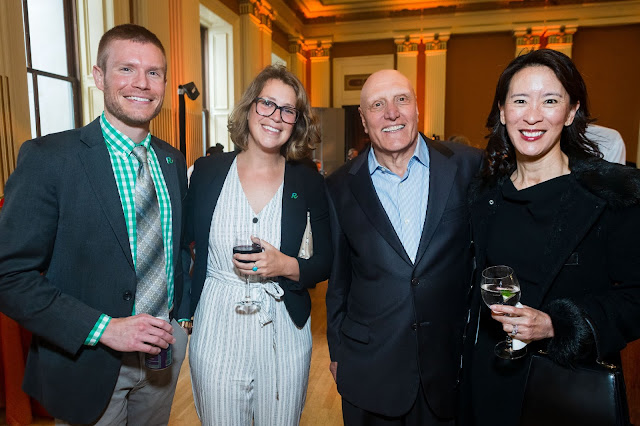
Enjoy the following photographs from our Gala evening at the Old U.S. Mint.


Wednesday, August 17, 2016

History Keepers: California Centennial Transportation Plate

California Centennial Transportation Plate, 1949
Private Collection of Phyllis Hansen

They are Los Angeles’s history keepers. They research, organize, store, repair, and care for historical artifacts and make them available to us online, at exhibitions, through publications, or in their homes. This summer, from August 5 to August 27, the California Historical Society celebrates them with an exhibition at the historic El Pueblo National Monument.

A series of blogs brings our online visitors a sample of objects in the exhibition. Here we explore a unique object that commemorated Los Angeles’s centennial featuring a depiction of an unusual mode of transportation in the late nineteenth century.

California Centennial Transportation Plate, 1949
History Keeper: Phyllis Hansen

California Centennial Transportation Plate (detail of back), 1949
Private Collection of Phyllis Hansen

In 1949, California celebrated its centennial of statehood. Vernon Kilns, one of Los Angeles’s premier pottery companies at that time, produced a series of themed commemorative plates for the occasion. There were six in the series, all in brown on white.

The plates were a creative collaboration between Mrs. Armitage S. C. Forbes—the “Bell Lady” of El Camino Real and “Mother of the Campo de Cahuenga”—and California artist/historian Orpha Klinker, who did the renderings.

“Wedding Party Arriving Home in Carreta,” detail,
California Centennial Transportation Plate, 1949
Private Collection of Phyllis Hansen

The transportation-themed plate depicts a wedding party on an oxen driven, wooden wagon, also known as a carreta, an early method of transport during the mission period. Surrounding this central image are other depictions of historical modes of transportation unique to Southern California. Perhaps the most unique of all the depictions are the camels that arrived at the Drum Barracks in Wilmington in January 1858.

“Ship of the Desert”: The U.S. Camel Experiment, 1856–1866
As a mode of transportation, few would guess that camels in California would qualify. Yet, in 1857, due largely to the efforts of Secretary of War Jefferson Davis, 75 camels were imported from Egypt to the United States as an experiment in serving the U.S. Army in the Southwest. One group of camels was selected to pack supplies from Los Angeles to Fort Tejon in California; others to transport military supplies to forts in Utah, Arizona, Texas, and New Mexico.

Gwynn H. Heap (illustrator), Loading the Camels for Transport to America, 1857
Published in Report of the Secretary of War, Communicating, in Compliance with a Resolution of the Senate of February 2, 1857, Information Respecting the Purchase of Camels for the Purposes of Military Transportation (Washington: A. O. P. Nicholson, printer, 1857)
Courtesy National Archives

“Camels Secured for a Gale, page 180 of Report of the Secretary of War (1857),” 1930
Published in A. A. Gray, Francis P. Farquhar, and William S. Lewis, Camels in Western America 
(San Francisco: California Historical Society, 1930)

In January 1858, the first train of pack camels arrived in Los Angeles. Their task was to carry supplies and provisions to Fort Tejon in the Tehachapi Mountains. As a 1902 historical record of Southern California noted, “For a year or more afterwards it was no uncommon sight to see a caravan of these hump-backed burden-bearers solemnly wending their way single file through the city.” 

Encampment with the Camels on the Descent towards Carson Valley, c. 1860
Vischer’s Pictorial of California (View No. 47)
California Historical Society

Camel at Drum Barracks, San Pedro, California, during the Civil War, c. 1863
Attributed to Rudolph D’Heureuse; courtesy of the Drum Barracks Garrison & Society


“Camels arrived in California in 1858 at Drum barracks, Wilmington, Calif.,” detail,
California Centennial Transportation Plate, 1949
Private Collection of Phyllis Hansen

The Camel Experiment ultimately failed. The camels’ eccentricities—unfamiliar and untrainable by its riders—and with their incompatibility with horses confined them to the forts in the Southwest. The onset of the Civil War led to the end of the Camel Corps, which disbanded in 1863.

In California, camels were brought to the military reservation at Benicia, where they were lodged and later auctioned off. Today the Camel Barns at the Arsenal house the Benicia Historical Museum. Still others were turned loose, to roam at will over the region. As the writers of the 1939 WPA Guide to California: The Golden State observed:

Within recent years a camel frisked about the neighborhood of Banning, making such a nuisance of himself that he was hunted down by a posse and shot. This was undoubtedly an aged survivor of the government caravans that cross the desert prior to the Civil War. . . . Some wild camels were sighted on the desert as late as 1980, and even now newcomers [to Banning] are solemnly assured they can expect to run into them at any moment.


Shelly Kale
Publications and Strategic Projects Manager
skale@calhist.org

Sources

Jefferson Davis, Reports upon the Purchase, Importation, and Use of Camels and Dromedaries to Be Employed for Military Purposes (Department of War, 1857)

Francis P. Farquhar, “Camels in the Sketches of Edward Vischer,” California Historical Society Quarterly 9, no. 4 (Dec., 1930): 33235

Federal Writers’ Project, The WPA Guide to Los Angeles: The Golden State (San Antonio, TX: Trinity University Press, 2013)

Walter L. Fleming, “Jefferson Davis’s Camel Experiment,” Popular Science Monthly, 174 (Feb. 1909): 141–52.

A.A. Gray, “Camels in California,” Quarterly of the California Historical Society IX, no. 4 (December 1930): 229–317

J. M. Guinn, “Camel Caravans of the American Deserts,” Publications of the Historical Society of Southern California and of the Pioneers of Los Angeles County, 5 (19001902): 14651
James Miller Guinn, Historical and Biographical Record of Southern California (Chicago; Chapman Publishing company, 1902)

Michael K. Sorenson, “A Most Curious Corps,” Military Images Magazine (March/April 2006)

______________________________________________________________________________
An exhibition by the California Historical Society and LA as Subject
Presented in partnership with El Pueblo Historical Monument and the El Pueblo Park Association

El Tranquilo Gallery & Visitor Center
634 N. Main Street (entrance on Olvera Street, W-19)
El Pueblo de Los Ángeles Historical Monument, Los Angeles, California
Tuesday–Friday, 10:00 am–3:00 pm
Saturday and Sunday, 9:00 am–4:00 pm


Wednesday, August 10, 2016

History Keepers: Backyard Residential Incinerator

Backyard Residential Incinerator, 1946-55
Courtesy of Nat Isaac


They are Los Angeles’s history keepers. They research, organize, store, repair, and care for historical artifacts and make them available to us online, at exhibitions, through publications, or in their homes. This summer, from August 5 to August 27, the California Historical Society celebrates Los Angeles’s history keepers with an exhibition at the historic El Pueblo National Monument.

A series of blogs brings our online visitors a sample of objects in the exhibition. In this blog, research into the city’s history of refuse collection and disposal leads one history keeper to acquire this old backyard incinerator—and successfully find it a home in a permanent collection.

By Nat Isaac, Los Angeles Sanitation Historical Project

As all historians know, you don’t just pass up on a treasured relic of the past, especially one such as this that tells the story of L.A.’s trashy past full of issues ranging from environmental protection to traffic, to organized crime to mayoral politics.

In the 1940s Los Angeles was searching for ways to minimize the costs of rubbish collection and disposal as well as reduce smog levels. Burning refuse was then a standard method of disposal in municipal incinerators and several open pits on the outskirts of the city. In 1944 the city’s main incinerator fell into disrepair and was permanently closed. This led to a crisis in the refuse industry. Home backyard incinerators, a firmly established practice since the turn of the twentieth century, became an even more popular method of disposing trash.

While burning trash meant less garbage trucks—and less traffic—on the streets of the city, it also meant more pollution in the air.


Burning Dump, 1945
Los Angeles Public Library, Herald-Examiner Collection
“Like a miniature Vesuvius,” the Herald-Examiner reported on August 2, 1945, “this open dump belches forth clouds of eye-irritating smog to pollute the atmosphere of the entire Los Angeles County. Scores of open dumps like this one would be eliminated through a county-wide incinerator and rubbish collection system.”

In the fall of 1954, the city council approved an increase in the daily hours of rubbish burning from four hours to seven hours. Rubbish could now be burned from 6 am to 10 am and from 4 pm to 7 pm. Although only a small contributor to Los Angeles’s overall smog, backyard incinerator smoke was very visible and its odors persisted for quite some time. As a result, residents began attributing high smog levels and poor health quality to the smoke from these units and complained to the air control district, local councilmen, and county supervisors about them. 


End of the Backyard Incinerator, 1954
Los Angeles Public Library, Herald-Examiner Collection
“Backyard incinerator with a large black bow with the letters ‘R.I.P’ on it marks the end of the backyard incinerator in Los Angeles,” noted the Herald-Examiner on October 20, 1954.


Backyard Incinerator Ban, 1954
Los Angeles Public Library, Herald-Examiner Collection
“W. G. Ney and Loy E. Moore, owners of the Peerless Incinerator Company, 1854 W. Washington Blvd., display their inventory of backyard incinerators as they hear reports of banning all incinerators,” the Herald-Examiner reported on October 20, 1954.

The County of Los Angeles addressed these complaints in 1955 with a phased-in ban on backyard incinerators. To Los Angeles Mayor Norris Poulson, the writing was on the wall. If the ban were applied city-wide, the garbage would have nowhere to go but to privately-owned dumps, which were known to be corrupt through involvement with organized crime.

Poulson immediately requested the county to delay implementation of the ban pending discussions on a more efficient garbage collection system for the city. He then began investigating private waste haulers and dumps for racketeering violations while at the same time proposing a new tax-funded municipal garbage collection program for the entire city that would ensure city-owned landfills and collection trucks for years to come. Such a municipal collection program, he saw, would avoid the need for dirty backyard incinerators, corrupt haulers, and privately-owned dumps. 

Hearing Conducted by Mayor Poulson, 1955
Los Angeles Public Library, Herald-Examiner Collection
At a hearing conducted by Mayor Norris Poulson and his investigation into rubbish collection racketeering, reported the Herald-Examiner on June 20, 1955, “The crowd heard testimony that threats have been made against persons who tried to dump their own rubbish. This was described as “a customary threat.”

As the mayor continued holding hearings on organized crime’s involvement with garbage collection haulers throughout 1955, public sentiment shifted in favor of his proposed municipal collection program. However, without adequate funding for such a program and with an expected increase in rubbish from the city-wide ban on backyard incineration, Poulson found himself in a difficult position.

By the summer of 1956, the city had started to phase in trash collection in areas where incinerator use was being slowly phased out. Poulson brought the proposed municipal collection program to a City Council vote on June 15, 1956. However, the council deadlocked, with six in favor and six opposed.

Ban on Residential Incinerators, 1957
Los Angeles Public Library; Herald-Examiner Collection
“All refuse burning will end October 1 when Air Pollution Control District’s ban on residential incinerators becomes effective,” reported the Herald-Examiner on July 1, 1957.

The mayor had no choice but to put the matter to a vote by the public, and on April 2, 1957, the residents of Los Angeles approved a new tax to fund a municipal garbage collection program for the city. Poulson won the battle against privately-owned haulers and dumps while enabling the ban on backyard incinerators to move forward. Later that year, on October 1, 1957, a total ban was placed upon incinerators by the county’s Air Pollution Control District, establishing the current way the city handles trash.

City Starts Combustible Rubbish, 1957
Los Angeles Public Library; Herald-Examiner Collection
“Loader Fred Mosely and driver Henry Lind are shown at Washington Boulevard and Arlington Avenue with one of 57 new garbage trucks put in use today as the City starts its combustible rubbish collection,” reported the Herald-Examiner on April 8, 1957.”

Residential Incinerator, 1960
Los Angeles Public Library, Herald-Examiner Collection

As the Herald-Examiner reported on June 25, 1960: “Patrolman Terzo explained to a new resident that incinerator burning has been banned within the Los Angeles basin since Sept. 30, 1957, and that the fire should be extinguished immediately.”

I first came across the old incinerator (depicted above) at an estate sale for a house that was listed for sale in mid-city Los Angeles in June 2007. It looked exactly like the images I had seen in my historical research on the collection and handling of trash in Los Angeles as part of my 26 years of work at Los Angeles Sanitation (LASAN). Unfortunately, the incinerator was not part of the estate sale, but rather a fixture of the house. Nevertheless, I was determined to get it as a potential item in LASAN’s collection. The only question was how? As my wife and I were already in the market to purchase a house and this one had a nice charm to it (as well as an incinerator), we purchased the house. Since then, the incinerator was carefully cleaned, disassembled, and reassembled after which it will patiently await a final resting place in the LASAN collection located in the Los Angeles City Archives.


History Keeper: Los Angeles Sanitation Historical Collection
Los Angeles Sanitation Historical Collection encompasses a history of and historical records related to municipal collection programs for refuse, recyclables, dead animals, and yard trimmings throughout the City of Los Angeles from its inception to the present day. The collections are located in the Los Angeles City Archives.

_________________________________________________________________________
An exhibition by the California Historical Society and LA as Subject
Presented in partnership with El Pueblo Historical Monument and the El Pueblo Park Association

El Tranquilo Gallery & Visitor Center
634 N. Main Street (entrance on Olvera Street, W-19)
El Pueblo de Los Ángeles Historical Monument, Los Angeles, California
TuesdayFriday, 10:00 am3:00 pm
Saturday and Sunday, 9:00 am4:00 pm