Redirect to CHS blog

Thursday, October 6, 2016

Hungry for Communication: The Love Pageant Rally & Michael Bowen


The Grateful Dead playing at the Love Pageant Rally - Photo by Susan Elting Hillyard*

The Summer of Love, known for the nearly 100,000 young people who converged on the Haight Ashbury neighborhood of San Francisco in the Spring and Summer of 1967 may have actually started 50 years ago today on October 6, 1966. As many of the original Haight-Ashbury hippies like to claim, the Summer of Love was the Summer and Fall of 1966. And the Love Pageant rally was a major reason why.
On this day half a century ago, somewhere between 1,000 and 3,000 (estimates continue to vary!) young people swarmed into the Panhandle of Golden Gate Park two blocks North of Haight Street for the “Love Pageant Rally.” The crowds were encouraged to gather in the Panhandle that day by the leaders of the new San Francisco Oracle newspaper to mark the day that the State of California made LSD illegal. The event was a seminal moment for the hippie counterculture that was growing in the neighborhood and directly led to the massive and transformative Human Be-In that took place in Golden Gate Park three months later.
The date (10/6/66) was deliberately chosen as the “666” in the date was meant to conjure the number of the beast in the Book of Revelation. Instead of a standard protest, however, the editors of the Oracle, wanted a ‘celebration of innocence, beauty of the universe…beauty of being.”
The larger-than-expected crowd who attended that day listened to free music provided by the Grateful Dead (see image above) and Big Brother and the Holding Company featuring Janis Joplin (recently brought back to San Francisco by her friend Chet Helms, see image below). Ken Kesey attended the event along with the Merry Pranksters and their famous colorful. “Furthur Bus.” (See video below). The celebration, at the time, was almost certainly the largest free outdoor rock concert in history.
Towards the end of the event, one of the Love Pageant Rally organizers, Beat era poet Michael Bowen, made a chance remark about the power of human beings. That remark soon became a call for “The Human Be-In” that took place in Golden Gate Park a few months later on January 14, 1967. That event,  which drew some 30,000 people to the park's Polo Grounds, and the media’s coverage of it, is widely recognized with creating the nationwide interest in converging on San Francisco in the months to come, thus creating the Summer of Love during the Spring and Summer of 1967.

The Grateful Dead playing at the Love Pageant Rally, with Chet Helms looking on. Photo by Susan Elting Hillyard*

______________________________________________________________________________________________
Read more below about Michael Bowen and the Love Pageant Rally

Watch. This. Video (from the Center for Home Movies)! Anything look familiar? The 1960s resonate with contemporary students of history because the time is imminently relatable. It’s highly likely that you will walk by hip kids in San Francisco (or other cities) dressed similarly if not identically to those in the video you (hopefully) just watched. Like those immortalized in celluloid above, American Millennials are also engaged in meaning-making that differs from the previous generation; we’ve inherited less than we’ve been promised, and we’re making due with what we have. Our politicians feel feckless, our soldiers are overseas, and we’re left at home making sense of it all. So we rely on each other within a sharing economy, we socialize in new forums fueled by innovative technologies, and we read blogs that proliferate from the will of the people.

35182_3.jpg
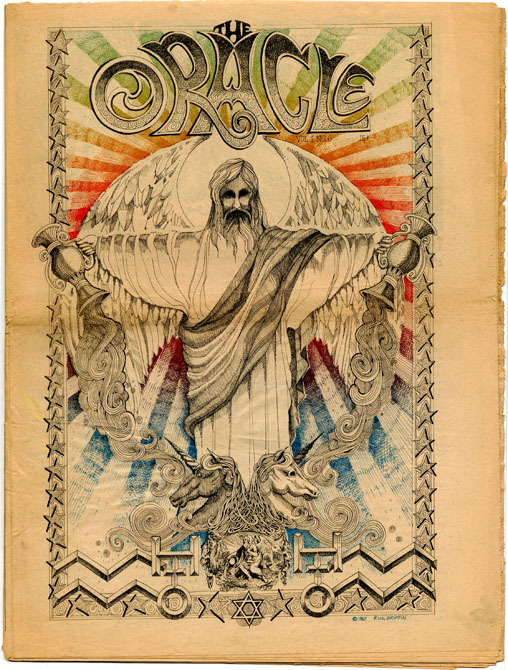
Cohen and Bowen’s San Francisco Oracle / Courtesy of Beat Books


Those blogs owe their existence in part to Allen Cohen’s rainbow dream, the San Francisco Oracle. Cohen’s counterculture commentary motivated many in the 1960s to 'tune in, turn on, and drop out,' but Michael Bowen supplied the radical aesthetics that made the San Francisco Oracle an unrivaled Bay Area leader. Cohen, a native New Yorker, claimed California as his home, but Bowen belonged to the world despite his Beverly Hills birthright. There would have been no Love Pageant Rally without Michael Bowen, and without the Love Pageant there many never have been a Summer of Love and The Oracle would have been much less stimulating.  


15-bowen-ayala-in-front-of-cafe-trieste-bw.jpg
Roberto Ayala and Michael Bowen in front of Caffe Trieste in North Beach. / Courtesy of Princeton By The Sea Memories

Michael Bowen was born on December 8, 1937 to society dentist Sterling Bowen and his wife, Grace. His grandmother, Alma Porter, introduced Bowen to metaphysics and modern art as a practicing member of the Theosophical Society in Ojai, California. His mother’s alleged lover, Benjamin (Bugsy) Siegel introduced him to the Vegas Strip and the Sir Francis Drake Hotel in San Francisco. He attended Chouinard Art School and studied with Los Angeles artist Ed Kienholz, working alongside notable artists such as John Altoon at the Ferus and Now Galleries. He moved to San Francisco in the late 1950s, and joined the west coast contingent of the Beat Generation. Living and working from 72 Commercial Street, he befriended a Norwegian physician and arts patron named Reidar Wennesland who heavily collected Bowen’s work in addition to that of his friends; as a result, the North Beach art scene is now very well-represented in the Wennesland Foundation Collection in Kristiansand, Norway.


bowen-LOVEPosterWEB-300.jpg
Love, 1965 by Michael Bowen / Courtesy of Percepticon, San Francisco


Bowen left San Francisco in 1963 and moved into an old Abalone Factory in Princeton-by-the-Sea with a coterie of artists. After many months of painting and entertaining friends like Janis Joplin, he was deeply affected by Aztec spiritualism after traveling in Mexico, and eventually settled in New York City where he found a studio on the Lower East Side and mingled with counterculture heavy-hitters Timothy Leary, Ram Dass and Richard Alpert. He returned to San Francisco in 1966 with an impressive alternative rolodex, and opened a studio and ashram in the Haight-Ashbury district--San Francisco’s newest bohemian neighborhood. He co-founded The San Francisco Oracle with Allen Cohen, and moved the newspaper’s office into his Haight Street shop when he moved to Stinson Beach; there, he would act as host for the inaugural meeting for the Underground Press Syndicate (UPS).

GDHB1-Handbill1.5-2.jpg
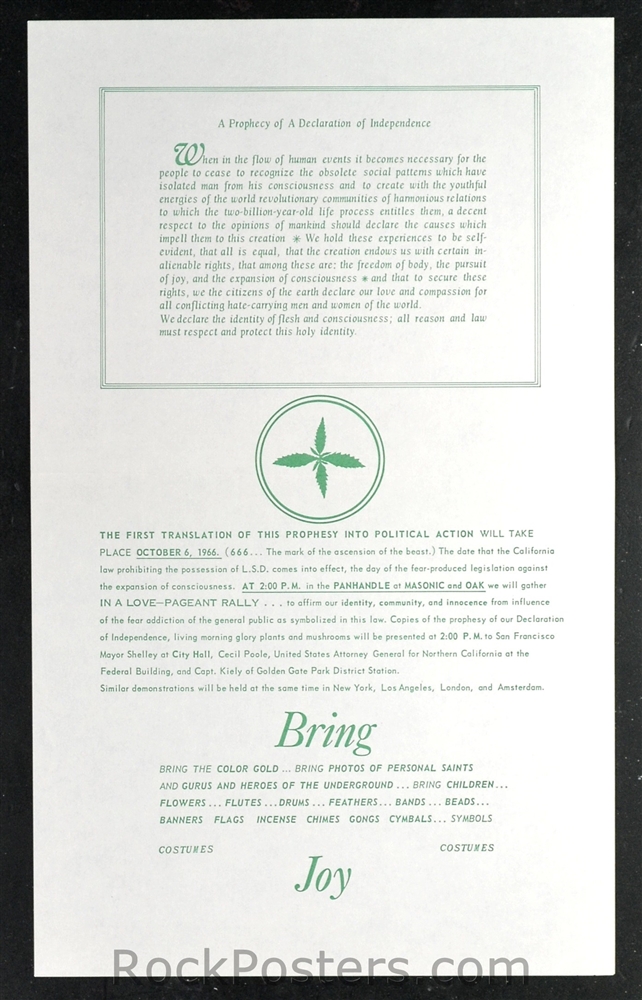
Handbill circulated at The Love Pageant / Courtesy of Rock Posters Collectibles.


The first issue of The Oracle ran “A Prophecy of a Declaration of Independence” on its back page. It read, in part:


We hold these experiences to be self-evident, that all is equal, that the creation endows us with certain unalienable rights, that among these are: the freedom of body, the pursuit of joy, and the expansion of consciousness and that to secure these rights, we the citizens of earth declare our love and compassion for all conflicting hate-carrying men and women of the world. We declare the identity of flesh and consciousness; all reason and law must respect and protect this holy identity.


Like-minded people were asked to translate these beliefs into political action by congregating in Golden Gate Park to “mark the ascension of the beast” on October 6, 1966--the date that LSD was criminalized in California.


jj100515.jpg
Janis Joplin with Big Brother and the Holding Company in Golden Gate Park for the Love Pageant Rally / Courtesy of Janis Joplin Official Site


Between 1,000 to 3,000 people came to Golden Gate Park dressed in gold, bearing instruments, and holding photos of personal saints per The Oracle’s instruction. Participants heard The Grateful Dead perform “Wheel of Fortune” for the very first time; saw a soulful young singer named Janis Joplin play with her new band, Big Brother and the Holding Company; and heard Jerry Rubin and Diggers founder Emmett Grogan speak, among other counterculture notables. Bowen’s personal connections had packed the lineup. After the Love Pageant Rally was over, the conscious masses went to the Psychedelic Shop on Haight, where everything in the store was free in true Diggers fashion, and attended after-parties at The Avalon Ballroom and The Fillmore Auditorium.

bowen-haight-studio-11-227x317.jpg
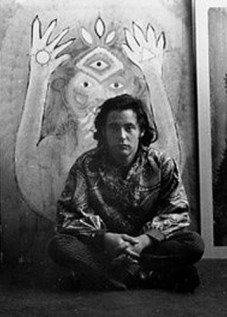
Michael Bowen, 1967 / Courtesy of Detroit Artists Workshop


Michael Bowen stood with Allen Cohen on a Panhandle path near Oak and Clayton streets, and they reveled in their success 50 years ago today. Seeing Richard Alpert walk by, Bowen yelled “Isn’t this far out? People are sure hungry for some communicating. They love it. It’s a joyous moment. What do you think, Alpert?” He agreed, and Cohen told Bowen he should do it again. “Yeah,” Bowen replied. “But next time, I’ll bet we could get ten times the people.” Cohen then asked Alpert what they should call their next rally, and Alpert said: “It’s a hell of a gathering. It’s just being. Humans being. Being together.”


“Well,” said Bowen, “we’ll just have another rally. Only bigger. And next time we bring all the tribes together.”

Flower_Power_by_Bernie_Boston.jpg
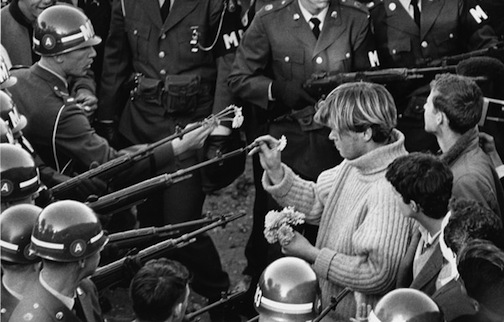
Flower Power, 1967, by Bernie Boston / Courtesy of Wikipedia


Michael Bowen wasn’t as vocal as many of his counterculture brethren, but his impact was equally as visible. Bringing the tribes together was Bowen’s natural talent, and his work as an organizer of the faithful only began with the Love Pageant Rally. His next gathering, The Human Be-In certainly was bigger and was, indeed, a gathering of the tribes...but check back here for more on that later, in the New Year. By 1967, Bowen had graduated from rallies in Golden Gate Park to anti-war marches on the Pentagon in Washington, D.C. That October, he arranged for 200 pounds of daisies to be dropped by aircraft on the Pentagon in the ultimate display of Flower Power as a protest of America’s presence in Vietnam. When that aircraft was preemptively seized by the FBI, Bowen instructed protesters to distribute them on the ground by hand. In that moment, as protesters fought guns with Gerber daisies, photojournalist Bernie Boston took what would become one of the most iconic photos of the 20th-century--transporting Bowen’s aesthetic intuitions far beyond the fields of San Francisco in the process.

---

* The first two photos in this post were taken by Susan Elting Hillyard. The first features a rare image of the Grateful Dead playing at the Love Pageant Rally, with Jerry Garcia on the left. The second, never before shown publicly, shows the Dead, along with rising Avalon Ballroom rock promoter and Texas friend-of-Janis Joplin, Chet Helms, in the background. 

Hillyard remembers taking the day well. "I was having fun taking photo," she notes.! I think it was at that event that Roger (my husband) got arrested for also taking photos of the cops. He was using my camera so when they were putting him in the cop car, I went over and asked if I could have my camera back and they gave it to me, thereby losing all evidence of what he was doing and being arrested for!"

----

By Nicole Meldahl

Sources not hyperlinked in text:

Tuesday, October 4, 2016

New River, Los Angeles

H. B. Wesner, Untitled [New River, Los Angeles], c. 1890, California Historical Society, CHS2016_2069
By Shelly Kale
In the late nineteenth century, San Bernardino-based Henry B. Wesner (1853–1932) photographed the effects of floods in the region. This image in his “Views of Southern California Scenery” series shows severed telegraph wires, felled steel beams, floating vegetation, and flooded railroad tracks—evidence of the destruction caused by flash floods common to the Los Angeles area during this period.1
Wesner’s image captures the dynamic quality of a river during flash floods. His eye-level perspective suggests the river’s momentum as it accommodates new waters in a seemingly peaceful wave.2
Photographs of floods would naturally have interested California’s first state engineer William Hammond Hall (1846–1934), who added this image to his collection, which was subsequently donated to the California Historical Society in 1951.3
Upon his appointment as state engineer in 1878, Hall began a systematic and far-reaching study of the state’s use of water and complex natural water systems. In 1880, he created the first integrated, comprehensive flood control plan for the Sacramento Valley.
Throughout his tenure, which ended in 1889, Hall attempted to revise California’s antiquated water laws and design a comprehensive water system. As Kevin Starr observes, Hall’s “envisionings” were an outgrowth of his work designing San Francisco’s Golden Gate Park (1871–76), through which he imagined “California as irrigated parkland ready for productive use.”4
While we don’t know Hall’s specific connection with Wesner’s photograph, his collection at the California Historical Society includes records of irrigation projects in southern California. These are the basis for his 1888 account of the irrigation works in Los Angeles, San Bernardino, and San Diego counties, Irrigation in California (Southern), which included a description of Los Angeles County’s “New River” and “Old River.”5
The nomenclature refers to the effects of heavy rains in 1867–68 on the San Gabriel River—a tributary to the Los Angeles River from 1825 to 1867. As explained in a 2007 historical ecology study, the storms caused “the most violent and dramatic change in the river since Europeans had begun to occupy southern California; a break in the a logjam in the canyon above Whittier Narrows sent a rush of water with such velocity that it changed the course of the river.” 6 During these storms, in which nearly fifty inches of rain fell over a thirty- to forty-day period, most of the flow migrated east and was called the “New River.”
Between 1884 and 1912, the New River changed course several times. Wesner’s photograph was likely taken during this period. In late December 1889, flash floods caused by regional storms caused several railroad tracks and bridges to wash away, including “a broken bridge over the New river.”7
Flood control was one of Hall’s key proposals to the state, along with the establishment of irrigation districts and regulation of the state’s water supply. However, Hall was ultimately unsuccessful in convincing the legislature to bring about these goals, and the state abandoned its water planning efforts in 1893. “Had the legislature accepted Hall’s proposals,” notes historian Donald Pisani, “California would have enjoyed the most advanced code of water laws in the arid West.”8
As Kevin Starr reflects, “A complex man . . . neither a pure public servant nor a pure entrepreneur, William Hammond Hall nevertheless achieved the first consistent act of foundational thinking regarding the future California might have through water. In this act of water prophecy, Hall made an enduring contribution.”9

NOTES
The author thanks Richard D. Thompson and Alison Moore of the California Historical Society for their help with sources and astute observations.
1.     According to a flood table prepared by the United States Weather Bureau, forty-one floods occurred in the Los Angeles vicinity from 1878 to 1914; H. D. McGlashan and F. C. Ebert, Southern California Floods of January, 1916 (Washington, DC: Government Printing Office), 40.
2.     According to the January 1982 San Bernardino Courier, “Mr. Wesner has one of the finest photo studios in southern California” (reproduced in Richard D. Thompson, Library News June 2013, City of San Bernardino Historical and Pioneer Society). A partner with his brother Michael in Wesner Brothers Imperial Photographic Parlor, established in 1884, the adventurous Wesner also traveled throughout the region in the Wesner Brothers Photographic Car, established in 1880 (Carl Mautz, Biographies of Western Photographers: A Reference Guide to Photographers Working in the 19th Century American West [Nevada City, CA: Carl Mautz Publishing, 1997)], 153). In 1893, for example, he roamed the county in search of “all the most interesting objects” for an album to be displayed at the California Midwinter International Exposition of 1894 (“News of the Studio,” Pacific Coast Photographer 2, no. 9 [October 1893], 406). Eight feet high and 4 feet square, the album was commissioned in recognition of “the value of photography as a means of conveying knowledge of view scenery” (“California Photography: It Renders Quite a Service to the State at the World’s Fair,” Pacific Coast Photographer 2, no. 1 [February 1893], 406). According to local newspapers, by April 1896 Wesner had “grown weary of photography business” (San Bernardino Daily Sun, April 23, 1896), closed his studio (San Bernardino Daily Sun, May 16, 1896), and left for Appleton, Illinois (San Bernardino Daily Sun, June 2, 1896). On a return trip to San Bernardino in the spring of 1920, he noted the changes that occurred in San Bernardino from the perspective of his new and prosperous life as a Midwestern farmer: “The changes that have come in San Bernardino since I was here indicate that we have not had all the prosperity in Illinois” (San Bernardino Daily Sun, April 12, 1920).
3.     William Hammond Hall Papers, 1878–1914, MSS 913, 914, 915 [hereafter cited as Hall Papers], California Historical Society, San Francisco.
4.     For an account of Hall’s career, see Donald J. Pisani, From the Family Farm to Agribusiness: The Irrigation Crusade in California and the West, 1850–1931 (Berkeley: University of California Press, 1984), 154–190. Kevin Starr, Material Dreams: Southern California Through the 1920s (New York/Oxford: Oxford University Press, 1990), 8.
5.     Irrigation in Southern California, c. 1888, box 4, folder 35, and Irrigation Projects in Southern CA, no date (L.A., San Diego, San Bernardino), box 4, folder 37, Hall Papers. William Hammond Hall, Irrigation in California (Southern): The Field, Water-supply, and Works, Organization and Operation in San Diego, San Bernardino, and Los Angeles Counties: The Second Part of the Report of the State Engineer of California on Irrigation and the Irrigation Question (Sacramento, CA: State Office, 1888), 575601.
6.     Eric D. Stein et al., Historical Ecology and Landscape Change of the San Gabriel River and Floodplain (Southern California Coastal Research Project Technical Report #499, February 2007), 13, 47. The authors quote a 1915 interview that describes a first-person account of the flood, including this episode: “He [Henry Roberts] found a dead grizzly bear out in the center of the pile of logs after he had been hauling logs from the pile quite awhile. The skeleton of the bear and hide was all there, and he said it looked as if it had been caught in the flood, and tried to save himself by riding the drift wood.” (p. 13).
7.     Stein et al., Historical Ecology, 47. “Storm Effects: Several Railroad Bridges Washed Away,” Los Angeles Herald, December 26, 1889.
8.     Pisani, From the Family Farm to Agribusiness, 178, 185.
9.     Starr, Material Dreams, 13.
Shelly Kale is Publications and Strategic Projects Manager at the California Historical Society. Formerly Managing Editor of California History from 2007 to 2013, she has held editorial and administrative positions in academic, museum, educational, electronic, and trade and mass-market publishing.
______________________________________________________________________________
This article originally appeared in Spotlight, a feature of the California History journal (Vol. 93, #1), published by the University of California Press in association with the California Historical Society. Conceived by former journal editor and historian Janet Fireman as a last-page photographic feature that itself would evoke a lasting image for journal’s readers, Spotlight draws from CHS’s vast and diverse collection of California photography and photographic history.
California History, Vol. 93, Number 1, pp. 64–66, ISSN 0162-2897, electronic ISSN 2327-1485. ©2016 by the Regents of the University of California. All rights reserved.
______________________________________________________________________________

To learn more about H. B. Wesner, read a biographical essay by Richard D. Thompson: http://californiahistoricalsociety.blogspot.com/2016/02/henry-beecher-wesner-18531932-san.html

Monday, October 3, 2016

¡Murales Rebeldes!: Contested Chicana/o Public Art

Remains of the East Los Streetscapers’ mural Filling Up on Ancient Energies (1981), and the wall on which it was painted, clutter 4th and Soto Streets in Boyle Heights, Los Angeles, on May 24, 1988. The mural was destroyed without notifying the artists.
In March, the J. Paul Getty Foundation awarded a grant to the California Historical Society in partnership with LA Plaza de Cultura y Artes of Los Angeles for an exhibition that will be part of “Pacific Standard Time: LA/LA.” This Getty initiative brings together over 40 museums and cultural institutions across Southern California. Through a series of exhibitions, publications, and programs, participating organizations will realize the goals of the project: to create a dialogue between Latin American and Latino art and Los Angeles.

In September 2017, CHS and LA Plaza will present ¡Murales Rebeldes!: Contested Chicana/o Public Art. The exhibition and companion publication will look at the ways in which Chicana/o murals in the greater Los Angeles area have been contested, challenged, censored, and even destroyed.

Why ¡Murales Rebeldes!: Contested Chicana/o Public Art?

Chicana/o murals often have been sites of controversy. The ways in which their creators provoke the dominant cultural norm and challenge the assumed historic narrative have often resulted in the desecration, whitewashing, or destruction of these works of art. Outright neglect and mistreatment of murals, as well as dismissal of their artistic and historical value, also threaten the survival of these works.

The exhibition will explore murals by Barbara Carrasco, Yriena Cervántez, Roberto Chávez, Ernesto de la Loza, East Los Streetscapers, Willie Herrón, and Sergio O’Cadiz. In this exhibition in the historic heart of Los Angeles, LA Plaza and CHS will examine the iconography, content, and artistic strategies of these key Los Angeles area Chicana/o murals that have made others uncomfortable to the point of provoking a contrary response. The exhibition will delve into the murals’ complicated creation and subsequent disturbing history of censorship. Through photography of the murals, preparatory sketches, related art works, and ephemera, the exhibition will tell the story of the mural from its genesis to its end.

A heavily illustrated companion publication of the same title—also released in September 2017 and published by Los Angeles publisher Angel City Press—will expand on the murals’ themes and controversies. With a foreword and afterword by Gustavo Arellano, publisher and editor of Orange County Weekly, and photographs by noted photographic journalist Oscar Castillo—many of them commissioned especially for this publication—the book will reach beyond a traditional exhibition catalogue to portray these murals as what co-curator Guiesela Latorre describes as “public platforms to protest against the injustices of institutionalized racism, including police brutality, educational inequality, inferior working conditions, and persisting colonial legacies.”

Barbara Carrasco’s massive L.A. History: A Mexican Perspective (1981) never made it to its designated location at 330 South Broadway in downtown Los Angeles due to its honest portrayal of Los Angeles’s history. Today it is in storage but will be brought to light again in the exhibition.

An investment company in Miami, Florida, could determine the fate of Willie Herrón’s The Wall That Cracked Open (1972). Painted in response to the violent stabbing of Herron’s brother in an alleyway, the mural has been conserved and cared for over the years by the artist himself.

Less than five years after its completion, Roberto Chávez’s The Path to Knowledge and the False University (1974–75) was completely obliterated by the college administration that had originally commissioned it.

Yreina Cervántez and Alma Lopez’s Huntington Beach mural Historia de Adentro/La Historia de Afuera, The History from Within/The History from Without (1995) was destroyed after years of graffiti and eventually painted out completely.

Sergio O’Cadiz’s mural (1975) was starved of resources after Fountain Valley officials who had commissioned it saw a panel showing police mistreating a Chicano youth. The mural was neglected, left to decay, and finally bulldozed by the city.


The complete disappearance of El Nuevo Mundo: Homage to the Workers (1997) (above) in Echo Park and the ongoing corrosion of his best known work, Resurrection of the Green Planet (1990–91) (below) in Boyle Heights tell the distinct yet interrelated stories of a disappeared and a disappearing mural, both embodying the death and near death of Chicana/o muralism.

¡Murales Rebeldes!: Contested Chicana/o Public Art opens on September 4, 2017, and will be on view through January 29, 2018, at LA Plaza de Cultura y Artes in downtown Los Angeles.

Stay tuned for updates on this exciting project!

Jessica Hough
Director of Exhibitions
jhough@calhist.org

Saturday, October 1, 2016

End of an Era: A California Daughter on Vin Scully


Vin Scully at Dodgers Stadium / Courtesy of ESPN.

If baseball is America’s national pastime, then veteran Dodgers announcer Vin Scully is the American Dream personified. He is so iconic that even the musician Ray Charles asked Bob Costas to introduce him to Scully after an interview in 1994. Today we will say goodbye to an internationally recognized sports broadcaster who feels like our kindly nextdoor neighbor. Fittingly, this last long goodbye will end during a Giants-Dodgers series just to prove that History often writes itself. The litany of tribute articles have been unanimously reverential, regaling us with the staggering career statistics of a living legend; more often than not, they’ve focused on authors’ personal stories because historic moments inspire remembrance, especially when we’re aware of their import in real-time. To this canon of compliments I’d like throw my own personal story into the mix, and thank you in advance for allowing a daughter the indulgence of remembering her father and the broadcaster that connected them. 

My Dad as a scrappy Pony League standout around age 14 in Arcadia, California c. 1963. / Courtesy of Nicole Meldahl
Baseball was a given in my house as a kid. My Dad, Bob Meldahl, was a local Pony League legend, and old-timers would often recount me with tales of his glory...as well as stories of his misspent youth; my father was a lovable rascal. He tried to carry that talent to the next level, and briefly played baseball at Pasadena City College (just like Dodgers great Jackie Robinson) before he was forced to unenroll due to residential zoning restrictions. Like many before him, my Dad put aside his sandlot dreams to build an adult life, and he did alright for himself: eventually becoming a notable jockey’s agent, representing Laffit Pincay, Jr., and buying a classic Southern California ranch home where he watched his family thrive. 
My childhood cat, BJ, using Dad’s hat as a headrest (much to his chagrin). / Courtesy of Jan Meldahl.
Through it all my Dad bled Dodgers Blue, even while my Mom and I pledged allegiances to the Anaheim Angels and the Atlanta Braves because of teenage crushes on Mickey Mantle and Chipper Jones, respectively. Much of my childhood was spent watching The Dodgers on KTLA or at Dodgers Stadium where my Dad seemed to know everyone because old-school Dodgers fans and stadium employees also played the ponies at Santa Anita Racetrack. When Dad got sick in 2009, we watched The Dodgers from his hospital bed as a family--my Mom, my Dad and me focused on the pitch count, thinking of the pennant race, and wishing for better times. Then, when we lost him in October of 2010, we placed a crisp new Dodgers baseball cap in his casket; ashes to ashes, dust to dust, my father was a Dodgers fan from the cradle to the grave.

The last time I set foot in Dodgers Stadium was with my Dad, but I didn’t stop listening to Dodgers broadcasts even after I did the Dodgerstown unthinkable and defected to San Francisco. Vin Scully was not only a touchstone of my childhood, he was a constant presence for my Dad’s entire life. Think about that: my Dad, a lifelong Dodgers fan born in 1949, never heard a Dodgers game that was not called by Vin Scully. A living link to the golden era of baseball, Vin Scully has been present for 87 of 94 World Series broadcasts, and has been a broadcasting participant in 22 of them. Managers moved on, owners gave up the ghost, and players peaked to become footnotes while one man sat in the Dodgers announcer’s booth (now named in his honor) for six decades. They just don’t make ‘em like Vin Scully anymore, nor do they make ‘em like my Dad.

Vin Scully, c. 1934. / Courtesy of Reddit user TheBrimic.
Vincent Edward Scully was born in the Bronx in November of 1927 to Irish immigrants Bridget “Bridie” (Freehill) Scully and Vincent Aloysius Scully. The Scully family lived in Washington Heights, and would take long walks on the Fordham Prep School campus Bridie dreamed her son could one-day attend. After her husband died of pneumonia in 1932, a grief-stricken Bridie took young Vin home to Ireland where she recovered amongst family. The pair returned to the United States, and Bridie married an English sailor named Allan Reeve who became a father-figure to Scully. To this happy family was born a daughter, Margaret, and just like that Scully became an older brother. He often recounts how he would crawl under the family’s radio with a plate of saltine crackers and a glass of milk to listen to college football broadcasts. With this in mind, he was certain of his answer to a school assignment asking students what they wanted to be when they grew older: Vin Scully was going to be a broadcaster.

During big moments in a game he listened to at home with his family, he would close his eyes and let the sound and resultant goosebumps wash over him. The effect that radio had on Scully cannot be underemphasized. NBC and CBS, networks with which Scully would later contract, were incorporated in 1926 and 1927, and the Radio Act of 1927 laid the foundations for the Federal Communications Commission (FCC). Modern broadcasting as a federally regulated service began the year Vin Scully was born. When put into this context, you can see how incredulous a parochial school boy’s desire to become a broadcaster really was. His ability to paint what he sees on the field and his penchant for dramatic pauses, essentially the things that make him an unrivaled announcer to this day, can be attributed to his origins in and love of radio.
Vin Scully with his Fordham baseball team, 1944. / Courtesy of Vin Scully.

At Fordham Preparatory School in 1940 and later at Fordham University in 1944, Scully played center field for the school’s baseball team, the Rams, but he really excelled off the field. He sang with a barbershop quartet called the Shaving Mugs, studied elocution, and performed in plays--learning the intricacies of public speaking and entertainment. Most importantly, he covered sports for the Prep’s newsletter, the Rampart, and stepped into broadcasting at WFUV, Fordham’s radio station. After graduation, he began applying to smaller-wattage radio stations in the area. He eventually found work as a summer substitute at WTOP in Washington, D.C., and was able to meet Red Barber, voice of the Brooklyn Dodgers, through CBS news director Ted Church. When CBS was short an announcer for College Football Roundup that Fall, Barber brought in Scully to call the Boston University-Maryland football game at Fenway Park. Scully nearly froze calling that game because he failed to bring an overcoat, thinking he’d be inside the booth, but his dedication paid off--he was sent to cover the Harvard-Yale game the following week.
Red Barber, Connie Desmond, and Vin Scully. / Courtesy of DodgersInsider.

When Ernie Harwell left the Brooklyn Dodgers broadcast team, Scully filled his seat alongside Red Barber and Connie Desmond in 1950--ironic for a self-professed New York Giants fan who came of age at the Polo Fields. He began calling himself Vin instead of Vince (because “Vince Scully” sounded too lispy), and learned from Barber’s folksy Mississippi style. Barber also taught him not to imitate other broadcasters, to find his own voice, and to keep his distance from the players in order to maintain his objectivity. By 1954, Barber had left and Desmond’s drinking had become problematic so Scully and Jerry Doggett were made primary announcers for the Brooklyn Dodgers.The next year he became the youngest person to broadcast a World Series game, calling the Dodgers’ first and only championship at Ebbets Field in Brooklyn in 1955. 

Vin Scully and Jerry Doggett, 1965 / Courtesy of the Los Angeles Dodgers via The New York Times.
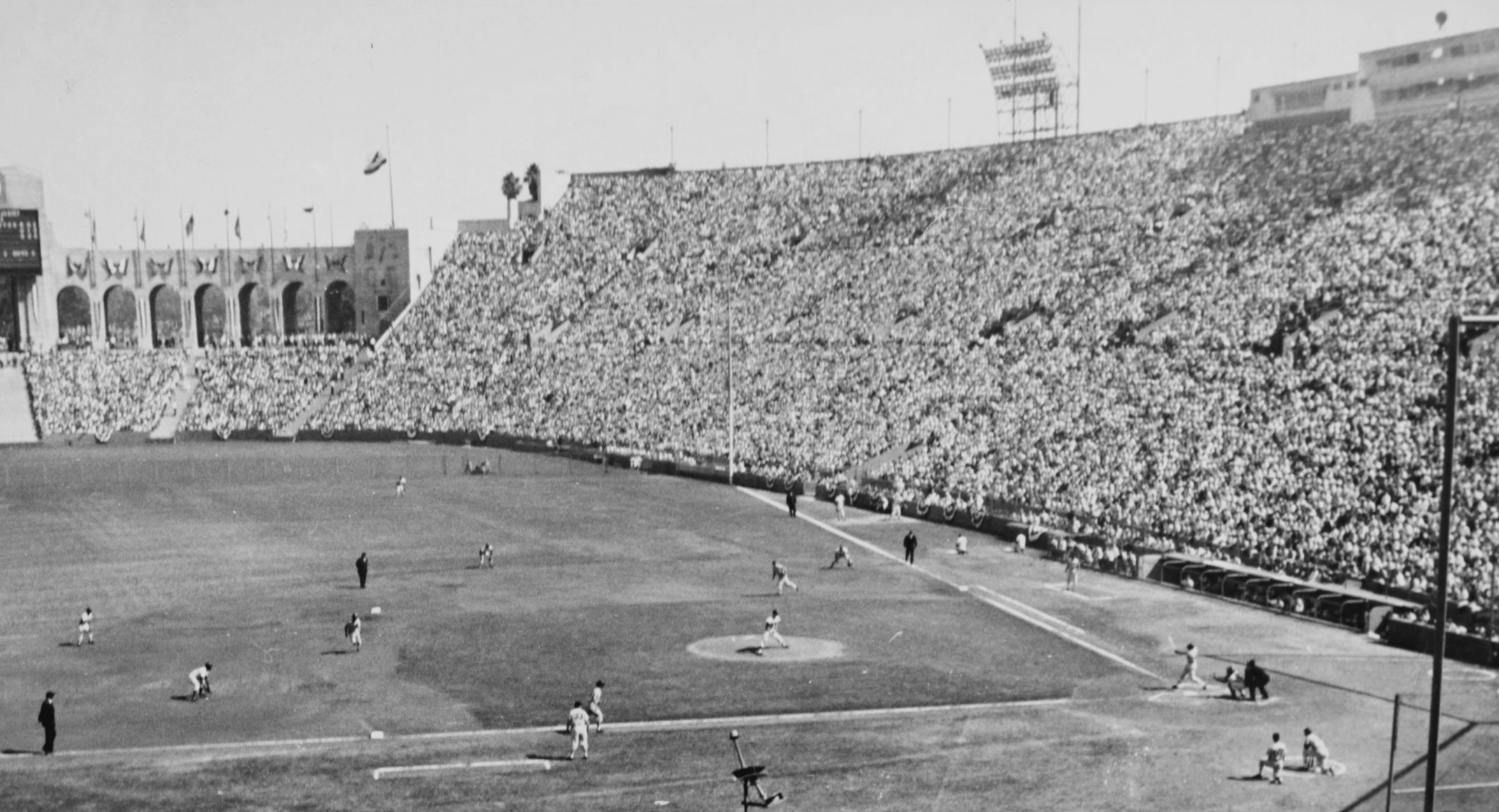
His career in Brooklyn was taking off, but Scully’s time in New York was about to come to an end. In 1956, Dodgers owner Walter O’Malley was frustrated by stalled negotiations with the City of Brooklyn over the construction of a new stadium. When the City of Los Angeles offered O’Malley land for purchase in the Chavez Ravine, as well as complete control over the stadium’s revenue, he decided to move his team to California. O’Malley also convinced New York Giants owner Horace Stoneham to move his team to the west coast, thus keeping intact a lucrative rivalry with roots in the 19th-century. Both teams went west after the 1957 season, much to the delight of Californians north and south, but the Dodgers’ stadium was still under construction so the team opened the 1958 season against the newly relocated San Francisco Giants in the Los Angeles Memorial Coliseum. Built for the 1932 Olympics, the Coliseum was a giant stadium not well-suited to watching baseball, but it became a boost to Scully’s popularity. 
1959 World Series at the Los Angeles Memorial Coliseum. / Courtesy of Wikipedia.
Vin Scully was determined to connect with his new base of Los Angeles listeners. He worked hard to highlight “rank and file” players, not just the superstars, by reading media guides, newspapers (local and from opponents’ hometowns), and magazines to find engaging stories--a process he calls “searching for seashells.” He has done this throughout his entire career, filing this information away in cabinets and using it to seed his conversational style. Luckily, the development of portable transistor radios enabled fans to bring Scully with them to the ballpark, and his narrative of the action compensated for their distance from the field of play. The same technology allowed Los Angeles residents to listen to Dodgers games in their backyards, at the beach, and in the car. Scully worked hard to craft content, and that content was disseminated not through television, which O’Malley was still hesitant to adopt, but through a cheaper, far more accessible, means of transmission. Once again, advancements in radio technology were perfectly timed to further Vin Scully’s career. 
Aerial view of Dodgers Stadium in the Chavez Ravine (detail), 1962. / California Historical Society at USC Special Collections.

And what a career it’s turned out to be. Since it opened in 1962, Vin Scully has been calling games in Dodgers Stadium, now the third-oldest in Major League Baseball. Danny Kaye immortalized him and the team’s rivalry with the Giants in song with “D.O.D.G.E.R.S.” that same year. He was earning more than most of the team’s players, and for good reason, by 1964. Scully is meticulous, a fact visible in his attire and seen in the phalanx of source materials at his desk in the announcer’s booth. Typically at his disposal are two media guides, home and away, stuffed with index cards filled with personally prepared notes. He has a blue pen to make corrections, a red pen for pitching changes, and a yellow highlighter for come-what-may. His pockets are filled with Jolly Rancher candies in case his throat gets dry, because liquids are a broadcaster’s worst enemy; baseball does not pause for bathroom breaks. Over the years, he’s developed a signature style now emulated in announcer’s booths around the world. He approaches announcing like a casual conversation, and treats listeners not like fanatics, or fans, but like his friends. 

“My idea is that I’m sitting next to the listener in the ballpark, and we’re just watching the game,” Scully said. “Sometimes, our conversation leaves the game. It might be a little bit about the weather we’re enduring or enjoying. It might be personal relationships which would involve a player. The game is just one long conversation and I’m anticipating that, and I will say things like ‘Did you know that?’ or ‘You’re probably wondering why.’ I’m really just conversing rather than just doing play-by-play.”

Kirk Gibson at the plate on that fateful 1988 World Series at-bat. / Courtesy of Yahoo Sports.
That personal style has narrated some of baseball’s most memorable moments, making them more iconic in the process. Perfect games by Don Larsen at Yankee Stadium in the 1956 World Series, and by Sandy Koufax against the Chicago Cubs in the 1965 World Series; Hank Aaron’s 715th career home run to surpass Babe Ruth’s record in 1974; Fernando Valenzuela’s no-hitter in 1990; Barry Bonds’ record-shattering home runs in 2001. If you ask him, Scully will tell you his trademark is knowing when to “shut up” and let the moment happen. The moment I remember most vividly was when I was only four-years-old, but when my Dad was a prime 39. It was Game 1 of the 1988 World Series at Dodgers Stadium. The Dodgers were playing the Oakland A’s, who were leading 4-3 when Kirk Gibson limped off the bench to pinch-hit with two outs in the 9th inning. After multiple foul balls, the count goes to three-and-two...and then a crack of the bat. “High fly ball into right field, she is gone,” Scully says before the mic goes silent for more than a minute. During this silence, Gibson hobbles round the bases, pumping his arm in exhausted ecstasy, and is swarmed by his teammates. Scully returns to say: “In a year that has been so improbable, the impossible has happened.” Obviously I was too young to actually remember that moment, but, growing up in Dodgerstown, I saw it replayed ad infinitum. Now, without listening to the audio, I can instinctively hear Scully’s inflections on “she is gone” because that moment doesn’t exist without his poignant, tenor commentary. I can also see my Dad pumping his arm like Kirk Gibson as he so often did when savoring a personal victory. This kind of flagrant celebration drove us all nuts, but, in hindsight, it was just my Dad identifying as an injured pinch-hitter making a clutch play against all odds. That’s the beauty of Vin Scully’s baseball: he enables us to see ourselves in the players, and identify with outcomes on the field.

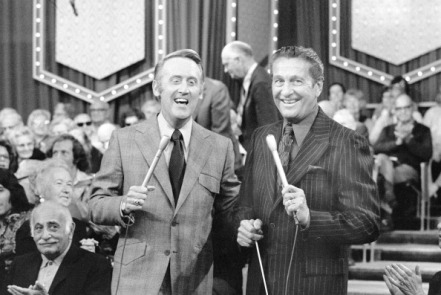
When Kirk Gibson launched that home run into the bleachers, it descended into Dodgers lore and brought Vin Scully along for the ride. He’s so synonymous with baseball because of moments like these that it’s hard to envision him outside the Dodgers announcer’s booth, but his career was not limited to one sport. From 1969-1970, he hosted a game show called It Takes Two, as well as a short-lived weekend afternoon variety show, appropriately called The Vin Scully Show, in 1973. He called play-by-play for NFL games and PGA Tour events for CBS from 1975-1982. I was surprised to learn that Vin Scully does not watch baseball games that he does not call, because he simply has too many other interests, like literature and Broadway musicals. Although still within the realm of baseball, he called World Series’ and All-Star Games, appeared in Kevin Costner’s For the Love of the Game, and provided voiceovers for a Playstation MLB game. 
The iconic broadcaster as host of The Vin Scully Show, 1973. / Courtesy of CBS Photo Archive.
Vin Scully is beloved personally and professionally because of his work ethic, his moral compass, and his humility in addition to what he believes is his God-given talent. He has an impressive list of awards to his credit, and California has rightfully recognized him as one of its own. He has been named California Sportscaster of the Year over 20 times. In 2008, he was inducted into the California Sports Hall of Fame, and, that same year, a bronze plaque was installed by the Los Angeles Memorial Coliseum Commission in Memorial Court which reads: “The games are ephemeral, the scores are forgotten, the players come and go, but the emotions endure, and the contributions of Vincent Edward Scully to Los Angeles will last forever.” This year, Dodgers Stadium’s main entrance street was renamed Vin Scully Avenue from Elysian Park Avenue so that future generations will always associate him with the Chavez Ravine, even if his voice no longer echoes within it. Despite these accolades, Scully has remained remarkably humble; he said: “All my career, all I have ever really done, all I ever have accomplished, is to talk about the accomplishments of others. We can’t all be heroes. Somebody has to stand on the curb and applaud as the parade goes by.”
My Dad’s last Dodgers cap, which now hangs in the entryway of my apartment. / Courtesy of Nicole Meldahl.
I came of age under the distant but watchful eye of Vin Scully, as did the generation before me. Dependable commonalities like Dodgers dogs and Scully’s soothing tenor voice help unite us during times of economic uncertainty, political polarity, and worldwide humanitarian crises. California might be a vast expanse of competing cultures, but Vin Scully is a piece of California history everyone can agree on--even Giants fans; he is the tie that binds. It’s truly hard to imagine baseball without him, and I’d bet it’s hard for Scully to imagine himself without baseball. My Dad fills the room every time I hear Vin Scully call a baseball game; I treasure him for that, because that feeling is fleeting, it’s precious. The further we get from my Dad’s life the less lifelike he becomes, but tangible connections to the time we had with him, like Scully, stay the unending process of grief...even if it’s only for nine innings. Similarly, the job that Scully has executed to perfection for so long helped him through the tragic deaths of his first wife and his son. At his first game back following the dismal 1994-1995 strike season, Scully said: “After being away, I’ve come to the realization that I need you more than you need me.” With all do respect, Mr. Scully, you’re wrong; the truth is we’ve needed each other equally all these years. Thank you for allowing us to pull up a chair.
Vin Scully at in his announcer’s booth at Dodgers Stadium, September 25, 2016. / Photo by Chris Carlson, AP via El Paso Times.
Vin Scully’s final call will happen today at 12:05 PST. KNBR and CSN Bay Area will air his broadcast of the 3rd inning so Giants fans can be distant witnesses to history. Otherwise, Dodgers friends in Los Angeles can watch the broadcast on KTLA or listen on AM 570. Those of us outside the region can listen through iHeartRadio or something similar. 


By Nicole Meldahl

Sources not hyperlinked in text: