Redirect to CHS blog

Showing posts with label The Grateful Dead. Show all posts

Thursday, October 6, 2016

Hungry for Communication: The Love Pageant Rally & Michael Bowen


The Grateful Dead playing at the Love Pageant Rally - Photo by Susan Elting Hillyard*

The Summer of Love, known for the nearly 100,000 young people who converged on the Haight Ashbury neighborhood of San Francisco in the Spring and Summer of 1967 may have actually started 50 years ago today on October 6, 1966. As many of the original Haight-Ashbury hippies like to claim, the Summer of Love was the Summer and Fall of 1966. And the Love Pageant rally was a major reason why.
On this day half a century ago, somewhere between 1,000 and 3,000 (estimates continue to vary!) young people swarmed into the Panhandle of Golden Gate Park two blocks North of Haight Street for the “Love Pageant Rally.” The crowds were encouraged to gather in the Panhandle that day by the leaders of the new San Francisco Oracle newspaper to mark the day that the State of California made LSD illegal. The event was a seminal moment for the hippie counterculture that was growing in the neighborhood and directly led to the massive and transformative Human Be-In that took place in Golden Gate Park three months later.
The date (10/6/66) was deliberately chosen as the “666” in the date was meant to conjure the number of the beast in the Book of Revelation. Instead of a standard protest, however, the editors of the Oracle, wanted a ‘celebration of innocence, beauty of the universe…beauty of being.”
The larger-than-expected crowd who attended that day listened to free music provided by the Grateful Dead (see image above) and Big Brother and the Holding Company featuring Janis Joplin (recently brought back to San Francisco by her friend Chet Helms, see image below). Ken Kesey attended the event along with the Merry Pranksters and their famous colorful. “Furthur Bus.” (See video below). The celebration, at the time, was almost certainly the largest free outdoor rock concert in history.
Towards the end of the event, one of the Love Pageant Rally organizers, Beat era poet Michael Bowen, made a chance remark about the power of human beings. That remark soon became a call for “The Human Be-In” that took place in Golden Gate Park a few months later on January 14, 1967. That event,  which drew some 30,000 people to the park's Polo Grounds, and the media’s coverage of it, is widely recognized with creating the nationwide interest in converging on San Francisco in the months to come, thus creating the Summer of Love during the Spring and Summer of 1967.

The Grateful Dead playing at the Love Pageant Rally, with Chet Helms looking on. Photo by Susan Elting Hillyard*

______________________________________________________________________________________________
Read more below about Michael Bowen and the Love Pageant Rally

Watch. This. Video (from the Center for Home Movies)! Anything look familiar? The 1960s resonate with contemporary students of history because the time is imminently relatable. It’s highly likely that you will walk by hip kids in San Francisco (or other cities) dressed similarly if not identically to those in the video you (hopefully) just watched. Like those immortalized in celluloid above, American Millennials are also engaged in meaning-making that differs from the previous generation; we’ve inherited less than we’ve been promised, and we’re making due with what we have. Our politicians feel feckless, our soldiers are overseas, and we’re left at home making sense of it all. So we rely on each other within a sharing economy, we socialize in new forums fueled by innovative technologies, and we read blogs that proliferate from the will of the people.

35182_3.jpg
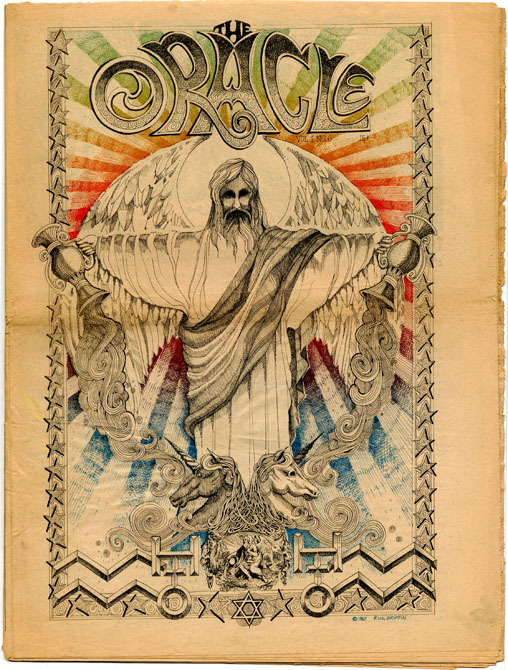
Cohen and Bowen’s San Francisco Oracle / Courtesy of Beat Books


Those blogs owe their existence in part to Allen Cohen’s rainbow dream, the San Francisco Oracle. Cohen’s counterculture commentary motivated many in the 1960s to 'tune in, turn on, and drop out,' but Michael Bowen supplied the radical aesthetics that made the San Francisco Oracle an unrivaled Bay Area leader. Cohen, a native New Yorker, claimed California as his home, but Bowen belonged to the world despite his Beverly Hills birthright. There would have been no Love Pageant Rally without Michael Bowen, and without the Love Pageant there many never have been a Summer of Love and The Oracle would have been much less stimulating.  


15-bowen-ayala-in-front-of-cafe-trieste-bw.jpg
Roberto Ayala and Michael Bowen in front of Caffe Trieste in North Beach. / Courtesy of Princeton By The Sea Memories

Michael Bowen was born on December 8, 1937 to society dentist Sterling Bowen and his wife, Grace. His grandmother, Alma Porter, introduced Bowen to metaphysics and modern art as a practicing member of the Theosophical Society in Ojai, California. His mother’s alleged lover, Benjamin (Bugsy) Siegel introduced him to the Vegas Strip and the Sir Francis Drake Hotel in San Francisco. He attended Chouinard Art School and studied with Los Angeles artist Ed Kienholz, working alongside notable artists such as John Altoon at the Ferus and Now Galleries. He moved to San Francisco in the late 1950s, and joined the west coast contingent of the Beat Generation. Living and working from 72 Commercial Street, he befriended a Norwegian physician and arts patron named Reidar Wennesland who heavily collected Bowen’s work in addition to that of his friends; as a result, the North Beach art scene is now very well-represented in the Wennesland Foundation Collection in Kristiansand, Norway.


bowen-LOVEPosterWEB-300.jpg
Love, 1965 by Michael Bowen / Courtesy of Percepticon, San Francisco


Bowen left San Francisco in 1963 and moved into an old Abalone Factory in Princeton-by-the-Sea with a coterie of artists. After many months of painting and entertaining friends like Janis Joplin, he was deeply affected by Aztec spiritualism after traveling in Mexico, and eventually settled in New York City where he found a studio on the Lower East Side and mingled with counterculture heavy-hitters Timothy Leary, Ram Dass and Richard Alpert. He returned to San Francisco in 1966 with an impressive alternative rolodex, and opened a studio and ashram in the Haight-Ashbury district--San Francisco’s newest bohemian neighborhood. He co-founded The San Francisco Oracle with Allen Cohen, and moved the newspaper’s office into his Haight Street shop when he moved to Stinson Beach; there, he would act as host for the inaugural meeting for the Underground Press Syndicate (UPS).
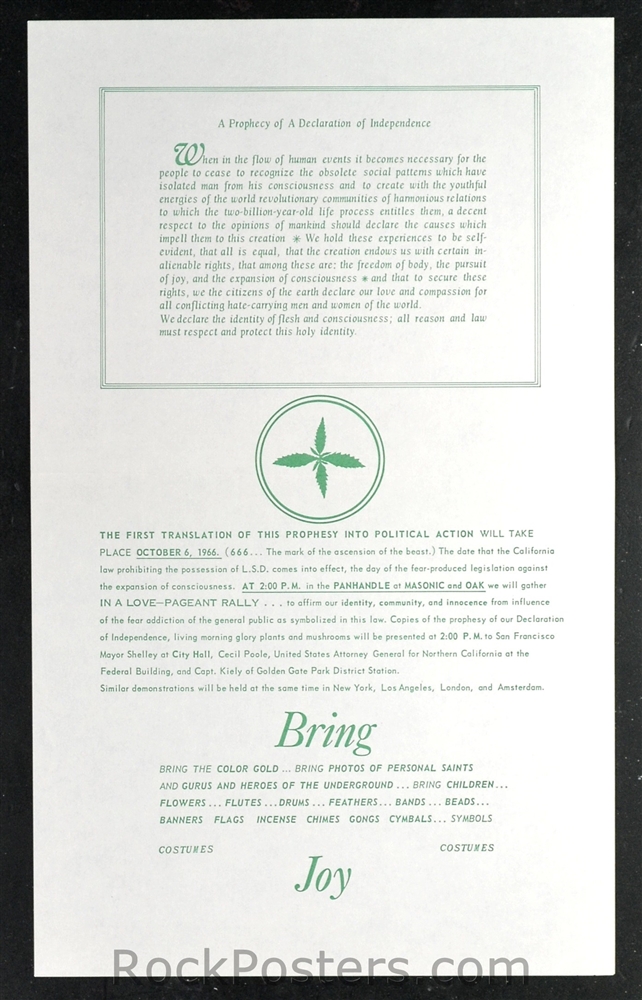

GDHB1-Handbill1.5-2.jpg
Handbill circulated at The Love Pageant / Courtesy of Rock Posters Collectibles.


The first issue of The Oracle ran “A Prophecy of a Declaration of Independence” on its back page. It read, in part:


We hold these experiences to be self-evident, that all is equal, that the creation endows us with certain unalienable rights, that among these are: the freedom of body, the pursuit of joy, and the expansion of consciousness and that to secure these rights, we the citizens of earth declare our love and compassion for all conflicting hate-carrying men and women of the world. We declare the identity of flesh and consciousness; all reason and law must respect and protect this holy identity.


Like-minded people were asked to translate these beliefs into political action by congregating in Golden Gate Park to “mark the ascension of the beast” on October 6, 1966--the date that LSD was criminalized in California.


jj100515.jpg
Janis Joplin with Big Brother and the Holding Company in Golden Gate Park for the Love Pageant Rally / Courtesy of Janis Joplin Official Site


Between 1,000 to 3,000 people came to Golden Gate Park dressed in gold, bearing instruments, and holding photos of personal saints per The Oracle’s instruction. Participants heard The Grateful Dead perform “Wheel of Fortune” for the very first time; saw a soulful young singer named Janis Joplin play with her new band, Big Brother and the Holding Company; and heard Jerry Rubin and Diggers founder Emmett Grogan speak, among other counterculture notables. Bowen’s personal connections had packed the lineup. After the Love Pageant Rally was over, the conscious masses went to the Psychedelic Shop on Haight, where everything in the store was free in true Diggers fashion, and attended after-parties at The Avalon Ballroom and The Fillmore Auditorium.

bowen-haight-studio-11-227x317.jpg
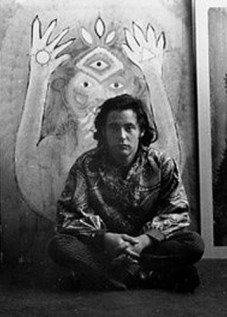
Michael Bowen, 1967 / Courtesy of Detroit Artists Workshop


Michael Bowen stood with Allen Cohen on a Panhandle path near Oak and Clayton streets, and they reveled in their success 50 years ago today. Seeing Richard Alpert walk by, Bowen yelled “Isn’t this far out? People are sure hungry for some communicating. They love it. It’s a joyous moment. What do you think, Alpert?” He agreed, and Cohen told Bowen he should do it again. “Yeah,” Bowen replied. “But next time, I’ll bet we could get ten times the people.” Cohen then asked Alpert what they should call their next rally, and Alpert said: “It’s a hell of a gathering. It’s just being. Humans being. Being together.”


“Well,” said Bowen, “we’ll just have another rally. Only bigger. And next time we bring all the tribes together.”
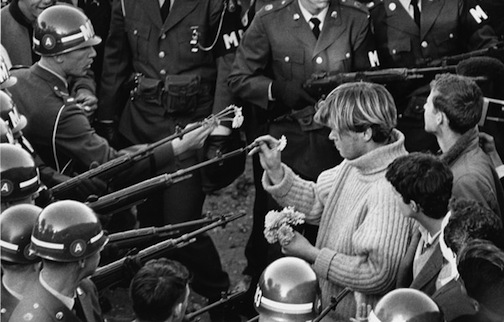

Flower_Power_by_Bernie_Boston.jpg
Flower Power, 1967, by Bernie Boston / Courtesy of Wikipedia


Michael Bowen wasn’t as vocal as many of his counterculture brethren, but his impact was equally as visible. Bringing the tribes together was Bowen’s natural talent, and his work as an organizer of the faithful only began with the Love Pageant Rally. His next gathering, The Human Be-In certainly was bigger and was, indeed, a gathering of the tribes...but check back here for more on that later, in the New Year. By 1967, Bowen had graduated from rallies in Golden Gate Park to anti-war marches on the Pentagon in Washington, D.C. That October, he arranged for 200 pounds of daisies to be dropped by aircraft on the Pentagon in the ultimate display of Flower Power as a protest of America’s presence in Vietnam. When that aircraft was preemptively seized by the FBI, Bowen instructed protesters to distribute them on the ground by hand. In that moment, as protesters fought guns with Gerber daisies, photojournalist Bernie Boston took what would become one of the most iconic photos of the 20th-century--transporting Bowen’s aesthetic intuitions far beyond the fields of San Francisco in the process.

---

* The first two photos in this post were taken by Susan Elting Hillyard. The first features a rare image of the Grateful Dead playing at the Love Pageant Rally, with Jerry Garcia on the left. The second, never before shown publicly, shows the Dead, along with rising Avalon Ballroom rock promoter and Texas friend-of-Janis Joplin, Chet Helms, in the background. 

Hillyard remembers taking the day well. "I was having fun taking photo," she notes.! I think it was at that event that Roger (my husband) got arrested for also taking photos of the cops. He was using my camera so when they were putting him in the cop car, I went over and asked if I could have my camera back and they gave it to me, thereby losing all evidence of what he was doing and being arrested for!"

----

By Nicole Meldahl

Sources not hyperlinked in text:

Friday, September 16, 2016

Stanley Mouse and the Making of an Icon

dt.common.streams.StreamServer.cls.jpeg


Prepare yourselves to see a lot of Stanley Mouse's work during the forthcoming 50th Anniversary of the Summer of Love. This notable 1960s artist will be well-represented in exhibitions all over the Bay Area and beyond in 2017, but do you know the story behind this legend’s most iconic work, displayed 50 years ago this very evening?


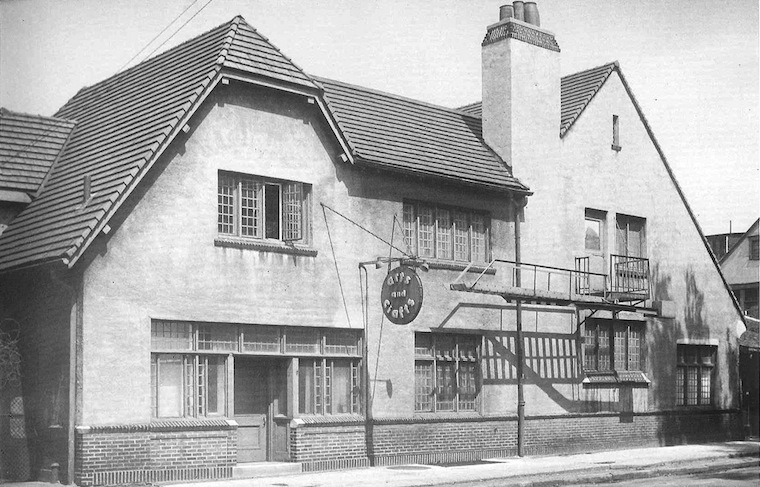
Born Stanley George Miller in California in 1940, this son of a Disney animator spent his formative years in Detroit, Michigan absorbing the city’s Motown and Motor City cultures. He was a quiet kid who often drew in class, earning him the nickname of “Mouse” in seventh grade, and his first taste of fame came from Detroit’s hot rod community, which was wild for his signature “Mouse pin-striping.” This led to T-shirts, and graffiti art, the latter of which prompted his expulsion from Mackenzie High School. He spent a year at Cooley High School, and then finished up at the Art School of the Detroit Society of Arts and Crafts—known nationally as the school that recognized the automobile as an artform.

Arts_and_Crafts.jpg


According to Mouse’s biography, “he dropped out to follow a higher calling to do rock posters in San Francisco during the sixties wartime era of social revolution, political passion and musical innovation.” His return to California in 1965 sent his art on a new trip. There he met Alton Kelley, then affiliated with The Family Dog, and the pair began producing rock posters for Chet Helms shows at the Avalon Ballroom. Mouse liked working with other artists—a penchant he refers to as one of his “Libra traits”—and this began a collaboration that would last into the 1980s.


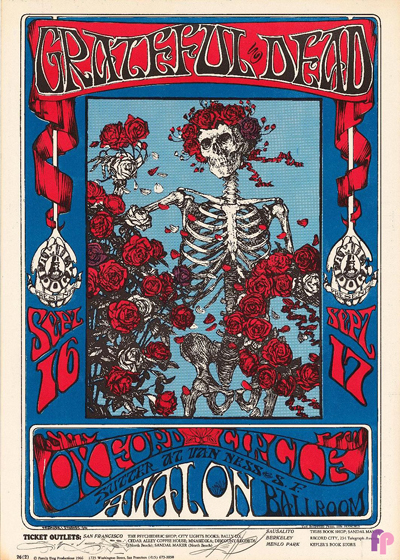
630ac26895ac9c0126fc045a43f60ae0.jpgMouse’s hand, trained from years of t-shirt designing and hot rod striping, and his love of Art Nouveau combined well with Kelley’s of-the-moment style and keen eye for layouts. The two most-remembered Mouse and Kelley collaborations are counterculture complimentary: a play on the ZigZag man familiar to denizens of cigarette rolling papers, and a poster for one of the most famous rock ‘n’ roll acts of all-time. In 1966, the pair were commissioned to make a poster for a show featuring The Grateful Dead. For this band they’d never heard of, Mouse and Kelley first designed a sheet that incorrectly spelled the band’s name as “Greatful Dead;’ for their second attempt, they went to the San Francisco Public Library for inspiration. Mouse recalled: “We would go to the San Francisco library and peruse the books on poster art. They had a back room full of books you couldn’t take out with great references. We were just going through and looking for something. And found this thing and thought, ‘This says Grateful Dead all over it.’” What Mouse found was The Rubaiyat of Omar Khayyam.


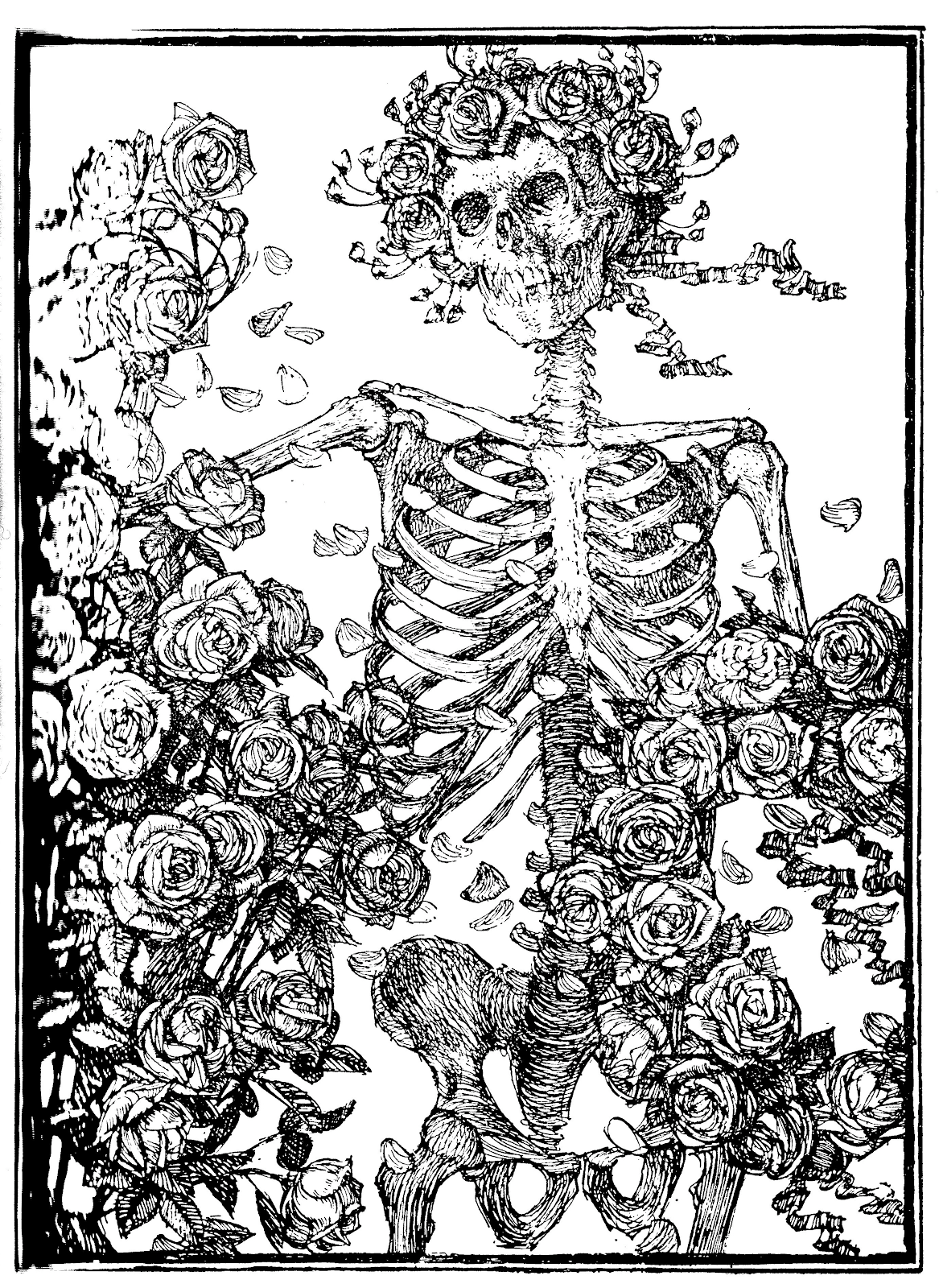
Omar Khayyam was a Persian poet, mathematician and astronomer who lived from 1048-1131, and a rubaiyat is a form of poetry (a quatrain rhyme)—hence The Rubaiyat of Omar Khayyam. The translation best known to English-speakers and found by Mouse and Kelley was done by Edward FitzGerald and illustrated by Edmund Joseph Sullivan, with five editions published from 1859 to 1889 that were more interpretive than they were literal. Mouse was particularly drawn to a Sullivan illustration that accompanied Verse 26, and couldn’t leave it behind. “I hate to say this,” Mouse recalled, “but Kelley cut it out with a pen knife. I always say that we Xeroxed it, but there weren’t Xerox machines then. I finally found it about two years ago, the actual cut-out piece, and I went, ‘Oh, my God’... And the poem that goes with this illustration is fantastic. It’s short and sweet and had to do with wine, women and song.” A perfect match for The Grateful Dead sound.


Kelley appropriated the black-and-white Sullivan illustration, and Mouse colored it in. The resulting poster advertised The Dead’s Avalon Ballroom show with Oxford Circle, September 16-17, 1966, and cemented Mouse and Kelley’s presence in San Francisco’s rock poster scene.


The verse that accompanied the poster’s inspiration was ripe with symbolism for artists marketing to Flower Children. “Oh, come with old Khayyam, and leave the Wise / To Talk; one thing is certain, that Life flies; / One this is certain, and the Rest is Lise; / The Flower that once was blown for ever dies.” Although Mouse’s interpretation of the verse’s meaning might be as liberal as FitzGerald’s “transmogrification” of Khayyam’s original quatrains, it does make a great story and the poster hit its mark—becoming an everlasting icon for both Mouse and the band it advertised.
Stanley Mouse continues to create and sell art through Mouse Studios, and The Dead (or what remains of The Dead) are miraculously still touring. As for this visual piece of rock history, it continues to be appropriated by local apparel manufacturers who shall not be named, and, more importantly, will be given a prominent place in the de Young Museum’s Summer of Love exhibition coming in April of 2017. Be sure not to miss it.

By Nicole Meldahl

Sources not previously linked:

Friday, January 16, 2015

Mojo Navigator Rock & Roll News


The wild going-ons of San Francisco’s psych rock scene were recorded in the West Coast’s first rock & roll magazine Mojo Navigator R&R News. Its premier issue, published by teenagers David Harris and Greg Shaw on August 8, 1966, includes a colophon stating the Mojo Publishing Company, at 2707 McAllister Street, San Francisco, would publish weekly. The mimeographed, stapled zine did not stick too closely to this arduous weekly schedule - presumably its young editors were busy attending the many musical performances, light shows, be-ins and happenings that Mojo Navigator covered in its gossip and events columns. Instead, only fourteen issues were published beginning in August of 1966 and ceasing sometime in 1967. But these fourteen issues included interviews with bands that would come to be known as seminal rock & roll artists, and the short-lived zine would be considered a major influence for the creation and publication of Rolling Stone magazine.  

Harris and Shaw attended high school together in a Bay Area suburb. Harris had been a rock & roll fan, listening to Berkeley’s KPFA Midnight Special radio show, which featured local artists such as The Grateful Dead and Janis Joplin playing live music and attending shows at the Longshoreman’s Hall, the Avalon Ballroom and the Fillmore Auditorium. Shaw was more interested in print – writing and publishing two fanzines. The first, Entmoot, was devoted to the writings of J.R.R. Tolkien, and the second, a sci-fi fanzine called Freemwlort. What Shaw might have lacked in knowledge of the San Francisco rock & roll scene, he more than made up for with his zine making skills, including a keen talent for stenciling and being particularly handy with the mimeograph machine.  

  Young Greg Shaw at his mimeograph machine.

Courtesy rockandrollreport.com/book-review-bomp-saving-the-world-one-record-at-a-time/

Just out of high school, Harris, Shaw, and Geoff Evans, Mojo Navigator’s art director, moved to McAllister Street, nearby Golden Gate Park’s Panhandle, where the Diggers distributed free food to any person who was hungry and held rallies and happenings for the hippies that proliferated in the Haight neighborhood. From their apartment, Harris and Shaw began work on the first issue of Mojo Navigator R&R News. Published Tuesday, August 8, 1966, the typed, four-paged zine contained gossip and news about Bay Area artists such as Jefferson Airplane, Big Brother and the Holding Company and R&B artists such as Howlin’ Wolf and Bo Diddley; Shaw’s record reviews of The Peter, Paul and Mary Album (“Don’t expect much from this record if you do buy it”) and the Byrds Fifth Dimension (“every song is flavored strongly with originality and performed flawlessly”); and a special report on radio DJ Wolf Man Jack, based out of Chula Vista, California, who could be heard in the Bay Area on XERB 1090 from 9 pm to 3 am. One hundred copies of the inaugural issue were printed and made available in local stores, such as Cosmo’s Grocery Store, the Psychedelic Shop and City Lights Bookstore.

As Mojo Navigator’s popularity grew so too did its print runs and distribution. The burgeoning San Francisco rock & roll scene created a fan base that yearned for a smart, hip and in-the-know music magazine that featured news and criticisms about the bands they were listening to. The teen magazines such as Teenbeat and 16 wouldn’t touch the long-haired, drugged out, heavy guitar bands, instead still focusing on teenybopper pop and American Bandstand hit makers. Music journalist Mick Farren noted: “A new and serious breed of rock fan required a publication that could be trusted to clue them in on all that was happening as original music – from A to Z, from The Animals to Frank Zappa – poured from every creative orifice....  An embryonic rock magazine would need to have the grit of the street and a delinquent iconoclasm.”

Short on the heels of the publication of East Coast writer Paul Williams’ Crawdaddy - the earliest rock & roll fanzine - Mojo Navigator R&R News provided its San Francisco Bay Area readers with reviews, gossip, and interviews with bands producing the acid-infused, psychedelic sounds of the local scene, while also keeping its hip readers in the loop about happenings such as the San Francisco Calliope Company’s dance parties and the Diggers' Love Pageant Rally, where participants gathered together to ingest LSD on October 6, 1966. Farren notes that Mojo Navigator’s writing was “smart, and yet still manage[d] to retain the disturbed and disturbing subversion of the street.” 


During Mojo Navigator’s just-over-one-year, fourteen issue run, Harris and Shaw managed to interview the heavyweights of  rock & roll, publishing possibly the first interview with the Grateful Dead in August and September of 1966 (before the release of their self-titled first album in 1967); and interviews with Big Brother and the Holding Co., Country Joe and the Fish, and the Doors. The magazine ceased publication in 1967, not before providing a major influence to fellow San Franciscan Jann Wenner, who began publication of Rolling Stone magazine in November of 1967.

In 1970 Greg Shaw introduced Who Put the Bomp in response to the "mainstream" music press. The magazine published the early writings of rock music journalists Lester Bangs, Greil Marcus and Richard Meltzer, and grew into an independent record label, BOMP!, with the 1974 release of the San Francisco-based band Flamin' Groovies' single "You Tore Me Down." BOMP! Records has released innumerable influential artists in the garage, punk and power pop genres. The label continues today under the guidance of Suzy Shaw, ex-wife and life-long friend and partner to Greg, after his death in 2004. 

The California Historical Society holds four of the fourteen issues of Mojo Navigator R&R News, including the rare first issue, and the issues featuring the two part interview with the Grateful Dead. We will be featuring our holdings of Mojo Navigator R&R News, along with other rock & roll ephemera and posters from the CHS vaults in an open house as part of our program Creating a Lasting Cultural Community: The 50th Anniversary of the Grateful Dead, featuring author Dennis McNally, Grateful Dead archivist Nicholas Meriweather and Peter Richardson, author of No Simple Highway: A Cultural History of the Grateful Dead, on Thursday, January 22, from 5:30 to 8:00 pm. Vault materials will be available for viewing in our library from 5:30 to 6:00, so be sure to get there early to check them out! Grab your ticket for the event here!

Works cited: 
Shaw, Suzy and Mick Farren. BOMP! Saving the World One Record at a Time. American Modern Books, 2007.

Jaime Henderson
Archivist