Redirect to CHS blog

Showing posts with label California Indians. Show all posts

Monday, April 1, 2019

Railroads Public Programs Preview: 5 Not-to-Miss Exhibition Related Events at CHS


With each new exhibition comes a flurry of public programs designed to help guests dive deeply into the core concepts within them.  Each exhibition provides new opportunities for conversation and interaction between our audiences and our organization, the exhibitions, and each other.  In order to better understand the final programmatic product let’s go back a bit and share how we design our exhibition-related public programs.

Around six to eight months before an exhibition opens, departments from across CHS sit down and discuss the exhibition and its core concepts. The curator(s) will present on the conceptual framework, key themes, and topics. Staff have the opportunity to pose questions as well as provide suggestions and insights. The Public Program Manager (me) then begins drafting program ideas to present to curators in a follow-up meeting. During that follow-up meeting, drafted ideas begin to harden and afterward I am able to begin reaching out to speakers and partners, further developing those ideas based on what the speakers’ expertise is and how they envision their place within the event. The collaborations between partners, speakers, and CHS staff are integral to the vibrant final product.

On March 21st, we opened two complimentary exhibitions, Mark Ruwedel: Westward the Course of Empire and Overland to California: Commemorating the Transcontinental Railroad. Below is a brief rundown of some of our upcoming exhibition-related programs. We hope that you mark them on your calendar, as they are not to be missed!

Thursday, April 4th, 6:00PM
Empire’s Tracks: Indigenous Nations, Chinese Workers, and the California Railroad

Professor of American Studies at Barnard University, Manu Karuka, will present on his new book Empire’s Tracks while focusing on indigenous experiences in relation to the transcontinental railroad. He and Professor of American Indian Studies at San Francisco State University, Joanne Barker (Lenape), will be in conversation about indigenous history and counter sovereignty. A book signing will close the event. Learn more.


Thursday, April 18, 6:00PM
Chinese and Chinese American Genealogies and the California Railroads
&
Wednesday, July 24, 6:00PM
Labor Strikes and Fights and the Transcontinental Railroad

In 1969, during the 100th anniversary of the transcontinental railroad, Chinese American communities and descendants of railroad workers felt a disconnect and articulated that there was a lack of focus on their ancestors’ history and contributions. This year, during the railroad’s 150th anniversary, organizations and individuals from across California will be highlighting the important contributions of Chinese and Chinese Americans to the building and maintenance of the railroads.

CHS will be hosting several events to honor this important history, the first being on April 18th with presentations by Al Cheng, Grant Din, Sue Lee, and Paulette Liang. They will focus on how and why Chinese and Chinese Americans are seeking to find their connection to this work, examples of individuals who have found genealogical connections, as well as those who have sought out but did not find a connection. Learn more.


The second event will be held July 24th and focuses on key labor battles which involved Chinese railroad workers, including the historic eight-day strike in 1867. Gordon Chang and Lawrence Shoup will present on this event and other important labor battles in celebration of Laborfest, which occurs each July.

Wednesday, May 15th, 6:00PM
Exploring the Gilded Age in California and its Reverberations Today

On May 15th we will explore the Gilded Age in California and its relationship to the Big Four, labor, and the railroads. How has the Gilded Age influenced what California is today? Learn more with moderator, William Frances Deverell (USC), panelists Richard White (Stanford), Margarite Shaffer (Miami University), Barbara Berglund Sokolov (Presidio Historian), and Jack Kelly (historian and author of Edge of Anarchy). Learn more. 


Thursday, June 27th, 6:00PM
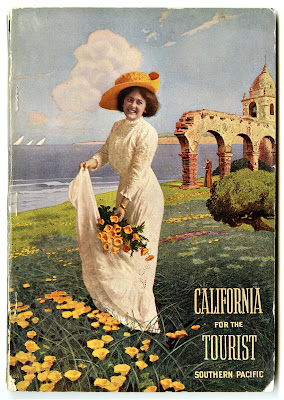
Women and Their Role on the Rails

On June 27th, we explore the role women played (or did not play) in the railroads. How did imagery of wealthy white women tell a particular story about the railroad? How were women of color and people of color generally excluded from the transportation system? Professor Amy Richter of Clark University and Julia H. Lee of U.C. Irvine will present on these questions and be available to discuss other related topics after their presentations. Learn more.


As we move deeper into the summer we will add additional programs, so continue to follow our Society Happenings e-newsletter and check out our online calendar at my.californiahistoricalsociety.org for more information.

--

Written by Patty Pforte, Programs & Visitor Experience Manager at CHS. 

Friday, November 25, 2016

Modoc Chief Kintpuash (Captain Jack): A California Indian Hero


Modoc Chief Kintpuash (“Captain Jack”) in 1864
Creative Commons 
As Native American Heritage Month draws to a close, so, too, do our related exhibitions, Sensational Portrayals of the Modoc War, 1872–73 and Native Portraits: Contemporary Tintypes by Ed Drew. The Modoc War connects these two shows: one features the intense interest the war created throughout the United States and the other displays contemporary portraits of native peoples of the Klamath region—some of them descendants of those who fought in the war.

This blog post commemorates a hero of the Modoc War, Kintpuash, known as Captain Jack (1837–1873). In 1872–73, this Modoc resistance leader led his people from the confines of the Klamath Indian Reservation back to their homeland to fight for the right to live as free people on their ancestral land in the Tule Lake area of northern California.


Klamath Indian Reservation, 1879
US Bureau of Reclamation, Klamath Basin Office

The Klamath Indian Reservation had its beginnings in the Treaty of 1864, in which the Klamath, Modoc, and Yahooskin peoples agreed to live together as what was referred to as the “Klamath Tribe” on a reservation in the Klamath Basin of southern Oregon. In exchange for their land—almost 20 million acres—they would be provided necessary provisions on land about one-tenth the size.


Klamath and Modoc Territories and Subgroups in the 19th Century with Modern Town Locations
Courtesy College of the Siskiyous

In the annals of the militarization of the West in the nineteenth century, many promises were made by the federal government, and many were not honored. For one band of Modoc Indians living in the Klamath Reservation the arrangement became untenable.

After a number of years without help and provisions, and under the leadership of Kintpuash with Jim Schonchin, a small group of Modoc men and their families left the reservation and returned to their ancestral lands in today’s Lava Beds National Monument in northern California. Federal troops attempted to push them back to the reservation. As Indian Commissioner Thomas J. Morgan, acknowledged about the government’s long-standing policy, “The Indians must conform to ‘the white man’s ways,’ peaceably if they will, forcibly if they must.” But the Modocs refused to abandon their homeland.

Louis H. Heller, Modoc Leaders Jim Schonchin and Captain Jack, 1873
California Historical Society

Louis H. Heller, Captain Jack’s Family, 1873
California Historical Society

War erupted in November 1872 between the Modocs—about 55 men and their families—and the United States Army. The volcanic landscape of the 47,000-acre lava beds (called the Land of Burnt Out Fires), with its nearly 700 caves, became a natural fortress that the Modocs reinforced to give them an upper hand in battles.


Eadweard Muybridge, The Lava Beds, 1872–73
California Historical Society

In January 1873, as U.S. troops from Fort Vancouver and Fort Klamath pressed the first major assault on Captain Jack’s Stronghold (the Modoc fortress), fog rolled in from nearby Tule Lake, blinding the soldiers as they inched across the rocky terrain. The Modocs moved unseen through lava tubes, killing or wounding dozens of soldiers from below while suffering no casualties of their own.

For about six months, the Modocs successfully fought off U.S. troops, capturing the attention and imagination of people across the country, many of whom were sympathetic to the Modocs for humanitarian reasons.

Captain Jack himself became somewhat of a folk hero. He was then “a man of 30 years of age, a man of square mold, 5 feet, 10 inches in height—a royal-blooded man of more than common heritage,” observed Col. Alfred B. Meacham of the Bureau of Indian Affairs.

According to the May 30, 1873, issue of the New York Times, “Each mail brings also to camp an extensive correspondence for Capt. Jack . . . . One wishes Jack to come there and scalp the fellow who wants to win his girl away from him, another assures him he will get plenty of volunteers if he comes to his village, still again he is congratulated on his heroism and told to go on and conquer.”

But the adulation was short-lived. On April 11, 1873, the Army and Modocs held a peace commission. In his bid for a settlement, Captain Jack requested a reservation of 6 square miles on the lava beds. Indians could live there, he reasoned, white men couldn’t. When it became clear that the two sides would not come to terms, Captain Jack opened fire and a battle ensued, resulting in the deaths of General Edward R. S. Canby—the only U.S. general lost in an Indian conflict—and Reverend Eleazer Thomas.

With the tide now turned against the Modocs, the government renewed its attempts to drive the Modocs out of the lava beds. Joined by 70 Warm Springs Indian scouts, 675 U.S. soldiers with four batteries of artillery besieged Captain Jack’s Stronghold for two days, but as few as eight Modoc men continued to fend them off.


Eadweard Muybridge, Warm Springs Indian Scouts in Camp, 1872–73
California Historical Society

Add captioEadweard Muybridge, The Modoc Stronghold after Its Capture, 1872–73
California Historical Society

 
The Modocs were nevertheless driven from their advantageous position. A loss of morale led several men to desert Captain Jack and help the forces hunting him. It was not until the first of June, a remarkable six months after the conflict began, that Captain Jack and his closest allies finally surrendered. They were brought to Fort Klamath, where they were sentenced to death for the murders of General Canby and Reverend Thomas.

Fort Klamath Graves of Boston Charley, Black Jim, John [Schonchin] Schonchiss, and Captain Jack, Executed October 3, 1873
Courtesy Huntington Library, San Marino, California


Shelly Kale
Publications and Strategic Projects Manager


Sources
Boyd Cothran, Remembering the Modoc War: Redemptive Violence and the Making of American Innocence (Chapel Hill: The University of North Carolina Press)
Cheewa James, The Tribe That Wouldn’t Die (Happy Camp, CA: Naturegraph Publishers, 2008)
The Oregon Experience: The Modoc War, documentary, Oregon Public Broadcasting and the Oregon Historical Society; http://www.californiaindianeducation.org/famous_indian_chiefs/captain_jack/  
Jeff C. Riddle, The Indian History of the Modoc War; http://www.archive.org/details/indianhistoryofm00riddrich
______________________________________________________________________________

Closing Soon!


Sunday, November 20, 2016

Native American Heritage Month: Occupying Alcatraz (1969–71)

Aerial View of Alcatraz Island during Indian Occupation, Teepee at Center, 1971
Courtesy National Archives, San Bruno
This month, the California Historical Society honors Native American Heritage Month with a look at the nearly 19-month-long Indian occupation of Alcatraz and the enduring outcome that came to fruition 40 years later. Through imagery and the voices of those who were there, we revisit this event, a defining moment in the Native American civil rights movement.
On November 20, 1969, a group of American Indians successfully breached a Coast Guard blockade and made landfall on Alcatraz Island, shut down by the government six years earlier. The group, which called itself Indians of All Tribes (IOAT) claimed the land by “right of discovery,” and, some said, earlier treaties between Indians and the federal government. Previous attempts to claim Alcatraz in 1964 and the spring of 1969 had led to the Coast Guard blockade.

American Indians Arriving on Alcatraz Island, 1969
Photograph by Vincent Maggiora, San Francisco Chronicle Collection
California Historical Society
"We hold The Rock" 
Richard Oakes, Mohawk, Occupation Leader
Issues around land—its meaning, the rights to it, and the abrogation of those rights—are frequently at the heart of modern land claims, as evidenced by current protests over the oil pipeline near North Dakota’s Standing Rock Sioux tribal lands. One hundred years before the occupation of Alcatraz, the Modoc War of 1872–73 in far northern California presaged the later occupation with a similar claim to native lands and a months-long standoff between the native peoples of the Klamath Basin area and the federal government. The site is now memorialized as part of the Lava Beds National Monument.

John Trudell, Spokesperson, American Indian Occupation of Alcatraz Island, August 1970
Photograph by Barney Peterson, San Francisco Chronicle Collection,
California Historical Society
“If you wanted to make it in America as an Indian, you had to become a hollow person and let them remold you. . . . Alcatraz put me back into my community and helped me remember
who I am. It was a rekindling of the spirit.”
John Trudell, Santee Sioux
At times during the occupation of Alcatraz, there were reportedly hundreds of members of more than 20 tribes on the island. The occupation focused worldwide attention on the ongoing grievances of American Indians and gained support from national celebrities, local residents, labor unions, and other organizations that helped supply the occupiers with food and medical supplies.

American Indian Woman and Child, Alcatraz Island, November 1969
Photograph by Dave Randolph, San Francisco Chronicle Collection,
California Historical Society
 “It was idealistic, and the generosity of the spirit of the people proved that we could change anything. People on the island were very strong about freedom of speech, freedom of dissent.
I saw the importance of dissent in government."
Wilma Mankiller, Cherokee Nation
Delivering Food, American Indian Occupation of Alcatraz Island, November 1969
Photograph by Vincent Maggiora, San Francisco Chronicle collection
California Historical Society
We're Indians, all of us, and we belong on Alcatraz. Indians never had prisons—yet here, in this white man's prison, we have found freedom for the first time.”
La Nada Means, Shoshone Bannock
By 1971 conditions on the island, which had been challenging from the start, deteriorated to the point where, on June 10, armed federal agents stepped in and removed the dozen or so people who remained. In 1972 the island became a national historic site as part of the Golden Gate National Recreation Area.
Coast Guard Protecting American Indian Property, November 1969
Photograph by Vincent Maggiora, San Francisco Chronicle Collection, 
California Historical Society
"The occupation of Alcatraz exceeded our wildest dreams. It caused major changes in government policies toward Indians."
Adam Fortunate Eagle Nordwall, Chippewa
FBI and GSA Officers Reassert Federal Ownership of Alcatraz Island, June 11, 1971
Photograph by Vincent Maggiora, San Francisco Chronicle Collection, 
California Historical Society
"It’s easy to pass off the Alcatraz event as largely symbolic, but the truth is the spirit and dream of Alcatraz never died, it simply found its way to other fights.”
Benjamin Bratt, Actor and Alcatraz Occupier (tribe?)
In the aftermath of the occupation, federal policies toward Native Americans changed. Many tribal lands were returned. Native American activism continued, such as the occupation of Wounded Knee (1973). Of more enduring impact, in 2011 “We Are Still Here,” a permanent multimedia exhibition documenting the occupation, opened in the Alcatraz cellblock basement. The exhibition satisfies one of the demands of the occupiers: to establish a cultural center on the island.

“We Are Still Here,” 2011
Courtesy Richard Oaks Multicultural Center
“This exhibit is going to allow us to tell our story behind it. It’s going to allow us to express ourselves in a way that America hasn’t heard our voice. It’s going to give to a lot of tribes that have lost their ways and touch with their own culture, because of assimilation, lack of the language.”
Frankie Rivera, Navajo
Entrance, “We Are Still Here” Exhibition, 2011
Courtesy, San Francisco State News; photo by Philip M. Klasky
 “A lot of native kids don’t know the history of Alcatraz, they know a little bit about it, but they don’t know why we did it, and the reasons that we did it, and how it changed everything, how it started a whole new way of looking at yourself as an indigenous person.”
Michael Horse, Yaqui/Mescalero Apache

The exhibition, which opened on November 20, 2011, was produced by students and faculty at San Francisco State and California State University East Bay. It was esigned to mark the occupation that began on the same day of 1969.  In addition to the exhibition, signs of the occupation are still visible to visitors of Alcratraz today.

Alison Moore
Strategic Initiatives Liaison

Shelly Kale
Publications and Strategic Projects Manager

Sources
Alex Arbuckle, “When Native American activists took control of Alcatraz for 18 months”; http://www.aol.com/article/news/2016/11/14/when-native-american-activists-took-control-of-alcatraz-for-18-m/21605574/

“Exhibit on historic 1969–71 occupation of Alcatraz Island Opens,” San Francisco State News; http://news.sfsu.edu/exhibit-historic-1969-71-occupation-alcatraz-island-opens

Meredith May, “American Indians get permanent exhibit at Alcatraz,” San Francisco Chronicle, Nov. 21, 2011; http://www.sfgate.com/bayarea/article/American-Indians-get-permanent-exhibit-at-Alcatraz-2288648.php

National Native American Heritage Month (2016); http://nativeamericanheritagemonth.gov/

National Park Service, Alcatraz Island, “We Hold the Rock”; https://www.nps.gov/alca/learn/historyculture/we-hold-the-rock.htm

National Park Service, Lava Beds National Monument, “The Modoc War”; https://www.nps.gov/labe/learn/historyculture/index.htm

Lulu Orozco, “Alcatraz Exhibit Highlights Native American History, Golden Gate Express, May 1, 2014; http://goldengatexpress.org/2013/05/01/we-are-still-here/

San Francisco State University, Bay Area Television Archive, “Occupation and Ownership of Alcatraz Island”; https://diva.sfsu.edu/collections/sfbatv/bundles/18779

Malia Wollan, “Antigovernment Graffiti Restored, Courtesy of Government,” New York Times, Dec. 24, 2012; http://www.nytimes.com/2012/12/25/us/alcatraz-american-indian-occupation-graffiti-preserved.html

______________________________________________________________________________

Now on View at the California Historical Society


Two exhibitions about Native Americans bridge the past and present:

Native Portraits: Contemporary Tintypes by Ed Drew features portraits of members of the Klamath, Modoc, and Pit River Paiute tribes, some of them descendants of Modoc War survivors.

A selection of Modoc War images by Eadweard J. Muybridge and Louis H. Heller from the California Historical Society collection are some of the objects displayed in Sensationalist Portrayal of the Modoc War, 1872–73.


Friday, October 7, 2016

Modoc Ancestral Run: Celebrating Native Heritage at Lava Beds National Monument


Ed Drew, Modoc Ancestral Run, Lava Beds National Monument, 2014 by © Ed Drew

On October 8, relay runners will wend their way through seventy-five miles of traditional Modoc territory in what is today Lava Beds National Monument. This will be the fifth annual Modoc Ancestral Run, a grassroots event designed to draw people of Modoc and Pitt River ancestry closer to their heritage and to one another. 
The run takes place on land where a small band of Modoc Indians led by a man known as Captain Jack (Kintpuash) made a six-month-long stand against U.S. Government forces through the winter of 1872–73. The Modocs had been living on a reservation in southern Oregon, but conditions there deteriorated and they returned to their homeland on the Lost River near the California-Oregon border. When federal troops attempted to push them back to the reservation, and the Modocs refused, war erupted. A group of about sixty Modoc men and their families retreated to their traditional site of refuge in the lava beds, which became the scene of a series of battles, nearly all of which the Modocs won, despite being outnumbered and out-gunned, by using the landscape to their advantage. 

Eadweard Muybridge, The Lava Beds, 1873
California Historical Society
This 1873 stereograph by Eadweard Muybridge (1830–1904) of the lava beds at Tule Lake on the California-Oregon border shows the topography that was home to a small band of Modoc Indians during the Modoc War—the only major U.S./Indian conflict in present-day California.

For contemporary Modocs, and for descendants of other tribes, the protracted confrontation in the lava beds stands today as a potent example of Indian resistance to the forces of colonization. It is also a powerful symbol of the resilience of their people. The Modoc Ancestral Run honors the bravery and fortitude of those who fought in the Modoc War, and the generations that suffered in its aftermath, but it is also speaks to the vitality of native people today. 


Louis H. Heller, Schonchin and Jack, 1873
California Historical Society
The portraits of imprisoned Modoc warriors by Louis H. Heller (1839–1928)—the first photographer to arrive at the lava beds—were originally published as engravings in Harper’s Weekly in June 1873 as engravings based on his photographs.

Participants will spend the weekend camping at nearby Indian Wells Campground. The run itself will begin Saturday at sunrise and continue through the day. For many of the participants—including tribal elders as well as young children—the weekend spent in the elements and the long relay through the unforgiving terrain of the lava beds will be arduous. This test of endurance will be a sacrifice, but one that connects participants to both the past and to one another.


(Above) Eadweard Muybridge, Gillem’s Camp, Tule Lake, Camp South, from Signal Station, 1873
California Historical Society
(Below) Gillem’s Bluff Bordering the Tule Lake Basin Today, 2013
Courtesy of National Park Service

(Below) Ed Drew, Charlene, 2014
Courtesy of the artist


Erin Garcia
Managing Curator of Exhibitions


_________________________________________________________________________

Read more about the Modocs and the Modoc War

Boyd Cothran, Remembering the Modoc War: Redemptive Violence and the Making of American Innocence (Chapel Hill: The University of North Carolina Press, 2014)

Cheewa James, Modoc: The Tribe That Wouldn’t Die (Happy Camp, CA: Naturegraph Publishers, 2008)

Peter Palmquist, “Imagemakers of the Modoc War: Louis Heller and Eadweard Muybridge,” Journal of California Anthropology 4, no. 2 (1977)

Jeff C. Riddle, The Indian History of the Modoc War and the Causes That Led to It (San Francisco: Marnell & Company, 1914)
_________________________________________________________________________

Now on View at the California Historical Society


Two exhibitions of Native Americans bridge the past and present.http://www.californiahistoricalsociety.org/exhibitions/current_exhibitions.

Native Portraits: Contemporary Tintypes by Ed Drew features portraits of members of the Klamath, Modoc, and Pit River Paiute tribes, some of them descendants of Modoc War survivors. A selection of Modoc War images by Eadweard J. Muybridge and Louis H. Heller from the California Historical Society collection are some of the objects displayed in Sensationalist Portrayal of the Modoc War, 1872–73.