Redirect to CHS blog

Wednesday, January 9, 2013

An Evening with Deborah Miranda, author of Bad Indians

Thursday, January 17, 2013, 6:00pm

Reservations are required
Free event at the California Historical Society
678 Mission Street
San Francisco


Join us for an evening with author Deborah Miranda. Her book,Bad Indians, part tribal history, part lyric and intimate memoir. Deborah A. Miranda tells stories of her Ohlone Costanoan Esselen family as well as the experience of California Indians as a whole through oral histories, newspaper clippings, anthropological recordings, personal reflections, and poems. The result is a work of literary art that is wise, angry, and playful all at once, a compilation that will break your heart and teach you to see the world anew. Deborah A. Miranda is an enrolled member of the Ohlone Costanoan Esselen Nation of California, and is also of Chumash and Jewish ancestry. The author of two poetry collections—Indian Cartography, which won the Diane Decorah Award for First Book from the Native Writer’s Circle of the Americas, and The Zen of La Llorona, nominated for the Lambda Literary Award—she also has a collection of essays, The Hidden Stories of Isabel Meadows and Other California Indian Lacunae, forthcoming from the University of Nebraska Press. Miranda is an associate professor of English at Washington and Lee University and says reading lists for her students include as many books by “bad Indians” as possible.

RSVP at mirandaatchs.eventbrite.com and we'll see you there! 

Thursday, January 3, 2013

100 Years of Rural California in Print


Saturday, January 12, 2013, Timed entry at 1:30pm, 2:15pm, 3pm, 3:45pm, reservations required
$5 general admission (includes gallery admission), Free for California Historical Society members


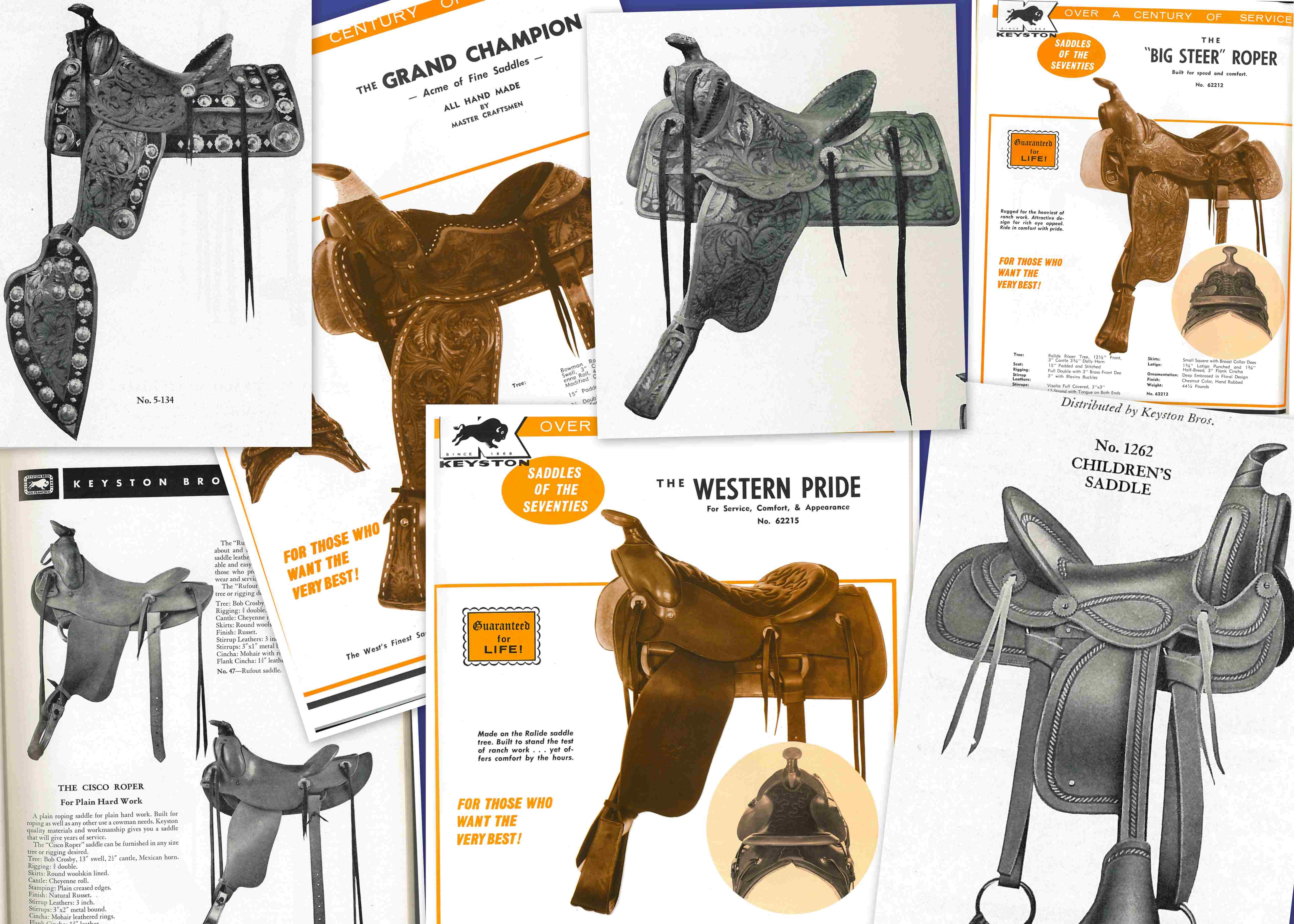
Join us for a special afternoon in the library of the California Historical Society where you will have the opportunity to hold history in your hands. Our archivists and librarians will gather an array of printed materials from the Collection – including commercial catalogs for farm implements, tack and saddlery, and seeds and nursery stock, as well as books, pamphlets, periodicals, and printed ephemera from counties, businesses, and organizations throughout the state that document various aspects of life in rural California – and make them available on tables in the library for visitors to look at up close. This event organized in connection with our ongoing exhibition I See Beauty in This Life: A Photographer Looks at 100 Years of Rural Californiahelps to expand upon our understanding, and image, of rural California over the past 100 years. Due to the delicate nature of the material, reservations are required and can be made at ruralcaliforniainprint.eventbrite.com.

Wednesday, December 19, 2012

California Wine Association Records, 1894-1936


Lackman & Jacobi business card, circa 1885, California Business Ephemera Collection.

With our vast viticultural districts and varied regional climates, California is known as an exceptional place to grow wine. Lesser known, however, is that the history of the state’s early wine production is largely connected to the history of the California Wine Association (1894-1936). With this in mind, the California Historical Society is pleased to announce that the California Wine Association records have been reprocessed with a finding aid available on the Online Archive of California.

The 1890s were a turning point for viticulture in California. The State’s wine industry was in a seemingly perilous position. California’s 200,000 acres of vineyard were overproductive, the country was in the middle of a depression, and California wines were sold cheaply without much regard to quality. In 1894, in an attempt to secure favorable options from grape growers and winemakers, and to raise prices and stimulate trade, seven leading wine firms joined together to form the California Wine Association. Their action, however, had an unintended consequence: winegrowers formed their own interest groups, which, in turn, led to the wine wars of the 1890s. In order to successfully negotiate grape and wine prices, the two factions came to agree upon standards for terms such as “hill grapes” and “valley grapes,” and stabilized the quality of California wine in the process. The C.W.A. would eventually control over eighty percent of wine manufactured in the State.

The California Wine Association records chronicle this fascinating history. Bound volumes of meeting minutes contain contract negotiations and correspondence between growers and firms, and document internal conflicts within the Association, responses to Prohibition, and, finally, the litigious dissolution of the Association itself.

The new guide to the collection can be found on the Online Archive of California at http://www.oac.cdlib.org/findaid/ark:/13030/tf667nb130

Megan Hickey Nespeco 
Library Volunteer

Thursday, December 13, 2012

I See Beauty in this Life Curator's Walkthrough


Thursday, December 13, 2012 (Timed entry, Reservation required)
Walk through our exhibition I See Beauty in this Life: A Photographer looks at 100 years of Rural California with curator Lisa M. Hamilton. She will give you insight into how she chose the historic images for the show from the extensive collections of the California Historical Society and share some of the stories behind her own photographs.
Over the past two years, writer and photographer Lisa M. Hamilton has been telling the stories of these rural communities in her multimedia work Real Rural. For this exhibition she has delved into the collections of the California Historical Society to connect these present-day stories with the past. Featuring roughly 150 photographs, I See Beauty in This Life is a combination of large-scale color prints by Hamilton and her selections from California Historical Society's vast photography collections—material dating from the 1880s through the mid-twentieth century, much of which has never been exhibited before. Led through CHS's vast collection of historic photographs by the Director of Library & Archives Mary Morganti, Hamilton has selected images that are not predictable views of pastoral windmills or heroic mule teams, but rather images that reflect her own keen interest in revealing the unexpected. Her approach to the Historical Society's collections is different from that of an historian in that her first priority was to choose images that are outstanding for aesthetic reasons. Taken by amateur and mostly unknown photographers, the photographs are remarkable for their beauty and unusual perspective. These press prints, snapshots, and publicity stills are also intimate records of struggle, celebration, community, and the endless work required to wrest a livelihood from the land. Together, they tell a complex—and sometimes humorous—story of the many different individual lives and landscapes comprising the vast mosaic that is the Golden State.

Friday, December 7, 2012

New CHS audio and film recordings digitized by the California Audiovisual Preservation Project (CAVPP)


Thanks to the California Audiovisual Preservation Project and the tireless efforts of Pamela Jean Vadakan, ten additional oral histories and two films have been digitized and are available freely on the Internet Archive:


These recordings include oral history interviews with California labor activists and printers, including Louise Lambert, Elaine Black Yoneda, and Amadeo R. Tommassini. The jewel in the crown, however, may be the beautifully digitized Tanker (pictured above), a 47-minute color film made for Marinship corporation in 1944 and 1945 documenting (and promoting) the Sausalito shipyard’s wartime operations. Tanker includes historic footage of shipyard workers, their newly built community in Marin City, spectacular launchings, shipbuilding processes and technologies, and a visit from Prince Faisal and other Saudi dignitaries.

Marie Silva
Archivist & Manuscripts Librarian

Thursday, November 29, 2012

Why the Richmond?


When people find out that I desire to live not in the Mission district or Hayes Valley, but someplace much further away—someplace that is cloudy every morning and evening—the first thing they ask is why?
The concern is understandable. Though, to understand why the Richmond District is so great you need to immerse yourself in its fascinating history.

Here are my primary reasons for living on the West side of San Francisco:

Number One:  Golden Gate Park.  A five minute walk takes me from my doorstep to a peaceful wooded oasis. Of course this cultural landscape didn’t come to be naturally. It took much work to transform the land from sand dunes into what is one of California’s most beloved and notorious outdoor spaces.
Before 1865, the area of Golden Gate Park, along with the Richmond and Sunset Districts, was known as Outside Lands. It was not part of the city of San Francisco for a reason: It was an undesirable and unruly landscape of sand dunes and scrub. Though, in order for San Francisco to satisfy its growing population Outside Lands was annexed in 1866.

Golden Gate Park, 1910

 In 1870 William Hammond Hill—field engineer and project commissioner—began working on the topographic map of the 1,017 acre park. By 1875 there were 60,000 trees planted, including the most notable Blue Gum Eucalyptus and Monterey Pine. Four additional years added another 155,000 trees.
Not only is the landscape architecture and the habitats it has nurtured beautifully luscious, there are also endless activities to enjoy in the park. The Encyclopedia of San Francisco eloquently states that many people visit the park, “but only a few know of all the rich nuggets that it harbors.” The big attractions consist of the Japanese Tea Gardens (presented for the California Midwinter International Exposition in 1894); San Francisco Botanical Garden (completed in 1937); De Young Museum (opened in 1921 and rebuilt after the 1989 Loma Prieta earthquake in 2005); the Academy of Sciences (established in 1853 and rebuilt in 2008); and my favorite—the rose garden (added in 1961). Golden Gate Park once had tremendous wildlife roaming its lands, including moose, caribou, antelope, zebras, elephants, kangaroos, ostriches and peacocks. In 1927 those animals were moved into the San Francisco Zoo, but the buffalo still remain!


The Conservatory of Flowers, 1910

The park also hosted tent refuge for thousands of misplaced people after the 1906 earthquake. By witnessing the open space Outside Lands provided, many of those citizens decided to remain and make a home for themselves. From then on the Sunset and Richmond district communities developed their distinct identities as we know them today.

Number Two: New Chinatown. Housed in the Inner Richmond, it is a San Francisco gem. Near 6th and Clement Street the neighborhood is filled with Chinese markets, restaurants and cafes. However it is not just a Chinese hub. The chances of finding Thai, Russian, Indian, Italian, Irish, Burmese, French and American cuisine all on one street are highly probable. Some of my favorite places include the literary-wonderland Green Apple Books, Toy Boat dessert cafĂ©, Burma Superstar, and the Blue Danube coffee house. 
But just how did the Richmond district develop into what it is today—a place that is full of mini neighborhoods with culturally vibrant identities? We can attribute its character to Australian George Turner Marsh, who was a man captivated by Japanese culture. When he moved to San Francisco around 1876 he opened a shop named G.T. Marsh and Company: Japanese Art Repository in the Palace Hotel off of Market Street. It was one of the first Asian-art galleries in the United States. With the success of his business, Marsh built his home at 12th and Clement Street. He named it the “Richmond House” after his birthplace in Richmond, Australia. His home was of a fashion unlike anything at the time. The Western Neighborhoods Project describes it as such:

The residence was large and elegant, and on the land around it Marsh installed a garden and ornamental stream, orchard, carriage house, stables, quarters for servants, and chicken pens. Marsh raised carrier pigeons, and would always carry a couple with him when he rode on horseback to work downtown. In the late afternoon he would send a bird home with a message for his wife about when he'd be home, and if he planned to bring guests for dinner.

George Turner Marsh

Given the prosperity and respectability of Mr. Marsh, a vote in 1890 brought the Richmond District name into existence, yet it remained unofficial. It was thought that naming it after Marsh’s prominent estate would entice more well-to-do investors into the newly graced district. The name was used throughout the 20th century but it was not until 2009 that the official title changed from Park Presidio District to the recognized Richmond District. 

Marsh's home on 12th Avenue & Clement Street

To learn more about how the Richmond District’s name came to be, the Western Neighborhoods Project has a detailed article you can read here.

Number Three: Ocean Beach. Its wonder is found in its simplicity. “Picture a 3.5-mile stretch of white beach with few tourists and no highrises. It's just you and the waves and the seabirds at Ocean Beach.” The National Parks Conservancy does not falsely advertise these facts. Though, there was a time past when people made the trek out to Ocean Beach for more than just its natural beauty; it was a land filled with abundant amusements and sweet pleasures.   


Ocean Beach prior to the construction of Playland Amusement Park, 1900

Surely you’ve heard of the Cliff House? Built in 1863 by Senator John Buckley and C. C. Butler, the original Cliff House was not as grand as its predecessors. It began as a residence but by 1868 a restaurant was added and renovations made it a place for high society. Later it became a tourist oasis.
The Cliff House has been through some rough times. In 1887 it was damaged by an abandoned schooner filled with dynamite that met its fate upon the tumultuous coastal rocks beneath. The blast was large enough to be heard across the Bay Area. The Cliff House remained thereafter with only minor repairs, but a chimney fire in 1894 ultimately burned it down.

In 1896 Aldoph Sutro spent $75,000 to rebuild the Cliff House into a Victorian eight-story mansion. Though not a hotel, it did boast much entertainment space. After Sutro’s death in 1898 the Cliff House was leased to John Tait and partners. Tait made many extensive renovations.  However, that same year the beloved Cliff House once again burned to the ground.

The third Cliff House was built in 1909 by Sutro’s daughter, Dr. Emma Merritt, as well as John Tait and his investors. They spent $75,000 in memory of the past Sutro Cliff House, but instead of making it equally grandiose they chose neo-classical. 

Cliff House, 1900

During prohibition the Cliff House was closed for several years.  In 1946 the Camera Obscura--known as San Francisco’s Giant Camera--was added onto the Cliff House property. Built by Floyd Jennings, the camera is placed “as far west as you can go in San Francisco,” according to the Western Neighborhoods Project. (It is now one of the few relics left from the Playland-at-the-Beach Amusement Park.) In 1977 the Golden Gate National Recreation Area finally acquired the Cliff House that we know today.

Ultimately the history of Ocean Beach (and all of Outside Lands for that matter) is endless. I could continue on and on about the Sutro Bath RuinsLands End, and other treasured spots. But I’ll leave you, dear reader, to discover those for yourself. Go find the history that awaits you in the present day Richmond and Sunset districts of San Francisco, California. 


Words by Andrea Dumovich--Guest Concierge for the California Historical Society

(All images, except two, are provided by the USC Digital Library--which is part of the CHS online research collection. The George Turner Marsh and 12th Avenue/Clement photos are sourced from the Western Neighborhoods Project website.) 

Wednesday, October 24, 2012

An evening with Matt Garcia, author of From the Jaws of Victory


Tuesday, November 13, 2012, 6:00 PM at the California Historical Society, 678 Mission Street, San Francisco


RSVP at http://jawsofvictory.eventbrite.com/.


Join us for an evening with author Matt Garcia. His book, From the Jaws of Victory: The Triumph and Tragedy of Cesar Chavez and the Farm Worker Movement is the most comprehensive history ever written on the meteoric rise and precipitous decline of the United Farm Workers, the most successful farm labor union in United States history. Based on little-known sources and one-of-a-kind oral histories with many veterans of the farm worker movement, this book revises much of what we know about the UFW. Matt Garcia’s gripping account of the expansion of the union’s grape boycott reveals how the boycott, which UFW leader Cesar Chavez initially resisted, became the defining feature of the movement and drove the growers to sign labor contracts in 1970. Garcia vividly relates how, as the union expanded and the boycott spread across the United States, Canada, and Europe, Chavez found it more difficult to organize workers and fend off rival unions. Ultimately, the union was a victim of its own success and Chavez’s growing instability.

From the Jaws of Victory delves deeply into Chavez’s attitudes and beliefs, and how they changed over time. Garcia also presents in-depth studies of other leaders in the UFW, including Gilbert Padilla, Marshall Ganz, Dolores Huerta, and Jerry Cohen. He introduces figures such as the co-coordinator of the boycott, Jerry Brown; the undisputed leader of the international boycott, Elaine Elinson; and Harry Kubo, the Japanese American farmer who led a successful campaign against the UFW in the mid-1970s. Copies of From the Jaws of Victory will be available for purchase at the event. 

Poetry and Photography: Five Poets on I See Beauty in This Life


Poetry reading and discussion

Friday, November 16, 2012, 7:00 PM at the California Historical Society, 678 Mission Street San Francisco, CA

RSVP at http://poetsandphotography.eventbrite.com/

The new exhibition I See Beauty in This Life: A Photographer Looks at 100 Years of Rural California features nearly one hundred fifty photographs that, together, tell a complex story about the vast mosaic of California’s rural life. At this event, notable poets Richard Silberg, Robert Sward, Jack and Adele Foley, and Tess Taylor, all published by California’s Red Hen Press, will respond to I See Beauty in This Life and read some of their own recent work.

I See the Beauty in this Life: A Photographer Looks at 100 Years of Rural California - Opening Party


Sunday, October 28, 2012, 4:00 to 6:00 p.m.

I See the Beauty in this Life: A Photographer Looks at 100 Years of Rural California - Opening Party

$5 suggested donation
California Historical Society members are always free


Join us for the opening celebration of I See Beauty in this Life: A Photographer Looks at 100 Years of Rural CaliforniaThis exhibition was curated by writer & photographer Lisa M. Hamilton, the first visiting scholar in a new series Curating California

About the exhibition:
            In many people’s experience, California consists of Los Angeles, San Francisco, Sacramento, and the highways that connect them. In reality these urban centers make up only a fraction of the whole; according to the 2010 Census, geographically the state of California is more than 94 percent rural. Surprise Valley, Lost Hills, Raisin City, Mecca—these are the communities that make up “the rest” of California.
            Over the past two years, writer and photographer Lisa M. Hamilton has been telling the stories of these rural communities in her multimedia work Real Rural. For this exhibition she has delved into the collections of the California Historical Society to connect these present-day stories with the past. Featuring roughly 150 photographs, I See Beauty in This Life is a combination of large-scale color prints by Hamilton and her selections from California Historical Society’s vast photography collections—material dating from the 1880s through the mid-twentieth century, much of which has never been exhibited before. Led through CHS’s vast collection of historic photographs by the director of Library and Archives Mary Morganti, Hamilton has selected images that are not predictable views of pastoral windmills or heroic mule teams, but rather images that reflect her own keen interest in revealing the unexpected. Her approach to the Historical Society’s collections is different from that of an historian in that her first priority was to choose images that are outstanding for aesthetic reasons. Taken by amateur and mostly unknown photographers, the photographs are remarkable for their beauty and unusual perspective.  These press prints, snapshots, and publicity stills are also intimate records of struggle, celebration, community, and the endless work required to wrest a livelihood from the land. Together, they tell a complex—and sometimes humorous—story of the many different individual lives and landscapes comprising the vast mosaic that is the Golden State.
            I See Beauty in this Life: A Photographer Looks at 100 Years of Rural California is on view from October 28, 2012 through March 24, 2013. The California Historical Society Gallery is open Tuesday through Sundays from 12:00 p.m. to 5:00 p.m. each day.

Tuesday, October 2, 2012

Stern Grove Festival Association Records


Stern Grove Festival Association Records, MS 2063

San Francisco’s open-air summer concert series, the Stern Grove Festival, presented its 75th season this year. In acknowledgment of this milestone, the Stern Grove Festival Association (SGFA) records have been reprocessed with a finding aid made available on the Online Archive of California.

Inspired by its bucolic setting and natural acoustics, Mrs. Rosalie Stern purchased and deeded Stern Grove to the city in 1931. Since then, Stern Grove has functioned as a nonprofit city recreational and park facility, featuring a diverse array of performances by renowned classical and jazz musicians, and theatre and dance companies. 
 Allied Relief Benefit Concert program, 1940, Stern Grove Festival Association Records, MS 2063
The Stern Grove Festival Association Records consist of correspondence, meeting minutes, programs, posters, photographs, and scrapbooks, which document the activities of the SGFA, as well as the city’s long history of support and appreciation for the arts.  

The new guide to the collection can be found on the Online Archive of California at
http://www.oac.cdlib.org/findaid/ark:/13030/c8zc8253

Megan Hickey Nespeco, Library Volunteer