Redirect to CHS blog

Showing posts with label Research Library. Show all posts

Friday, June 28, 2013

The Arts of Beauty; or, Secrets of a Lady’s Toilet, by Madame Lola Montez


Cataloged under the subject heading “Beauty, Personal” is this gem of nineteenth-century cosmetology: Madame Lola Montez’s The Arts of Beauty; or, Secrets of a Lady’s Toilet, published by Dick & Fitzgerald of New York in 1858.

The Irish entertainer’s advice ranges from the impractical to the outrageous, begging the question: did this famous beauty really intend to divulge the secrets of her charms, or does this book have another, hidden purpose? Is The Arts of Beauty an ironic feminist treatise, or did Madame Montez simply wish to poison the competition?

For those of us who suffer from premature graying, Madame Montez recommends an intoxicating blend of oxide of bismuth, spermaceti, and pure hog’s lard: “The lard and spermaceti should be melted together and when they begin to cool stir in the bismuth. It may be perfumed to your liking.”


Another chapter is devoted to “A Beautiful Bosom.” The subject is delicate, yes, but “why should not a woman be suitably instructed in the right management of such extraordinary charms?” Various preparations are recommended to promote the desired growth or reduction of the area; ladies are discouraged, however, from the dangerous practice of self-medicating with internal doses of iodine!

And, lest the woman so spackled with layers of animal grease, ambergris, and ammonia be accused of vanity, Madame Montez asks us to consider: “Preach to the contrary as you may, there still stands the eternal fact, that the world has yet allowed no higher ‘mission’ to woman, than to be beautiful.” The quotation marks round “mission” say all.

Marie Silva
Archivist & Manuscripts Librarian


Friday, June 21, 2013

Traveling in Style

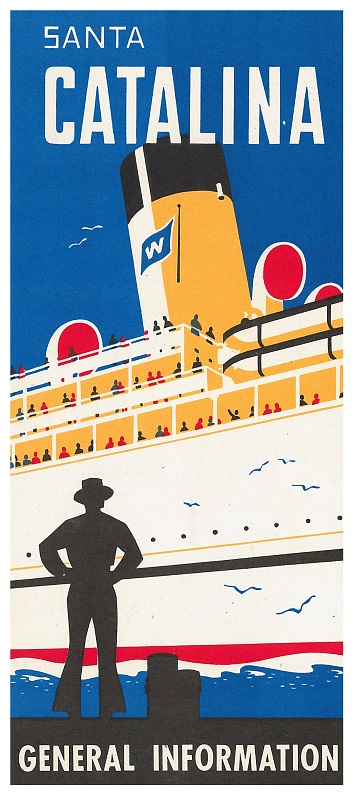
These colorful vacation guides inspired 1940’s travelers to explore California in style. Use them to inspire your own California summer plans!


There is plenty more travel ephemera to inspire you – visit the California Historical Society’s North Baker Research Library to view ephemera from our California Ephemera Collection.

To view the travel guides ask for:

Robert Spiers Benjamin, The Vacation Guide. New York: Whittlesey House, 1940.
Blair Tavenner, Seeing California. Boston: Little, Brown and Company, 1948.

Jaime Henderson
Archivist


Tuesday, June 11, 2013

National Dairy Month

June celebrates National Dairy Month! Originally started in 1937 as National Milk Month the tradition grew to celebrate all the contributions of the dairy industry including butter, cheese, yogurt, and ice cream in addition to milk.


Early dairying in California was rare. Cattle were prevalent but mostly used for beef, leather and tallow. Mission Indian women did make a soft cheese and butter that sustained missionaries in times of need but primarily the diets of the Dominican and Franciscan missionaries and the native population did not have the same great taste for milk, butter or cheese that came with the arrival of early pioneers from the Eastern states. Many families arriving in California from their overland journeys from the East brought along their family cow. In their new California home they continued the tradition of supplementing meals with milk, butter and cheese provided by their favored bovine.

In the 1850s Clara Steele settled with her family near San Francisco. She missed the delicious cheddar cheese she enjoyed back in Ohio made from a family recipe, so she hired an Indian man to help her wrangle the cattle grazing near her home. With the milk from these cattle she replicated the cheddar cheese she so loved. The results were so delicious that when she introduced the cheese to the San Francisco market it was an immediate hit! Clara, her husband Rensselaer and cousins Isaac, Edgar and George begin making and selling high quality cheese and butter and start one of the first commercial dairies in the United States, known as Steele Brothers. By 1857 the Steele Brothers were so successful they relocated to a 6,000 acre farm in Point Reyes to expand their dairy operation. In 1861 they purchased 15,000 acres in Santa Cruz County. Here is a tax receipt for the Steele Brothers Santa Cruz County property. Note the 7000 lbs. of cheese at a value of $280.00.


Throughout the 1880s and 1890s dairying becomes less of a rustic enterprise and begins to rely on modernization to allow the booming industry to supply its customers with safe, quality products. Improved farming techniques such as extensive planting and irrigation of alfalfa nourished cows and improved production to meet the needs of the market. In the rapidly growing cities, dairy products could be delivered straight to the customers home or business.


 Modern dairying equipment such as cream separators, refrigerators, milking machines and even butter wrapping machines industrialized the dairying industry.


From the dairy industry’s early beginnings, in which a pioneer woman had to wrestle wild cattle just to get a good piece of cheddar, to California’s current status as the nation’s leading dairy producer, dairying has made a significant impact on the economy, landscape and tastes of Californians.

References:
California Milk Advisory Board. Two Centuries of Prominence and Personalities. (Available: http://www.californiadairypressroom.com/Press_Kit/History_of_Dairy_ndustry, accessed June 2011).
California State Parks. Guide to the California Dairy Industry History Collection. (Available: http://www.parks.ca.gov/pages/1080/files/fa_456_001.pdf, accessed June 2011).

Jaime Henderson, Archivist
California Historical Society


Saturday, May 25, 2013

Kemble Ephemera Collection

The California Historical Society has recently made available a finding aid to our extensive Kemble Ephemera Collection on the Online Archive of California.  The collection, dating from 1802 to 2013, comprises a wide variety of ephemera pertaining to printing practice, culture, and history in the Western Hemisphere. Here is only a very small sample of some of the ephemeral materials found in the Kemble Collection. 

A.C. Studios, Designers, Lithographers, Illustrated Map Makers, Oakland, California


Types from Solotype, Oakland, California

The Stanley-Taylor Company, San Francisco, California

Crown Zellerbach Corporation, San Francisco and Los Angeles, California


View the Kemble Ephemera Collection finding aid HERE.


Entry by Jaime Henderson, Archivist at CHS

Saturday, February 23, 2013

Scanning the Horizon


The Society of California Archivists will hold its 2013 Annual General
Meeting on April 11-13, in Berkeley, California.

Complete schedule, registration, and hotel information is available at

This year's conference theme, "Scanning the Horizon," invites you not
only to gaze at the Golden Gate views afforded by our bay front hotel
location, but also to look ahead at the world of archives and historical
research in the 21st century. The program includes sessions that take
stock of the impact of digital technology, online primary resources, and
trends in digital humanities. There will be even more offerings
addressing traditional processing, reference, public outreach, grant
management, and audiovisual preservation, among other engaging topics.

Photo by Ansel Adams. Courtesy of the Bancroft Library

In addition to two days of sessions, the SCA AGM offers two
pre-conference workshops, an opening reception at the Berkeley Hillside
Club, and numerous opportunities to network and mingle at repository
tours, vendor exhibits, and a new member happy hour!

The venue will be the DoubleTree Hotel at the Berkeley Marina.

Follow SCA on Facebook and Twitter for additional updates:
@calarchivists  (use the hashtag #sca13 to follow all AGM-related
tweets)

Thursday, November 29, 2012

Why the Richmond?


When people find out that I desire to live not in the Mission district or Hayes Valley, but someplace much further away—someplace that is cloudy every morning and evening—the first thing they ask is why?
The concern is understandable. Though, to understand why the Richmond District is so great you need to immerse yourself in its fascinating history.

Here are my primary reasons for living on the West side of San Francisco:

Number One:  Golden Gate Park.  A five minute walk takes me from my doorstep to a peaceful wooded oasis. Of course this cultural landscape didn’t come to be naturally. It took much work to transform the land from sand dunes into what is one of California’s most beloved and notorious outdoor spaces.
Before 1865, the area of Golden Gate Park, along with the Richmond and Sunset Districts, was known as Outside Lands. It was not part of the city of San Francisco for a reason: It was an undesirable and unruly landscape of sand dunes and scrub. Though, in order for San Francisco to satisfy its growing population Outside Lands was annexed in 1866.

Golden Gate Park, 1910

 In 1870 William Hammond Hill—field engineer and project commissioner—began working on the topographic map of the 1,017 acre park. By 1875 there were 60,000 trees planted, including the most notable Blue Gum Eucalyptus and Monterey Pine. Four additional years added another 155,000 trees.
Not only is the landscape architecture and the habitats it has nurtured beautifully luscious, there are also endless activities to enjoy in the park. The Encyclopedia of San Francisco eloquently states that many people visit the park, “but only a few know of all the rich nuggets that it harbors.” The big attractions consist of the Japanese Tea Gardens (presented for the California Midwinter International Exposition in 1894); San Francisco Botanical Garden (completed in 1937); De Young Museum (opened in 1921 and rebuilt after the 1989 Loma Prieta earthquake in 2005); the Academy of Sciences (established in 1853 and rebuilt in 2008); and my favorite—the rose garden (added in 1961). Golden Gate Park once had tremendous wildlife roaming its lands, including moose, caribou, antelope, zebras, elephants, kangaroos, ostriches and peacocks. In 1927 those animals were moved into the San Francisco Zoo, but the buffalo still remain!


The Conservatory of Flowers, 1910

The park also hosted tent refuge for thousands of misplaced people after the 1906 earthquake. By witnessing the open space Outside Lands provided, many of those citizens decided to remain and make a home for themselves. From then on the Sunset and Richmond district communities developed their distinct identities as we know them today.

Number Two: New Chinatown. Housed in the Inner Richmond, it is a San Francisco gem. Near 6th and Clement Street the neighborhood is filled with Chinese markets, restaurants and cafes. However it is not just a Chinese hub. The chances of finding Thai, Russian, Indian, Italian, Irish, Burmese, French and American cuisine all on one street are highly probable. Some of my favorite places include the literary-wonderland Green Apple Books, Toy Boat dessert café, Burma Superstar, and the Blue Danube coffee house. 
But just how did the Richmond district develop into what it is today—a place that is full of mini neighborhoods with culturally vibrant identities? We can attribute its character to Australian George Turner Marsh, who was a man captivated by Japanese culture. When he moved to San Francisco around 1876 he opened a shop named G.T. Marsh and Company: Japanese Art Repository in the Palace Hotel off of Market Street. It was one of the first Asian-art galleries in the United States. With the success of his business, Marsh built his home at 12th and Clement Street. He named it the “Richmond House” after his birthplace in Richmond, Australia. His home was of a fashion unlike anything at the time. The Western Neighborhoods Project describes it as such:

The residence was large and elegant, and on the land around it Marsh installed a garden and ornamental stream, orchard, carriage house, stables, quarters for servants, and chicken pens. Marsh raised carrier pigeons, and would always carry a couple with him when he rode on horseback to work downtown. In the late afternoon he would send a bird home with a message for his wife about when he'd be home, and if he planned to bring guests for dinner.

George Turner Marsh

Given the prosperity and respectability of Mr. Marsh, a vote in 1890 brought the Richmond District name into existence, yet it remained unofficial. It was thought that naming it after Marsh’s prominent estate would entice more well-to-do investors into the newly graced district. The name was used throughout the 20th century but it was not until 2009 that the official title changed from Park Presidio District to the recognized Richmond District. 

Marsh's home on 12th Avenue & Clement Street

To learn more about how the Richmond District’s name came to be, the Western Neighborhoods Project has a detailed article you can read here.

Number Three: Ocean Beach. Its wonder is found in its simplicity. “Picture a 3.5-mile stretch of white beach with few tourists and no highrises. It's just you and the waves and the seabirds at Ocean Beach.” The National Parks Conservancy does not falsely advertise these facts. Though, there was a time past when people made the trek out to Ocean Beach for more than just its natural beauty; it was a land filled with abundant amusements and sweet pleasures.   


Ocean Beach prior to the construction of Playland Amusement Park, 1900

Surely you’ve heard of the Cliff House? Built in 1863 by Senator John Buckley and C. C. Butler, the original Cliff House was not as grand as its predecessors. It began as a residence but by 1868 a restaurant was added and renovations made it a place for high society. Later it became a tourist oasis.
The Cliff House has been through some rough times. In 1887 it was damaged by an abandoned schooner filled with dynamite that met its fate upon the tumultuous coastal rocks beneath. The blast was large enough to be heard across the Bay Area. The Cliff House remained thereafter with only minor repairs, but a chimney fire in 1894 ultimately burned it down.

In 1896 Aldoph Sutro spent $75,000 to rebuild the Cliff House into a Victorian eight-story mansion. Though not a hotel, it did boast much entertainment space. After Sutro’s death in 1898 the Cliff House was leased to John Tait and partners. Tait made many extensive renovations.  However, that same year the beloved Cliff House once again burned to the ground.

The third Cliff House was built in 1909 by Sutro’s daughter, Dr. Emma Merritt, as well as John Tait and his investors. They spent $75,000 in memory of the past Sutro Cliff House, but instead of making it equally grandiose they chose neo-classical. 

Cliff House, 1900

During prohibition the Cliff House was closed for several years.  In 1946 the Camera Obscura--known as San Francisco’s Giant Camera--was added onto the Cliff House property. Built by Floyd Jennings, the camera is placed “as far west as you can go in San Francisco,” according to the Western Neighborhoods Project. (It is now one of the few relics left from the Playland-at-the-Beach Amusement Park.) In 1977 the Golden Gate National Recreation Area finally acquired the Cliff House that we know today.

Ultimately the history of Ocean Beach (and all of Outside Lands for that matter) is endless. I could continue on and on about the Sutro Bath RuinsLands End, and other treasured spots. But I’ll leave you, dear reader, to discover those for yourself. Go find the history that awaits you in the present day Richmond and Sunset districts of San Francisco, California. 


Words by Andrea Dumovich--Guest Concierge for the California Historical Society

(All images, except two, are provided by the USC Digital Library--which is part of the CHS online research collection. The George Turner Marsh and 12th Avenue/Clement photos are sourced from the Western Neighborhoods Project website.) 

Thursday, July 19, 2012

Getting Lost in Los Angeles


Comparing Northern California to Southern is as similar as comparing apples to oranges. Yet, when it comes to praise, Los Angeles tends to get the short end of the stick. All people can think about is Hollywood, celebrities, and traffic. But Los Angeles has much history, culture, ethnically diverse people, and hidden beauty to offer. You only need patience and an open mind to find it. Here’s my small guide for you to discover the hidden treasures Los Angeles has to offer in its present day and glorious past.

If you enjoy flavor then go to Echo Park. Mexican food in Los Angeles is the real deal. It cannot be argued otherwise: There is proof in its history. Just take a look at Olvera Street, located in the heart of historic Los Angeles. Originally known as Vine Street, it was renamed in 1877 after Augustin Olvera, who was Los Angeles’ first county judge. After the 1920s the thriving community began to degrade. Christine Sterling, with her wealth and vision, saved Olvera Street from its decrepit path towards doom. She foresaw a lively market, and thus it came into being in 1930, which is still flourishing today. When you find yourself hungry in Los Angeles, here is a tip: Don’t be afraid to try the street food! Trust your instincts. If it smells good, chances are it will be great. (This applies only to the non-tourist districts.)

Women Tortilla Makers in Olvera Street, 1930

 Another argument is that there isn’t enough nature in LA. There may very well not be enough, but there certainly are oases within the city. Why not take a hike through Griffith Park all the way up to the Observatory while contemplating its strange history? Previously a Spanish settlement, Griffith Park was called Rancho Los Feliz. As landholder Don Antonio Feliz was dying he supposedly agreed to give the land not to his family but instead to Don Antonio Coronel. As the story goes, once Feliz’s 17 year old blind niece found this out, she put a curse on the land as well as upon Coronel, the lawyer and the judge. Because of the curse she immediately died. Coincidentally the judge was shot and the lawyer passed early too. Well, the story isn’t all too true. Horace Bell fabricated the niece’s blindness, her early death, and quite possibly the curse for a newspaper. But misfortune has followed landholders ever since and the curse is something to blame.

View from the Planetarium at Griffith Park, 1934

The founder of Griffith Park didn’t end up with the best of luck either. The land was bought by Griffith J. Griffith, of Whales, in 1882. He first opened an ostrich ranch on present-day Griffith Park to attract fashionable people who were looking for feathers. Mainly, though, he wanted to show off his land. On December 16, 1896, he donated 3,015 of his acres to create the public park. Influenced by European parks, Griffith realized that to be a great city, there needs to be a great park. (Today the park contains 4,210 acres.) Unfortunately, the story doesn’t end well for Griffith or his wife. While vacationing he believed his wife was conspiring with the Pope to poison him. He later shot her, though she survived. After that incident Griffith fell from fame. But at least one great thing came out of his purchase: An amazing piece of land can be admired today for its green and quite nestled within bustling LA. While you’re there, check out Trails Café and get an avocado sandwich packed with sprouts and cheese on whole wheat bread. You can’t get more Southern California picturesque than sitting on a picnic bench beneath enormous shady trees, with lemonade, a veggie sandwich and the 405 freeway within reach.

Picnic Tables in Griffith Park, 1920

Another great outdoor space with copious amounts of history is Echo Park Lake. Most people tend to overlook it as a manmade wonder. In the 1860s Echo Lake was built as a reservoir to provide drinking water. Obtained from the Los Angeles River, water travelled down a path that crossed through Los Feliz. Mayor Henry Hazard foresaw Alvarado Street as a popular boulevard that would connect people from Westlake (today’s MacArthur Park) to Echo Park Lake and Elysian Park. In 1885 Echo Park Lake and boathouse were completed. Unfortunately a year later the Times wrote, “There has perhaps been less talk, newspaper and other, about his park than about any other, and it does not seem, thus far in its existence, that it were worthy of much." Throughout the century the park’s popularity fluctuated.  During the final days of WWII Echo Park Lake became a destination for weekend outings, picnics, and toy boat festivities. From 1944 to 1950 the construction of the 101 freeway put a damper on the park’s momentum. It sliced through the playground and many of the homes that were situated near the lake. Disrupting the community lifestyle that the park provided meant less accessibility for residents to walk to the park. Before the 101 was built, Echo Playground had a fountain, basketball and tennis courts, croquet and sports fields, an outdoor gymnasium and a walking path within its grassland. It flourished in its heyday. The Pacific Electric Red Car was a main source of transportation, running alongside the park, until 1955. Echo Park even once had a beautiful Spanish library from 1928 that was demolished by the city in 1974. As you can see, Los Angeles is screaming with history that would have been a treat to witness back in the day.

Boys Launching Boats on Echo Lake for Boat Tournament, 1930

After its charming mid-century era, Echo Park sadly went into a downward spiral. With population surplus and immigrant families landing in Echo Park, the Lake has been a difficult place for Los Angeles to maintain. In 1971 The Los Angeles Times printed an article titled “Which Way for Echo Park – Inner City Oasis or Slum?” summing up that the park was at a tipping point. Finally, by 1980 activists deemed a Historic Preservation Overlay Zone upon the Victorian and craftsman style homes. For the park’s 100-year anniversary in 1995, Echo Park was given serious consideration for improving its green space. That same year the Echo Park Historical Society was created to protect the lake and create a safer environment. By 2013 Echo Park will be integrated back with its community and visitors will then be able to catch a glimpse of the icon it once was, and still is today.   


Yes, LA has problems. As do all cities. But that doesn’t mean that we should withhold respect when we compare it to other cities.  I once was speaking with a reputable urban planner in San Francisco. I asked him if I should focus my concerns on Los Angeles—the sprawl, the traffic, and the waste—instead of on a city that is already environmentally aware. He laughed and said, “You need to get up here.”  That was it. No debate or profound thoughts about why it would be beneficial to work in a city that needs help the most. You need to be here. I understand that being surrounded by likeminded people is always encouraging to get work done. But I can’t let all the other problems be set off to the side because they are harder to fix.

Living in the state of California, we are lucky to have it all. And we really do have it all. San Diego has its laidback beach vibe. Orange County is comfortable with breath-taking scenery. Los Angeles is a pocket of cities within cities, which makes it fantastic for exploring. Santa Barbara is a luscious mountain landscape painted on sand. Further up the coast includes numerous cozy-coastal and inland farm towns that I cannot begin to list. Driving up the 101, it if feels like the state’s growth can’t be stopped. It goes, and goes, and keeps going past hundreds of curvy miles and straightly paved roads through deserts, beaches, forests, farmland, suburbs, and average-looking cities. Everything we ever could want is in at our front door.  We can just as easily hop on a plane and be transported from SF to LA in one hour. So when people decide to dislike Los Angeles because they had a single bad experience or are not familiar with it, next time they can look in the right places—the lesser known and undiscovered landscapes—to  see the vast wonders  Los Angeles truly offers.  


Words by Andrea Dumovich--Guest concierge for the California Historical Society

(All images are provided by the USC Digital Library which is part of our online research collection.)