Redirect to CHS blog

Wednesday, March 20, 2013

From the Archives: Girls’ High School


Girls’ High School opened at Bush and Stockton streets in 1864. Originally part of the city’s first high school, San Francisco High, the school separated genders in 1864, creating Girls’ High School and Boys’ High School. In 1919 – the year this Girls’ High School Journal was published – the school was located on Scott Street between O’Farrell and Geary.

Girls’ High School was an accredited, public school that drew young women from all socio-economic classes and neighborhoods of San Francisco. Upon commencement Girls’ High graduates were automatically admitted to any course of study at the University of California or Stanford University. Girls’ High School also offered the Normal Course preparing young women for the teaching profession and offering teaching certificates.

The cover of the December 1919 Girls’ High School Journal celebrates the holiday season with its holly berry motif and young woman bundled in a coat, scarf, and muff. More interesting are the pages of the journal listing the 57 Girls’ High graduates, called “57” Varieties – a play on the H. J. Heinz Company advertising slogan most commonly seen on tomato ketchup bottles. Presumably the exercise required a bit of self-reflection on the part of each graduate; she is asked to fill in the blanks after the prompts “Name,” “Is,” “Wants to be,” “Will be,” and “Indoor sport.” The answers to these prompts supplied by these 57 graduates reveal a class of young women whose goals and aspirations certainly vary, as do their attitudes and understandings of the cultural and societal limitations and expectations placed on women during the suffrage era. Their answers demonstrate both confidence (E. Judge) and doubt (M. Hardiman); high self-esteem (G. Quarre) and insecurity (I. Bley); good-natured sense of humor (H. Richards) and self-effacing humor (M. Ludwig). Some express a strong sense of self (E. Meyer) while others express a desire to be something wholly unexpected (H. Hutchins). Also included is an image from the journal with a selection of school portraits with whimsical drawings next to each girl’s photo. Virginia Jurs yearns for Stanford, while Therese Kutner declares, “I’m a jazz baby!”

Overall the young women demonstrate a youthful ambition to be appreciated, successful, and to have all opportunities made available to them. Less than a year after publication of this journal the 19th Amendment giving women the right to vote would be passed on August 18, 1920. One cannot help but think about how the right to vote, coupled with other achievements gained by the first wave women’s movement, including reform in higher education, the workplace, and health care and access, continued to influence the Girls’ High School class of 1919. 

Sunday, March 10, 2013

Wishing you well, Chez Panisse!

On the morning of Friday, March 8, 2013 celebrated Berkeley restaurant Chez
Panisse was damaged by fire. Our best wishes for a speedy re-opening.

Photographed below is the Chez Panisse menu for Saturday, June 25, 1977, printed by Wesley B. Tanner from the Kemble Ephemera Collection.


Saturday, February 23, 2013

Scanning the Horizon


The Society of California Archivists will hold its 2013 Annual General
Meeting on April 11-13, in Berkeley, California.

Complete schedule, registration, and hotel information is available at

This year's conference theme, "Scanning the Horizon," invites you not
only to gaze at the Golden Gate views afforded by our bay front hotel
location, but also to look ahead at the world of archives and historical
research in the 21st century. The program includes sessions that take
stock of the impact of digital technology, online primary resources, and
trends in digital humanities. There will be even more offerings
addressing traditional processing, reference, public outreach, grant
management, and audiovisual preservation, among other engaging topics.

Photo by Ansel Adams. Courtesy of the Bancroft Library

In addition to two days of sessions, the SCA AGM offers two
pre-conference workshops, an opening reception at the Berkeley Hillside
Club, and numerous opportunities to network and mingle at repository
tours, vendor exhibits, and a new member happy hour!

The venue will be the DoubleTree Hotel at the Berkeley Marina.

Follow SCA on Facebook and Twitter for additional updates:
@calarchivists  (use the hashtag #sca13 to follow all AGM-related
tweets)

Thursday, February 14, 2013

Be Our Vintage Valentine

In the spirit of Valentine's Day, the California Historical Society 
has gathered this charming selection of vintage Valentines! 
This set of colorful keepsakes are from our 
Whimsical, romantic, and even cheeky: 
these Valentines are artifacts of adoration that have endured the test of time. 

We invite you to share and send the love around!

Sheet Music Cover - Kemble Collections on Western Printing & Publishing
Kemble Collections on Western Printing & Publishing
 Kemble Collections on Western Printing & Publishing

Saturday, February 9, 2013

Birds of Paradise Lost - book event with author Andrew Lam

This event takes place on Friday, March 1, 2013, 6:00pm

Reservations are required

Free event at the California Historical Society 
678 Mission Street
San Francisco

Join us for the evening as Andrew Lam shares excerpts from his new book Birds of Paradise Lost.

The thirteen stories in Birds of Paradise Lost shimmer with humor and pathos as they chronicle the anguish and joy and bravery of new Americans, the troubled lives of those who fled Vietnam and remade themselves in the San Francisco Bay Area. Past memories -- of war and its aftermath, of murder, arrest, re-education camps and new economic zones, of escape and shipwreck and atrocity --are ever present Andrew Lam’s wise and compassionate stories.

Andrew Lam is the author of Perfume Dreams: Reflections on the Vietnamese Diaspora, which won the 2006 PEN Open Book Award, and East Eats West: Writing in Two Hemispheres. He is an editor and cofounder of New American Media, an association of over two thousand ethnic media outlets in the US.

He was a regular commentator on NPR'’s All Things Considered for many years, and was the subject of a 2004 PBS documentary called My Journey Home. His essays have appeared in newspapers and magazines such as the New York Times, The LA Times, the San Francisco Chronicle, The Baltimore Sun, The Atlanta Journal, the Chicago Tribune, Mother Jones, and The Nation, among many others.

Please RSVP at andrewlamchs.eventbrite.com and we look forward to seeing you! 

The Sound of Rural California

This event takes place on Thursday, February 28, 2013, 6:00pm 

Reservations are required

Free event at the California Historical Society
678 Mission Street
San Francisco 

What does rural California sound like?  What makes up the days, and what's on the minds, of people who live in the state's small towns? And how can reporters convey that accurately and evocatively to an urban audience? To complement the California Historical Society exhibition I See Beauty in This Life: A Photographer Looks at 100 Years of Rural California, five public radio reporters will share audio from across the state and discuss the joys and challenges of  reporting in rural California. A panel discussion will be moderated by I See Beauty curator and writer/photographer Lisa M. Hamilton.

Lisa Morehouse is an independent public radio producer.  Stories from her project After The Gold Rush: The Future of Small Town California air on KQED's The California Report and NPR's Latino USA. Julie Caine is an independent journalist whose work is regularly heard on KALW, where she is currently the lead producer onAudiograph, a project documenting sound-rich stories from the nine Bay Area counties. Michael Montgomery is a producer-reporter with the Berkeley-based Center for Investigative Reporting and a regular contributor to KQED and American RadioWorks. Molly Samuel is a multimedia producer at KQED, where she reports on science and environment. Dan Brekke is a reporter and editor with

Please RSVP at ruralsounds.eventbrite.com and we look forward to seeing you! 

Sunday, January 20, 2013

Squeezebox Stories: Rural music, immigration, & the accordion

This event takes place on Thursday, January 24, 2013, 6:00pm

Reservations are required
Free event at the California Historical Society
678 Mission Street
San Francisco

Squeezebox Stories: Rural music, immigration, and the accordion in California's Central Valley
When Carlos Mendoza immigrated to California from Oaxaca in the 1980s to work in the fields outside Madera, he brought his beloved Chilena music along with him. Now a full-time musician, Mendoza will play some of these traditional Oaxacan songs and talk with producers Julie Caine and Marié Abe about the role the accordion has played in carrying culture to a new land.
Squeezebox Stories is an award-winning public radio documentary that uses the rich history of the accordion to tell immigration and migration stories to California.  Produced by radio journalist Julie Caine and Boston University ethnomusicologist Marié Abe, this project is supported by the California Council for the Humanities and the Arhoolie Foundation.
During this event, we'll hear the story of some of rural California's newest residents, and learn how their journey north has given new life to traditional music that embodies cultural pride in a new land. The most recent wave of Mexican immigrants to California are mostly indigenous people from the southern Mexican state of Oaxaca–many of whom don’t even speak Spanish as their first language, and who are often discriminated against within mainstream Mexican culture for their indigenous heritage. We hope you can join us for this special event. Light refreshments will be served. 

Please RSVP at squeezeboxchs.eventbrite.com and we'll see you there!

Wednesday, January 9, 2013

An Evening with Deborah Miranda, author of Bad Indians

Thursday, January 17, 2013, 6:00pm

Reservations are required
Free event at the California Historical Society
678 Mission Street
San Francisco


Join us for an evening with author Deborah Miranda. Her book,Bad Indians, part tribal history, part lyric and intimate memoir. Deborah A. Miranda tells stories of her Ohlone Costanoan Esselen family as well as the experience of California Indians as a whole through oral histories, newspaper clippings, anthropological recordings, personal reflections, and poems. The result is a work of literary art that is wise, angry, and playful all at once, a compilation that will break your heart and teach you to see the world anew. Deborah A. Miranda is an enrolled member of the Ohlone Costanoan Esselen Nation of California, and is also of Chumash and Jewish ancestry. The author of two poetry collections—Indian Cartography, which won the Diane Decorah Award for First Book from the Native Writer’s Circle of the Americas, and The Zen of La Llorona, nominated for the Lambda Literary Award—she also has a collection of essays, The Hidden Stories of Isabel Meadows and Other California Indian Lacunae, forthcoming from the University of Nebraska Press. Miranda is an associate professor of English at Washington and Lee University and says reading lists for her students include as many books by “bad Indians” as possible.

RSVP at mirandaatchs.eventbrite.com and we'll see you there! 

Thursday, January 3, 2013

100 Years of Rural California in Print


Saturday, January 12, 2013, Timed entry at 1:30pm, 2:15pm, 3pm, 3:45pm, reservations required
$5 general admission (includes gallery admission), Free for California Historical Society members


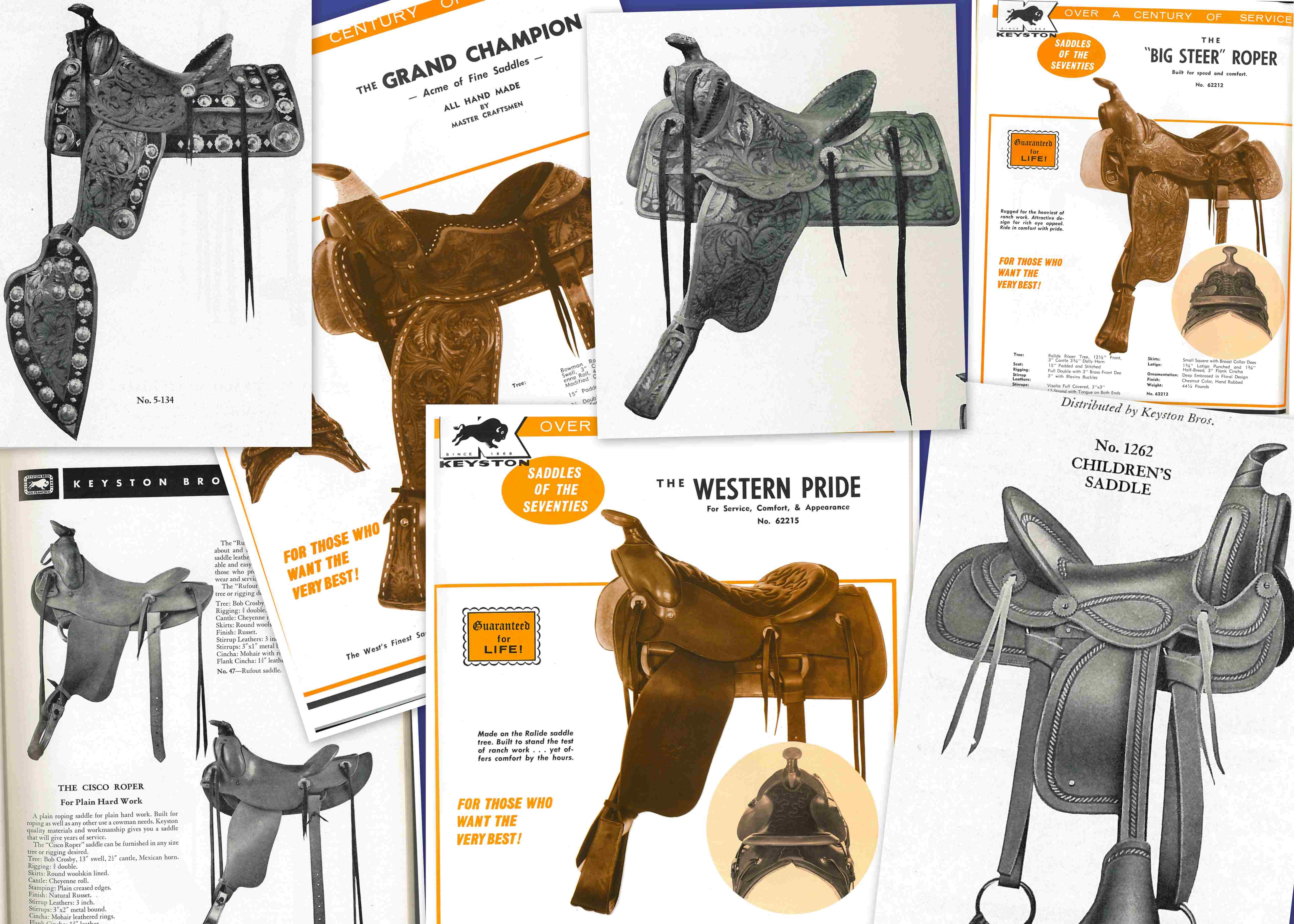
Join us for a special afternoon in the library of the California Historical Society where you will have the opportunity to hold history in your hands. Our archivists and librarians will gather an array of printed materials from the Collection – including commercial catalogs for farm implements, tack and saddlery, and seeds and nursery stock, as well as books, pamphlets, periodicals, and printed ephemera from counties, businesses, and organizations throughout the state that document various aspects of life in rural California – and make them available on tables in the library for visitors to look at up close. This event organized in connection with our ongoing exhibition I See Beauty in This Life: A Photographer Looks at 100 Years of Rural California, helps to expand upon our understanding, and image, of rural California over the past 100 years. Due to the delicate nature of the material, reservations are required and can be made at ruralcaliforniainprint.eventbrite.com.

Wednesday, December 19, 2012

California Wine Association Records, 1894-1936


Lackman & Jacobi business card, circa 1885, California Business Ephemera Collection.

With our vast viticultural districts and varied regional climates, California is known as an exceptional place to grow wine. Lesser known, however, is that the history of the state’s early wine production is largely connected to the history of the California Wine Association (1894-1936). With this in mind, the California Historical Society is pleased to announce that the California Wine Association records have been reprocessed with a finding aid available on the Online Archive of California.

The 1890s were a turning point for viticulture in California. The State’s wine industry was in a seemingly perilous position. California’s 200,000 acres of vineyard were overproductive, the country was in the middle of a depression, and California wines were sold cheaply without much regard to quality. In 1894, in an attempt to secure favorable options from grape growers and winemakers, and to raise prices and stimulate trade, seven leading wine firms joined together to form the California Wine Association. Their action, however, had an unintended consequence: winegrowers formed their own interest groups, which, in turn, led to the wine wars of the 1890s. In order to successfully negotiate grape and wine prices, the two factions came to agree upon standards for terms such as “hill grapes” and “valley grapes,” and stabilized the quality of California wine in the process. The C.W.A. would eventually control over eighty percent of wine manufactured in the State.

The California Wine Association records chronicle this fascinating history. Bound volumes of meeting minutes contain contract negotiations and correspondence between growers and firms, and document internal conflicts within the Association, responses to Prohibition, and, finally, the litigious dissolution of the Association itself.

The new guide to the collection can be found on the Online Archive of California at http://www.oac.cdlib.org/findaid/ark:/13030/tf667nb130

Megan Hickey Nespeco 
Library Volunteer