Redirect to CHS blog

Wednesday, January 26, 2011

Friday! Book Talk and Signing: Destiny’s Children with Dr. Roger Herst @ CHS 1/28/11

Friday January 28, 2011 - 6:00 p.m. to 7:30 p.m.
Book Talk and Signing: Destiny’s Children with Dr. Roger Herst
Free Event @ California Historical Society

Destiny's Children is a carefully crafted and well researched saga of post-Civil War California. These were the decisive years when the transcontinental railroad was being built, one of the most colorful and inspiring periods in our history. The novel plays out over a large canvas and is based on the actual pioneers whose super human struggles forged the modern west. Destiny’s Children artfully presents California in the 1870’s and the extraordinary challenges of building the western half of the transcontinental railroad on a very personal level. The vital contributions of Chinese immigrants at this key moment in California’s history are a central theme of the book. Dr. Herst is a fourth generation San Franciscan, graduate of the University of California, Berkeley and a doctorate in history. The book will be available for sale at the event.


California Historical Society
678 Mission Street
San Francisco

Thursday, January 20, 2011

Book Talk: The Color of America Has Changed with Mark Brilliant @ CHS 1/20/11

Thursday January 20, 2011 6:00 p.m. – 7:30 p.m.
Book Talk: The Color of America Has Changed with Mark Brilliant

Free Event @ The California Historical Society

From the moment that the attack on the "problem of the color line" began to gather momentum nationally during World War II, California demonstrated that the problem was one of color lines. This talk presents an overview of The Color of America Has Changed: How Racial Diversity Shaped Civil Rights Reform in California, 1941-1978. The book taps California’s civil rights history to reveal how the Civil Rights Era was truly a nationwide and multiracial phenomenon. Brilliant examines California’s multiple “race problems” shaped and complicated the multifaceted efforts of civil rights reformers. While civil rights historians have long set their sights on the South and, more recently, turned their attention to the North, advancing a “long civil rights movement” interpretation, The Color of America Has Changed calls for a new understanding of civil rights history that more fully reflects the racial diversity and accompanying civil rights complexity of America - a civil rights history that is as "wide" as it is "long." The book will be available for sale at the event.

Mark Brilliant is Assistant Professor of History at U.C. Berkeley.

California Historical Society
678 Mission Street
San Francisco

Wednesday, January 12, 2011

Happy 135th Birthday Jack London!

Jack London  (1876 - 1916)

Jack London by Arnold Genthe
Collection of
The Bancroft Library. University of California, Berkeley.


Christened John Griffith Chaney on January 12, 1876, Jack London was born near 3rd and Brannan Streets in San Francisco California. Sadly his birthplace burned in the Great Earthquake and Firestorm of May 1906.  Click Here to read London's account of the disaster, first published by Collier's on May 5th 1906. In 1953 the California Historical Society placed a plaque at the site of his childhood home, honoring London's memory and many contributions to the literary world.   London was a prolific American writer, photographer, activist and journalist.  His fiction, novels and essays  gained him world-wide fame and fortune.   He was one of a group of writers who pioneered the nascent genre of commercial magazine fiction.  White Fang and Call of the Wild endure as his most memorable novels, yet he penned many popular essays, exposés, articles and short stories. 


Jack London's flask, 1907
Sterling Silver, Snake Skin, Glass
Collection of the California Historical Society
Gift of Albert Bender

London's flask is currently on view in the galleries of the California Historical Society.  After London died his wife Charmian gave the flask to his friend George Sterling, most likely the one who originally presented London with the flask. Sterling then gave the flask to Albert Bender, a great philanthropist of the Bay Area arts and cultural scene in the early 20th century. The flask is one of Bender’s many gifts to CHS and it is one of the earliest acquisitions of the permanent collection.


Jack London Resources on the Web:

Jack London Online Collection

Jack London State Historic Park

The World of Jack London

Jack London on Wikipedia

Wednesday, January 5, 2011

Free Event at West End Library: New Deal Structures in Alameda 1/13/11

Image from http://www.alamedainfo.com/Alameda_CA_Postcards_4.htm
New Deal Structures in Alameda

Guest Speaker: Harvey Smith
Board President of the National New Deal Preservation Association
Thursday, January 13, 2011
7-8:30pm

This program will include a talk and Power Point presentation by Mr. Smith on New Deal structures in Alameda built through the federal Public Works Administration (PWA) and Works Progress Administration (WPA). Alameda's West End Library was one of many projects funded nationwide by the Public Works Administration of President Franklin D. Roosevelt's New Deal. Designed by architect Carl Werner and
completed in 1936, the recently renovated library reopened on October 26, 2010.

Free event co-sponsored by the West End Library and Alameda Multicultural Community Center.
Everyone welcome. Wheelchair accessible.


West End Library
788 Santa Clara Ave.
Alameda, CA 94501
510-747-7767 

alamulticultural@gmail.com

Saturday, January 1, 2011

Explore San José Parks: Open to the Public Since 1850

History San José presents: Open to the Public Since 1850.

Gateway to Alum Rock Park near the Tunnel
Photograph by Alice Hare, c. 1902
Collection of History San Jose
San José has a long and unique history of providing open space for the public. When California gained statehood in 1850, San José had already set aside several public squares including St. James, Washington, and Market Plaza. Designating land for public use was unusual at that time for a city of San José’s size. Older, more established cities like New York City and Chicago began establishing parks in the 1850s and ’60s to provide residents with an escape from crowded urban areas. However, in 1850, San José had a population of just 4,000 and was surrounded by vast open land used for cattle grazing and agriculture. There is no definite record of the town council’s motivations for preserving these public areas. They may have wanted to protect land to sell in the future; or they may have had a desire to move toward an American aesthetic and distance themselves from the city’s Mexican past; or perhaps they were way ahead of their time and had the forethought to preserve open space for the public.

Today, San José boasts more than 180 parks with 3,448 acres of land. The first public space, the Plaza at present-day Market Street between San Carlos and San Fernando Streets was established during the Pueblo Era and renamed Plaza de César Chavez in 1993. Originally used as a market space and recreation area for bear and bull fights, today it hosts tamer events like Christmas in the Park and the Jazz Festival. As San José grew from an agricultural base to become the center of Silicon Valley, new parks continue to be a part of the city’s vision. In 2009, the former IBM/Hitachi Campus in South San José was developed into three parks: RAMAC Park, Charlotte Commons, and Raleigh Linear Green.

Creating public parks is a complex process, involving community members, land owners, developers, city staff and public officials. But, more often than not, the effort begins with community volunteers passionately engaged in a shared vision. The San José Municipal Rose Garden is a fine example where Mrs. Frémont Older and Mrs. Charles C. Derby proposed the project, which was supported by the Rotary Club of San José in 1927.

View of History Park, c. 1975 Explore San José Parks begins with History San José’s home, Kelley Park. Originally Judge Lawrence Archer’s park-like estate, Lone Oak, the 156-acre park is now home to History Park, the Japanese Friendship Garden, the Leininger Center, and Happy Hollow Park & Zoo. Next the exhibit examines San José’s First Parks: the Plaza, St. James Park, and Alum Rock Park. In Neighborhood Parks a selection from the more than 150 suburban parks is featured with a look at Public Art. The exhibit ends with plans for The Guadalupe River Park and Gardens, originally a flood control project, and Park Conservation. San José’s parks and open spaces continue to provide opportunities for social interaction, recreation, and contact with nature, and as such are essential to the well being of our community.

History Park is located at the south end of Kelley Park at the corner of Senter Road and Phelan Avenue in San José.  With 27 original and reproduction homes, businesses and landmarks History Park highlights Santa Clara Valley's past. Complete with paved streets, running trolleys and a cafe, this 14-acre site has the charm and ambiance of times gone by.

Pacific Hotel Gallery, History Park

Open through January 23, 2011
Tuesday - Sunday
11 am - 5 pm

For more info please visit http://www.historysanjose.org/index.php

Wednesday, December 22, 2010

On view @ Sonoma County Museum through 1/30/11 - Bittersweet Harvest: Braceros Program

Photos by Leonard Nadel
Collection of National Museum of American History
The “Bittersweet” Struggle of the Bracero Is Revealed in a New Smithsonian Traveling Exhibition


In 1943, President Roosevelt announced the creation of what would become the largest Mexican guest-worker program in U.S. history. Bittersweet Harvest: The Bracero Program, 1942-1964, a new bilingual (English/Spanish) exhibition debuting at the National Museum of American History and organized for travel by the Smithsonian Institution Traveling Exhibition Service (SITES), will explore this chapter of American history. The exhibition will be on view at the museum Sept. 9 through Jan. 3, 2010, and will then travel to museums around the country on a two-year, multicity tour.

Facing labor shortages on the home front during World War II, the United States initiated a series of agreements with Mexico to recruit Mexican men to work on American farms and railroads. The Emergency Farm Labor Program, more familiarly known as the Bracero Program, enabled approximately 2 million Mexicans to enter the United States and work on short-term labor contracts.

“SITES is deeply gratified to share with the nation a central part of American labor history of which so few are aware,” said Anna Cohn, director of SITES. “The story of the bracero is rooted in hope and determination. It is a testament to the enduring contributions that Mexicans and Mexican Americans have made to American life.”

The exhibition explores the braceros’ contributions to communities in Mexico and the United States, the opportunities that became available to braceros and the challenges that they faced as guest workers during the war years and afterward. Included in the exhibition are 15 free-standing banners featuring oral histories, quotes and photographs by Leonard Nadel, a photographer who, in 1956, exposed employer violations endured by many braceros. The Nadel photos inspired the museum’s work on Bittersweet Harvest and the Bracero History Project, which also includes audio clips of former braceros relating their experiences. The firsthand accounts were collected as part of the project’s oral-history initiative.

“This exhibition allows us to explore complex issues of race, class, community and national origin while highlighting the irrefutable contributions by Mexican Americans to American society,” said Brent D. Glass, director of the museum. “‘Bittersweet Harvest’ is a unique opportunity to share an important but overlooked chapter in American history with visitors across the country.”

Two versions of Bittersweet Harvest will travel through the country through 2011. Scheduled stops include the Alameda National Center for Latino Arts and Culture in San Antonio: El Museo Latino in Omaha, Neb.; Chamizal National Memorial in El Paso, Texas; and the Springs Preserve in Las Vegas.

Accompanying the exhibition is a Web site with transcripts, audio files of all of the oral histories, photos, essays, bibliographies and teaching resources. Developed by the Center for New Media at George Mason University, the Web site features a section where braceros and their families can contribute their own stories. The Web site is located at http://braceroarchive.org.

Bittersweet Harvest is organized by the National Museum of American History and organized for travel by SITES. Funding is made possible through the Smithsonian’s Latino Center, which celebrates Latino culture, spirit and achievement in America by facilitating the development of exhibitions, research, collections and education programs. For more information, visit http://www.latino.si.edu/.

The Sonoma County Museum
425 7th Street
Santa Rosa, CA 95401
(707) 579 1500


For more info on this exhibition, visit the Smithsonian website

Visit the Bracero History Archive

Smithsonian Secretary on Bittersweet Harvest

Monday, December 20, 2010

On View @ CJM - Reclaimed: Paintings from the Collection of Jacques Goudstikker

Ferdinand Bol (1616–1680),
Louise-Marie Gonzaga de Nevers? (1611–1667),
Queen of Poland, 17th century, oil on canvas.
Collection of Marei von Saher, heir of Jacques Goudstikker.


The Contemporary Jewish Museum presents an exhibition of rarely seen Old Master paintings entitled Reclaimed: Paintings from the Collection of Jacques Goudstikker. Reclaimed reveals the extraordinary legacy of Jacques Goudstikker, a preeminent art dealer in Amsterdam, whose vast collection of masterpieces fell victim, and was almost lost forever, to the Nazi practice of looting cultural properties during World War II.

In 2006, after years of working with a team of art historians and legal experts, Goudstikker’s family successfully reclaimed 200 of his paintings from the Dutch government – one of the largest claims to Nazi-looted art ever resolved. Featuring nearly 45 of the finest examples of the recovered art, along with original documents and photographs, the exhibition reveals Goudstikker’s influence as a collector, art dealer, tastemaker and impresario; and celebrates the historic restitution of the artworks to the rightful heir. Also included are original documents and photographs relating to Goudstikker’s life. The Museum will have on view an interactive touchscreen computer version of Goudstikker’s notebook, which inventoried the bulk of his gallery’s holdings at the time he fled the Netherlands. Visitors will be able to see each page of this extraordinary document while viewing images of the paintings that Goudstikker referred to in the notebook.

Jacques Goudstikker (1897-1940) was one of the most important and influential art dealers in Europe during the period between the First and Second World Wars. The Goudstikker Gallery, located in a grand house on one of Amsterdam’s prominent canals, dealt primarily in Dutch Old Masters from the Golden Age, yet also offered other Northern European and Italian paintings. Goudstikker catered to leading collectors of his day, selling paintings not only to Dutch museums (such as the Mauritshuis in The Hague, and the Rijksmuseum in Amsterdam), but also to the Metropolitan Museum of Art in New York, the Art Institute of Chicago, and to Andrew Mellon for the then-fledgling National Gallery of Art, Washington, DC. A natural impresario, Goudstikker delighted in organizing national as well as international art fairs, festivals, and exhibitions, some of which had enduring significance for the history of art and a profound influence on collecting patterns. He was responsible for what was, at the time, the largest exhibition of Peter Paul Rubens’s art in the Netherlands, and the only show ever of the landscapes of Salomon van Ruysdael, among others.

As prominent members of society, Jacques and his wife Dési entertained lavishly in their villa outside the city and at their country estate, Nyenrode Castle on the Vecht River. Yet this luxurious and exuberant life would soon be a lost moment in time. Due to the rising threat of the Third Reich and because he was Jewish, Goudstikker was forced to flee the Netherlands with his wife and their year-old son, Eduard (nicknamed “Edo”), in May 1940 shortly after the Nazi invasion. Jacques died in a tragic accident on board ship while escaping by sea.

Left behind was Goudstikker’s collection of approximately 1,400 works of art, the bulk of which were taken to Germany after the looting of the Goudstikker Gallery by Herman Göring, Hitler’s second in command and a rapacious art collector. Göring’s henchman, Alois Miedl, ran the gallery throughout the war under the Goudstikker name, profiting from its remaining stock of artworks and respected reputation.
When World War II ended, over 200 Goudstikker paintings were located by the Allies in Germany and returned to the Netherlands with the expectation that they would be restituted to the rightful owner. Despite Dési’s efforts to recover them, the Dutch government kept the works in its national collections. Eventually, Dési and her second husband, A.E. D. von Saher, who adopted Edo, left the United States, where they had settled, to return to the Netherlands, where she died in 1996. Edo survived her by only a few months.

Edo’s widow, Marei von Saher, initiated the claims process for restitution in 1997 at a time of renewed interest in restituting Nazi-looted artworks in the Netherlands and after new information about the fate of the Goudstikker collection became available to her. The small black notebook Jacques Goudstikker had used meticulously to inventory his collection was found with him at the time of his death and later became a crucial piece of evidence in the battle to reclaim his art. Finally, after a nearly decade-long battle, the Dutch government agreed on February 6, 2006 to restitute 200 of the paintings looted by the Nazis.

Jacques Goudstikker’s inventory included Italian Renaissance works, early German and Netherlandish paintings, 17th-century Dutch Old Masters, French and Italian Rococo artworks, and 19th-century French and Northern European paintings. Although his offerings became increasingly diverse – he can be credited with expanding the Dutch art market as well as collectors’ tastes – his specialty remained Northern Baroque art.

Highlights in the exhibition include Jan Wellens de Cock’s Temptation of Saint Anthony, a splendid river landscape by Salomon van Ruysdael, a rare early marine painting by Salomon’s nephew Jacob van Ruisdael, an atmospheric Winter Landscape with Skaters by Jan van Goyen, and Jan van der Heyden’s View of Nyenrode Castle on the Vecht – the country estate that Goudstikker himself owned and opened to the public each summer in the 1930s. Also on view are excellent still life paintings and portraits such as Hieronymus Galle’s Still Life with Flowers in a Vase and Ferdinand Bol’s Louise-Marie Gonzaga de Nevers.

In addition to viewing fine paintings, museum visitors will be offered an opportunity to reflect on the inequities of war, the looting of cultural property during the Holocaust, and ongoing efforts to recover artworks stolen during World War II. “This is a rare chance to tell the extraordinary story of restitution,” says Connie Wolf, Executive Director of the Contemporary Jewish Museum. “It’s a poignant story that resonates today as looting of artworks continues in conflicts around the world. We are thrilled to have these remarkable masterpieces on view for Bay Area audiences to see and experience.”

General Information

The CJM is open daily (except Wednesday) 11 AM – 5 PM and Thursday, 1 – 8 PM.
For more info please visit thecjm.org or call 415.655.7800.

The Contemporary Jewish Museum
736 Mission Street (between 3rd & 4th streets)
San Francisco.

Friday, December 17, 2010

Historic Libations Tonight @ 6! Tickets will be sold at the door!

Come celebrate the season with the California Historical Society!
Friday December 17, 2010
6:00 p.m. to 9:00 p.m.

Tickets are available at: http://www.brownpapertickets.com/event/136213
CHS Members $40
Non-members $50

Come celebrate the season with the California Historical Society. 

Historic Libations features legendary cocktails from across the state, including favorites such as the Boothby whiskey punch, the Revolver, Moscow Mule and the Martinez. La Melodita will provide live tango, gypsy jazz, blues entertainment at 7:30 p.m. Learn a little about the history of mixed drinks, and indulge in notable concoctions, as members of the United States Bartenders Guild craft cocktails. All attendees will receive their very own copy of the Anchor Distilling Co. edition of Cocktail Boothby's American Bartender.

Event Sponsors include: Apertifs Bar Management, Anchor Distilling, Elixir Saloon, United States Bartenders Guild and The Sentinel.  For more information, or to purchase tickets by phone please call 415-357-1848 x 229. or email kjacobson@calhist.org

California Historical Society
678 Mission Street
San Francisco

Friday, December 10, 2010

Upcoming Events at The San Mateo County History Museum


January 22, Saturday at 1 pm
The Architectural History of Suburbia at the San Mateo County History Museum
Association members; $3 - $5 general admission.

Architect and historian Alan Hess presents The Architectural History of Suburbia. The San Francisco Peninsula, including San Mateo County, played a large role in the development of modern suburbia; for example, the ranch house. Mr. Hess documents the emerging suburban metropolises of the West. Free to


Saturday, January 8th at 11 am
Story Time at the History Museum for Children - Covered Wagons, Bumpy Trails

Admission: $5 for adults, $3 for seniors and students with ID.
FREE for children 5 and under; Members are always free.

Come listen to a story about a pioneer family’s journey on a wagon train headed to California. Hear the story Covered Wagons, Bumpy Trails and make your own covered wagon to take home. Then, tour the museum’s Journey to Work exhibit to learn about early forms of transportation in San Mateo County.

***********

A Centennial Celebration - 100th Anniversary of the 1910 Courthouse
Visit http://www.historysmc.org/ for more details
 
 
San Mateo County History Museum
2200 Broadway

Redwood City, 94063
650-299-0104
www.historysmc.org

Thursday, December 9, 2010

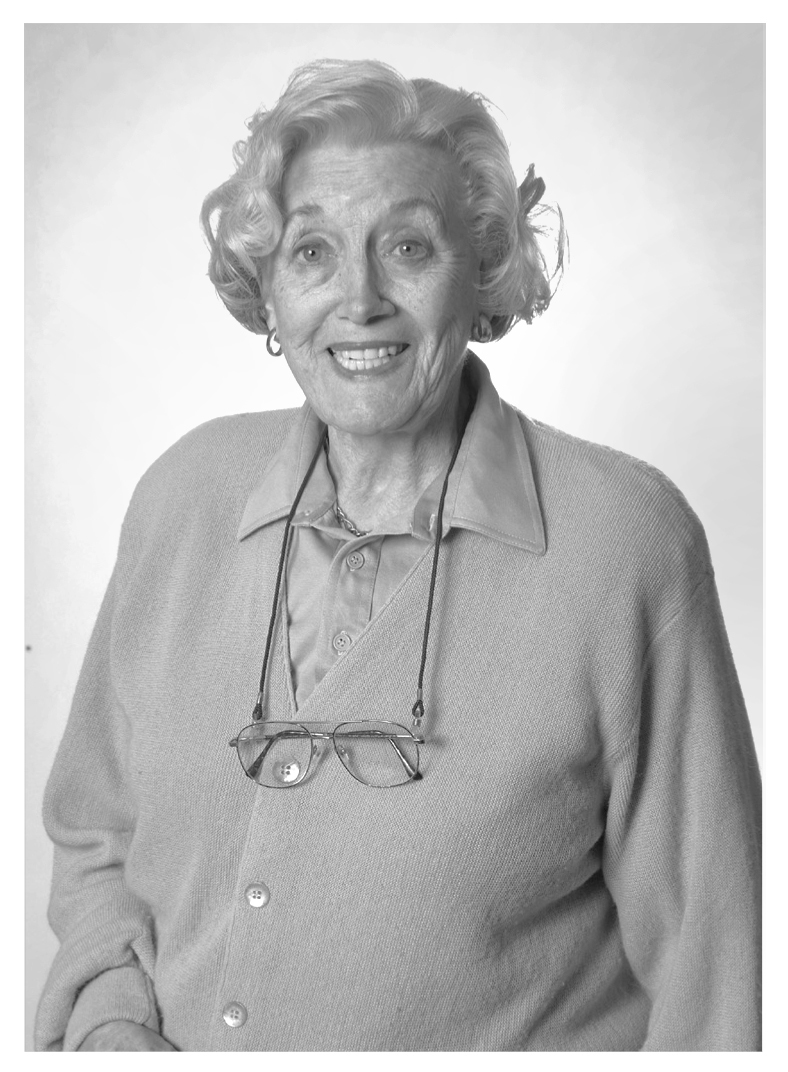
In Memoriam: Marian Gibbons - Founder of Hollywood Heritage Museum

Marian Dean Newman Gibbons
(1921 - 2010)

Hollywood Heritage Founder, preservationist, actress, singer and author Marian Gibbons passed away December 8, 2010 from lung cancer. Whether you knew her as "Marian," "Mrs. Gibbons," "Mage" or "Majemahanna" (her mother's nickname for her) Marian was and is an unforgettable Hollywood person.

She was born in Cuyahoga Falls, Ohio, and lived in Wisconsin and Arizona. A brief stay in Hollywood in 1949 convinced her that this was the town she wanted to live in, but her husband Jim's business took them back to the Midwest. Marian vowed if she ever had the chance to come back, she would. That chance came in the late 1970's and Marian came to Los Angeles and worked as a publicist with her daughter, Jane, an anchor for KNBC. The 1970's appearance of the town she had worked so hard to return to inspired her with Christy Johnson McAvoy, Frances Offenhauser McKeal, Mildred Heredeen and Susan Peterson St. Francis to start Hollywood Heritage, Inc. Through the inspiration and hard work of these founders, Hollywood Heritage became the success story it is today.

A memorial is planned and we will post that information as soon as it is available. She will be interred at Hollywood Forever in Hollywood.


Janet L. Hoffmann
Blondie House
WBSF Ranch Operations
411 North Hollywood Way
Burbank, CA 91505
818-977-5233
818-977-2750 FAX
http://www.hollywoodheritage.org/