Redirect to CHS blog

Showing posts with label Museums. Show all posts

Wednesday, February 1, 2012

A Wild Flight of the Imagination Opening Celebration


Sunday, February 26, 2012,  2:30 - 4:30pm


A Wild Flight of the Imagination Opening Celebration


Free Event at the California Historical Society, 678 Mission Street, San Francisco

Put on your party clothes and come help us celebrate the opening of A Wild Flight of the Imagination: the Story of the Golden Gate Bridge. On this day in 1933 San Franciscans celebrated the ground breaking for the Bridge, a symbol of hope in a devastated economy. Come kick up your heels to the band, gather around the classic cars parked outside, and learn the story of the Bridge.  RSVP to wildflight.eventbrite.com  or 415.357.1848, ext. 229.


Monday, March 21, 2011

Exhibit Opening April 4 @ SF State: Will Egypt's Treasures Survive?

Wings over the Pyramids: Will Egypt's Treasures Survive?
On view April 4—May 4, 2011

San Francisco, CA--The University Museum at San Francisco State University proudly presents the exhibition: Wings over the Pyramids, from April 4—May 4, 2011.

Wings over the Pyramids features modern and historic photography documenting the effects of pollution and urbanization on Egypt’s cultural monuments. The works on display range from 1930's aerial photographs of the Giza Pyramids to modern satellite images taken over Egypt. West of the River Nile, the Giza Plateau is the site of some of the most important and astonishing monuments of the ancient world.

Through photographs, this exhibition will explore issues such as dam construction, Cairo's rapid urbanization, uncontrolled pollution, and population growth and how these conditions have had a cumulative and deleterious effect on Egypt's pyramids and monuments. Also explored is the impact of the 2011 Revolution on Egypt’s museums and archaeological sites.

In addition, artifacts from the University's Egyptian collection will be on view in the gallery. Issues of museum conservation and provenance will be examined through selected objects relating to the religious and every-day lives of the ancient Egyptians. In addition, visitors can view the mummified remains of priest Nes-Per-N-Nub and a rare, triple-nested sarcophagus from the University Museum's Sutro Egyptian Collection.
The exhibition is open to the public 11:00 to 4:00, Monday through Friday, April 4-May 4. Note: SFSU Admission is free.

The museum is located in the Humanities Building 510
corner of Font and Tapia on the San Francisco State University campus.

Museum Studies Program
San Francisco State University
1600 Holloway Avenue

San Francisco, CA 94132
museumst@sfsu.edu
www.sfsu.edu/~museumst

Wednesday, February 23, 2011

On View at the Hearst Art Gallery: Lee and Grant

150 Year after the start of the Civil War, the National Endowment for the Humanities, Mid-America Arts Alliance and the Virginia Historical Society have organized "Lee and Grant" -- A multi-media history exhibition that tells the history of the war through the biographies of the two Generals.  The exhibition is packed with documents, period photographs, maps, engravings, uniforms, original objects owned and carried by Lee and Grant, flags, swords, bayonets, Harpers' Magazine illustrations by Winslow Homer and Thomas Nast, tents, an extensive study table of books, bibliographies, films, ipods, a handout on California's Civil War history and more....

Divided in sections, the exhibition's content includes units on the Mexican War (1846-48), Grant's ascent in the West, Lee's in the East, Vicksburg, Cold Harbor, Slavery, Surrender at Appomattox, Emancipation, Reconciliation. Partner programs are being offered by the Contra Costa Libraries, the National Civil War Association, and the California Horse Artillery Society.

A lecture by Civil War history scholar, author and professor Carl Guarneri, Ph.D., "'Only a Question of Time and Patience': An Inside View of Grant's Campaign against Lee," will highlight opening day programs at 2 pm on Sunday, January 30, which also includes displays by members of the National Civil War Association in period uniforms and clothing.

The exhibition is on view through March 20, 2011 and is the only California venue for this nationally traveling exhibition.
For more info please visit:
http://www.hearstartgallery.org/
contact: Heidi Ehrman Donner 925.631.4069

Ephemera from the Saint Mary's College Archives is on view in the Library including original letters from soldiers and the diaries of a Union officer and Medal of Honor winner, period photographs, and a first edition of Grant's memoirs -

http://library.stmarys-ca.edu/about/special/hill/index.php.

Saturday, January 1, 2011

Explore San José Parks: Open to the Public Since 1850

History San José presents: Open to the Public Since 1850.

Gateway to Alum Rock Park near the Tunnel
Photograph by Alice Hare, c. 1902
Collection of History San Jose
San José has a long and unique history of providing open space for the public. When California gained statehood in 1850, San José had already set aside several public squares including St. James, Washington, and Market Plaza. Designating land for public use was unusual at that time for a city of San José’s size. Older, more established cities like New York City and Chicago began establishing parks in the 1850s and ’60s to provide residents with an escape from crowded urban areas. However, in 1850, San José had a population of just 4,000 and was surrounded by vast open land used for cattle grazing and agriculture. There is no definite record of the town council’s motivations for preserving these public areas. They may have wanted to protect land to sell in the future; or they may have had a desire to move toward an American aesthetic and distance themselves from the city’s Mexican past; or perhaps they were way ahead of their time and had the forethought to preserve open space for the public.

Today, San José boasts more than 180 parks with 3,448 acres of land. The first public space, the Plaza at present-day Market Street between San Carlos and San Fernando Streets was established during the Pueblo Era and renamed Plaza de César Chavez in 1993. Originally used as a market space and recreation area for bear and bull fights, today it hosts tamer events like Christmas in the Park and the Jazz Festival. As San José grew from an agricultural base to become the center of Silicon Valley, new parks continue to be a part of the city’s vision. In 2009, the former IBM/Hitachi Campus in South San José was developed into three parks: RAMAC Park, Charlotte Commons, and Raleigh Linear Green.

Creating public parks is a complex process, involving community members, land owners, developers, city staff and public officials. But, more often than not, the effort begins with community volunteers passionately engaged in a shared vision. The San José Municipal Rose Garden is a fine example where Mrs. Frémont Older and Mrs. Charles C. Derby proposed the project, which was supported by the Rotary Club of San José in 1927.

View of History Park, c. 1975 Explore San José Parks begins with History San José’s home, Kelley Park. Originally Judge Lawrence Archer’s park-like estate, Lone Oak, the 156-acre park is now home to History Park, the Japanese Friendship Garden, the Leininger Center, and Happy Hollow Park & Zoo. Next the exhibit examines San José’s First Parks: the Plaza, St. James Park, and Alum Rock Park. In Neighborhood Parks a selection from the more than 150 suburban parks is featured with a look at Public Art. The exhibit ends with plans for The Guadalupe River Park and Gardens, originally a flood control project, and Park Conservation. San José’s parks and open spaces continue to provide opportunities for social interaction, recreation, and contact with nature, and as such are essential to the well being of our community.

History Park is located at the south end of Kelley Park at the corner of Senter Road and Phelan Avenue in San José.  With 27 original and reproduction homes, businesses and landmarks History Park highlights Santa Clara Valley's past. Complete with paved streets, running trolleys and a cafe, this 14-acre site has the charm and ambiance of times gone by.

Pacific Hotel Gallery, History Park

Open through January 23, 2011
Tuesday - Sunday
11 am - 5 pm

For more info please visit http://www.historysanjose.org/index.php

Wednesday, December 22, 2010

On view @ Sonoma County Museum through 1/30/11 - Bittersweet Harvest: Braceros Program

Photos by Leonard Nadel
Collection of National Museum of American History
The “Bittersweet” Struggle of the Bracero Is Revealed in a New Smithsonian Traveling Exhibition


In 1943, President Roosevelt announced the creation of what would become the largest Mexican guest-worker program in U.S. history. Bittersweet Harvest: The Bracero Program, 1942-1964, a new bilingual (English/Spanish) exhibition debuting at the National Museum of American History and organized for travel by the Smithsonian Institution Traveling Exhibition Service (SITES), will explore this chapter of American history. The exhibition will be on view at the museum Sept. 9 through Jan. 3, 2010, and will then travel to museums around the country on a two-year, multicity tour.

Facing labor shortages on the home front during World War II, the United States initiated a series of agreements with Mexico to recruit Mexican men to work on American farms and railroads. The Emergency Farm Labor Program, more familiarly known as the Bracero Program, enabled approximately 2 million Mexicans to enter the United States and work on short-term labor contracts.

“SITES is deeply gratified to share with the nation a central part of American labor history of which so few are aware,” said Anna Cohn, director of SITES. “The story of the bracero is rooted in hope and determination. It is a testament to the enduring contributions that Mexicans and Mexican Americans have made to American life.”

The exhibition explores the braceros’ contributions to communities in Mexico and the United States, the opportunities that became available to braceros and the challenges that they faced as guest workers during the war years and afterward. Included in the exhibition are 15 free-standing banners featuring oral histories, quotes and photographs by Leonard Nadel, a photographer who, in 1956, exposed employer violations endured by many braceros. The Nadel photos inspired the museum’s work on Bittersweet Harvest and the Bracero History Project, which also includes audio clips of former braceros relating their experiences. The firsthand accounts were collected as part of the project’s oral-history initiative.

“This exhibition allows us to explore complex issues of race, class, community and national origin while highlighting the irrefutable contributions by Mexican Americans to American society,” said Brent D. Glass, director of the museum. “‘Bittersweet Harvest’ is a unique opportunity to share an important but overlooked chapter in American history with visitors across the country.”

Two versions of Bittersweet Harvest will travel through the country through 2011. Scheduled stops include the Alameda National Center for Latino Arts and Culture in San Antonio: El Museo Latino in Omaha, Neb.; Chamizal National Memorial in El Paso, Texas; and the Springs Preserve in Las Vegas.

Accompanying the exhibition is a Web site with transcripts, audio files of all of the oral histories, photos, essays, bibliographies and teaching resources. Developed by the Center for New Media at George Mason University, the Web site features a section where braceros and their families can contribute their own stories. The Web site is located at http://braceroarchive.org.

Bittersweet Harvest is organized by the National Museum of American History and organized for travel by SITES. Funding is made possible through the Smithsonian’s Latino Center, which celebrates Latino culture, spirit and achievement in America by facilitating the development of exhibitions, research, collections and education programs. For more information, visit http://www.latino.si.edu/.

The Sonoma County Museum
425 7th Street
Santa Rosa, CA 95401
(707) 579 1500


For more info on this exhibition, visit the Smithsonian website

Visit the Bracero History Archive

Smithsonian Secretary on Bittersweet Harvest

Friday, December 10, 2010

Upcoming Events at The San Mateo County History Museum


January 22, Saturday at 1 pm
The Architectural History of Suburbia at the San Mateo County History Museum
Association members; $3 - $5 general admission.

Architect and historian Alan Hess presents The Architectural History of Suburbia. The San Francisco Peninsula, including San Mateo County, played a large role in the development of modern suburbia; for example, the ranch house. Mr. Hess documents the emerging suburban metropolises of the West. Free to


Saturday, January 8th at 11 am
Story Time at the History Museum for Children - Covered Wagons, Bumpy Trails

Admission: $5 for adults, $3 for seniors and students with ID.
FREE for children 5 and under; Members are always free.

Come listen to a story about a pioneer family’s journey on a wagon train headed to California. Hear the story Covered Wagons, Bumpy Trails and make your own covered wagon to take home. Then, tour the museum’s Journey to Work exhibit to learn about early forms of transportation in San Mateo County.

***********

A Centennial Celebration - 100th Anniversary of the 1910 Courthouse
Visit http://www.historysmc.org/ for more details
 
 
San Mateo County History Museum
2200 Broadway

Redwood City, 94063
650-299-0104
www.historysmc.org

Thursday, December 9, 2010

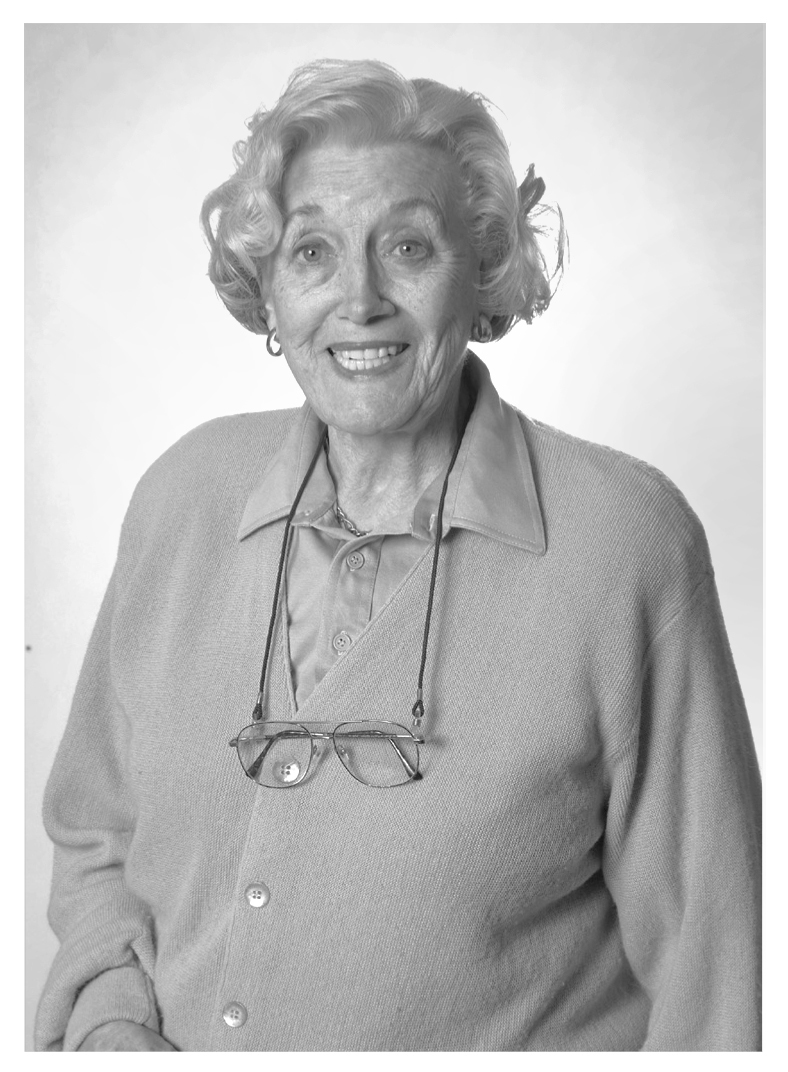
In Memoriam: Marian Gibbons - Founder of Hollywood Heritage Museum

Marian Dean Newman Gibbons
(1921 - 2010)

Hollywood Heritage Founder, preservationist, actress, singer and author Marian Gibbons passed away December 8, 2010 from lung cancer. Whether you knew her as "Marian," "Mrs. Gibbons," "Mage" or "Majemahanna" (her mother's nickname for her) Marian was and is an unforgettable Hollywood person.

She was born in Cuyahoga Falls, Ohio, and lived in Wisconsin and Arizona. A brief stay in Hollywood in 1949 convinced her that this was the town she wanted to live in, but her husband Jim's business took them back to the Midwest. Marian vowed if she ever had the chance to come back, she would. That chance came in the late 1970's and Marian came to Los Angeles and worked as a publicist with her daughter, Jane, an anchor for KNBC. The 1970's appearance of the town she had worked so hard to return to inspired her with Christy Johnson McAvoy, Frances Offenhauser McKeal, Mildred Heredeen and Susan Peterson St. Francis to start Hollywood Heritage, Inc. Through the inspiration and hard work of these founders, Hollywood Heritage became the success story it is today.

A memorial is planned and we will post that information as soon as it is available. She will be interred at Hollywood Forever in Hollywood.


Janet L. Hoffmann
Blondie House
WBSF Ranch Operations
411 North Hollywood Way
Burbank, CA 91505
818-977-5233
818-977-2750 FAX
http://www.hollywoodheritage.org/

Wednesday, December 8, 2010

Eadweard Muybridge in California

Featured slideshow images are available for viewing in the North Baker Research Library
at the California Historical Society.  For rights and reproduction information please click here.


Born Edward James Muggeridge in Kingston upon Thames in southwest London, Eadweard Muybridge (1830-1904) immigrated to New York in the early 1850s and worked as a sales agent for the London Printing and Publishing Company. He moved to San Francisco in 1855 to open a branch office, and here his name began evolving, first into Muygridge and finally to Muybridge in 1865. Following a severe head injury from a stage coach crash in northern Texas in 1860 that caused him to see double images, he returned to London for recuperation and it is thought that his experiments with photography began at this time. At the International Exhibition of 1862, in which the Photographic Society of London participated, Muybridge would have seen works by many other photographers and the emerging association between art and science that would later influence his work. Upon returning to San Francisco in 1866 or1867 he immediately began working as a photographer, signing his works as Helios, and established his business as Helios Flying Studio.

Among his subject matter, Muybridge photographed the development of the Central Pacific Railroad, and accepted government commissions for documenting lighthouses on the Pacific coast and various government buildings in San Francisco. His landscape and terrain images include Alaska and Central America, Yosemite and the Sierra Nevada Mountains, and he was in northeastern California documenting Tule Lake for the US Army when the Modoc Wars erupted in 1873. After meeting Governor Stanford in 1877, Muybridge photographed Stanford’s horses while in motion. He would continue to develop his Animal Locomotion series and, in 1887, convinced the Corcoran Art Gallery in Washington, D. C. to purchase a full portfolio of eleven volumes of all the Locomotion images. When Muybridge retired in 1894 to Kingston upon Thames, he continued to promote and publish his motion studies and books with an emphasis on the connection of his work to the birth of the new visual media―cinema—which began to flourish at his death.

In June 2009, CHS was invited by the Corcoran to lend fifteen works by Muybridge plus an additional photo album from its permanent collections for the exhibition, Helios: Eadweard Muybridge in a Time of Change. Organized by the Corcoran’s chief curator, Philip Brookman, this first major retrospective of over 300 items from thirty-six lenders examines Muybridge’s career and extensive pioneering work in areas such as The Geology of Time: Yosemite and the High Sierra; War, Murder, and the Production of Coffee: the Modoc Wars and the Development of Central America; Motion Pictures: the Zoopraxiscope; and Animal Locomotion.

CHS’ stereo card with the classic image of Contemplation Rock, Glacier Point, 1872, was chosen as one of two images selected to illustrate Muybridge’s work in the Washington Post review of the exhibition, on view this last spring and early summer at the Corcoran Gallery. Three small works from CHS’ group were shipped to the exhibition’s second venue at the Tate Gallery in London and are currently on view there to January 16, 2011. The Helios exhibition will travel to its last venue, the San Francisco Museum of Modern Art, and open in late February for fourteen weeks of viewing. We hope you will visit Helios at SFMOMA, and visit CHS where more works by Muybridge from our permanent collection will also be on view during that time. More works by Muybridge are available for viewing in our North Baker Research Library, where we welcome visitors from around the world.

~ Cheryl Maslin, CHS Registrar/Collections Manager
    California Historical Society


Biographical source: Brookman, Philip. Helios: Eadweard Muybridge in a Time of Change.
Corcoran Gallery of Art and Steidl Publishers, 2010.

Friday, November 26, 2010

Day of Inclusion @ California State Railroad Museum 12-6-10, 4:30 p.m.

In contrast to statehouses from Arizona, Texas, Oklahoma, and across the United States, California has taken an inclusive stand on immigration with ACR 76 which was chaptered into California law in 2009. ACR 76 calls for all Californians to acknowledge December 17th as a Day of Inclusion in recognition and appreciation of the priceless contributions of all immigrants to the greatness of the United States and especially California.

On December 6th, California Assemblymember Mike Eng (Los Angeles), California Secretary of State Debra Bowen, Sacramento Mayor Kevin Johnson, former California Supreme Court Justice Cruz Reynoso, many statewide elected officials and over 45 civic rights organizations from thoroughout California will be gathering at the California State Railroad Museum for a "Day of Inclusion."

Among the speakers, Basim Elkarra, Executive Director, Council on American-Islamic Relations Sacramento Valley Chapter will speak on the Islamphobic year in review and the aspirations of the local Muslim community. Barry Broad, Chair, Jewish Community Relations Council will be calling on all Californians to fight back the fear that led to the defamation of NBA star Omar Caspi and the attacks on local synagogues by educating our society on anti-Semitism. Arturo Venegas Jr., former chief of the Sacramento Police Department and project director of the Law Enforcement Engagement Initiative will shed light on the scapegoating of the Latino community and law enforcement issues rising from recent immigration policies. Sacramento NAACP President, Betty Williams and Florin JACL President, Marielle Tsukamoto will also be on hand to say a few words.

This one of two statewide Day of Inclusion events being held this year in response to recent legislation that promotes inclusion and the appreciation of California's immigrant heritage by calling for all Californians to embrace our shared differences but common goals.

"A Day of Inclusion may serve us well. Any American who has been singled out, interned or excluded has an investment in the immigration debate; it was through the struggle of expatriates in the land of indigenous Americans that the United States came to be." says Cristina Mora, a California Latina activist who resides in Elk Grove, California.

CA State Railroad Museum
125 "I" Street (corner of Second and "I" Streets in Old Sacramento)
Sacramento, CA 95814


More information can be found at http://www.dayofinclusion.org/

Wednesday, November 24, 2010

Tribute to Will Rogers @ Hollywood Heritage Museum 12-8-10

Hollywood Heritage's popular Evenings @ The Barn series will offer “A Tribute to Will Rogers” on Wednesday, December 8, 2010 at 7:30 PM at The Lasky-DeMille Barn, the birthplace of Paramount Pictures.   General admission is $10, $5 for Hollywood Heritage members and free parking is available. Will Rogers(November 4, 1879 – August 15, 1935) was one of the best-known celebrities in the 1920's and 1930's. The tribute to the cowboy humorist, who starred in the Ziegfeld Follies on Broadway, wrote a nationally syndicated newspaper column and became Hollywood's biggest box-office star will commemorate Rogers’ passing with an evening of film clips and recollections.

Twentieth Century Fox Home Entertainment has graciously allowed the museum to host the first public screening of several documentaries that were produced expressly for their popular Will Rogers DVD Collection. The first is entitled “Back to the Ranch” and features personal interviews with Rogers’ family members at the re-dedication of the Will Rogers Ranch in Pacific Palisades. The second, “Jane Withers Remembers…” features heartfelt stories from the beloved child star who was befriended by Rogers when they were both making films at Fox Studios. In addition, Hollywood Heritage board-member and film historian Stan Taffel will offer rarely seen Rogers movie clips from his personal film collection. A raffle for gift baskets filled with unusual Will Rogers’ related memorabilia will also be held.

The Hollywood Heritage Museum is located at
2100 North Highland Avenue across from the Hollywood Bowl.
For more information please visit their website: http://www.hollywoodheritage.org/

Wednesday, November 17, 2010

Alameda Naval Air Museum Commemorates 75th Anniversary of the first transpacific flight


China Clipper, Hawaii. 1935
Collection of UCR/Calfornia Museum of Photography

Living History Event to Recall “China Clipper” Departure From Alameda, CA on Historic Flight to Manila, PI.

On November 22, 1935, over 25,000 spectators lined the shore of Pan American
Airways’ (PAA) base at Alameda, CA, to watch as the China Clipper eased away
from its mooring to begin the dangerous transpacific flight. The engines of the silver Martin M-130 flying boat roared as her pilot, renowned PAA aviator Capt. Edwin Musick, coaxed the heavy aircraft up from San Francisco Bay bound for Manila, via Honolulu, Midway, Wake Island, and Guam. The inaugural 8,200-mile journey, delivering U.S. Air Mail run, including personal letters to the president of the Philippines from Franklin D. Roosevelt, was completed some 59 hours after passing over the Golden Gate. The world listened intently to international radio broadcasts that covered every detail of the dangerous flight as it made its way across the Pacific Ocean.

On Sunday, November 21, 2010, the Alameda Naval Air Museum will commemorate the inaugural flight of China Clipper with a living history reenactment of the actual 1935 event. Featuring a simulated radio broadcast, complete with live re-enactors portraying the actual participants and dignitaries, plus vintage vehicles, military fly-by, and more, the public will have a rare opportunity to turn back the clock and participate in what was a significant event in world and aviation history. Attendees of all ages are invited to dress in 1930’s period attire. The museum will also open its new China Clipper exhibit to the public as part of the event.

Commemorative events will begin at 1:00 pm. to 3:00 pm. Admission is $5.00 and
parking is free. Food and beverages will be available.

Alameda Naval Air Museum, located at 2151Ferry Point Rd., Building 77, Alameda
CA, is registered with the State of California as a non-profit 501(c) (3)
organization. The all-volunteer museum has been in operation since 2004.

###

If you’d like more information about this topic or the event, please call Kin Robles
at 925/759-2090 or e-mail Kin at anammedia@mac.com or visit our website at
http://www.alamedanavalairmuseum.org/

Monday, November 8, 2010

The Snoopy License Plate: Help CA Museums!


We’re excited to announce that the California Association of Museums has over 7,000 folks signed up on http://www.snoopyplate.com/ and who can help make the Snoopy license plate a reality. We need as many Snoopy lovers as possible to raise their hands so we can establish a special license plate to support our state's great museums. When the Snooopy plate is produced, proceeds will go towards supporting museums in California communities.

Stay tuned! We hope to announce the pre-purchase period soon. We will then collect a $50 fee from anyone who wants to get their own Snoopy plate - or a bit more if you would like it personalized. When we reach the magic number of 7,500 folks who have completed an application and paid the fee, the plates will go into production, and voilà, Snoopy is ours.

When the plate is produced, proceeds will go towards supporting museums in California communities, and you’ll get the chance to show off your devotion to your favorite beagle. We continue to call on YOU to spread the word and help us reach this goal. Don't be shy! Please tell your friends, family members, co-workers, and any other Snoopy lovers about this campaign.

Ask everyone to sign up TODAY at http://www.snoopyplate.com/! With your help, we can make the official California Snoopy license plate and support museums.

Tuesday, July 27, 2010

Exhbition Continues: Think California -Through February 5, 2011

Think California

What comes to mind when you think of California? Beaches, the Gold Rush, freeways and road trips, cultural diversity, agricultural abundance, earthquakes, Hollywood? Indeed, there are many spectacular stories in California’s history. The California Historical Society presents Think California, an exhibition highlighting the colorful history of California through the institution’s remarkable collection of artwork, artifacts, and ephemera. This ambitious exhibition asks the question “What do you think about when you think of California?” Here you see both common and little known facts of the Golden State’s fascinating history, as well as the myths and realities that are the lore of California.

Think California will  be on view in the galleries of the California Historical Society through February 5, 2011
678 Mission Street, San Francisco CA
Galleries open Wednesday - Saturday 12:00 - 5:00 pm

Monday, August 31, 2009

Think California

September 25, 2009-Februrary 5, 2011


"Pardners as in 49"
Crate label, Sanderson & Kozuki, Growers and Shippers
Lehmann Printing and Lithograph Co., San Francisco

The California Historical Society presents Think California, an exhibition highlighting the colorful history of California through the institution’s remarkable collection of artwork, artifacts, and ephemera. This ambitious exhibition asks the question “What do you think about when you think of California?” Here you see both common and little known facts of the Golden State’s fascinating history, as well as the myths and realities that are the lore of California.

For more information on this exhibition, please click here.